What Is CryptoAlgo.com.au — And Is It Worth Bookmarking for Australian Traders?
CryptoAlgo.com.au is an Australian-owned resource built specifically for retail crypto traders who want to move beyond guesswork and into structured, automated strategies. If you have landed here wondering whether the site is worth your time, the short answer is: it depends on what you are looking for. If you want signals, hype, or someone to tell you what to buy, this is the wrong place. If you want to understand how algo trading actually works in Australia, which exchanges are compliant, and what the ATO expects when your bot fires off 300 trades in a month, you are in the right spot.
> TL;DR: CryptoAlgo.com.au is a free, Australian-owned resource publishing independent reviews, exchange comparisons, and step-by-step algo trading guides tailored specifically to Australian retail crypto traders. It covers AUSTRAC-registered exchanges, crypto tax obligations, grid bots, DCA automation, and Pine Script, and it does not charge for any of its content. The primary keyword CryptoAlgo.com.au appears throughout this site because this is the site, and everything published here is written from direct experience with these platforms and tools.
What CryptoAlgo.com.au Actually Does

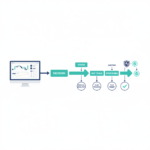
CryptoAlgo.com.au is a content and review site, not a trading platform. It does not execute trades, hold funds, or provide signals. What it does is publish independent guides, platform reviews, and strategy breakdowns written specifically for Australian retail crypto traders, with AUD pricing, Australian exchange compliance, and local tax obligations baked into every piece.
The site covers four main categories: crypto exchanges, trading bots and automation tools, charting and portfolio software, and crypto tax software. Each review applies Australian-specific criteria, so rather than telling you a platform has “low fees,” you will find something like the actual spread on BTC/AUD, whether the exchange holds an AUSTRAC registration, and how deposits work via PayID or OSKO.
New content goes up weekly. That matters because the Australian crypto market moves fast. Exchange fee structures change, AUSTRAC registration statuses shift, and the ATO periodically updates its guidance on crypto asset taxation. A resource that was accurate in 2024 can be quietly wrong by mid-2026 if nobody is maintaining it.
I have been building and writing for this site since its early days, and the editorial line has stayed consistent throughout: no financial advice, no affiliate-driven rankings, no inflating a platform’s score because it pays a higher commission. The content exists to help Australian traders make better-informed decisions, and the only way that works long-term is if readers can trust what they are reading.
Everything on CryptoAlgo.com.au is free to access. There is a weekly newsletter, also free, which is covered further down.
[INTERNAL LINK PLACEHOLDER: “AUSTRAC-registered exchanges” → exchange comparison pillar]
Who Is CryptoAlgo.com.au Built For?
The site is aimed at Australian retail crypto traders, broadly from beginner to intermediate level. That said, “beginner to intermediate” covers a wide range, so it is worth being specific.
If you are entirely new to crypto and want to understand what Bitcoin is, you will find some foundational content here, but this is not primarily a crypto literacy site. The focus is on people who already hold or trade crypto and are now asking: how do I do this more systematically? How do I stop making emotional decisions at 2am? How do I set up a bot that buys on a schedule instead of whenever I remember to?
The site also serves traders who are specifically trying to understand the compliance and tax angle. A lot of global crypto content either ignores Australian regulation entirely or gets it wrong. Questions like “is algo trading legal in Australia?”, “do I need an AFSL to run a bot?”, and “how does the ATO treat bot-generated trades?” are genuinely hard to answer from generic international sources. CryptoAlgo.com.au addresses all of them with Australian-specific accuracy.
Traders who want to automate strategies without necessarily writing code from scratch will find practical guidance on no-code tools like Cryptohopper alongside more technical options like Freqtrade and Pine Script. The assumption is not that you are a developer, but that you are willing to learn the basics if someone explains them clearly.
[INTERNAL LINK PLACEHOLDER: “algo trading legal in Australia” → algorithmic trading legality guide]
Core Content Areas: Exchanges, Bots, and Algo Guides
The site organises its content into three main pillars.
Exchange Reviews and Comparisons
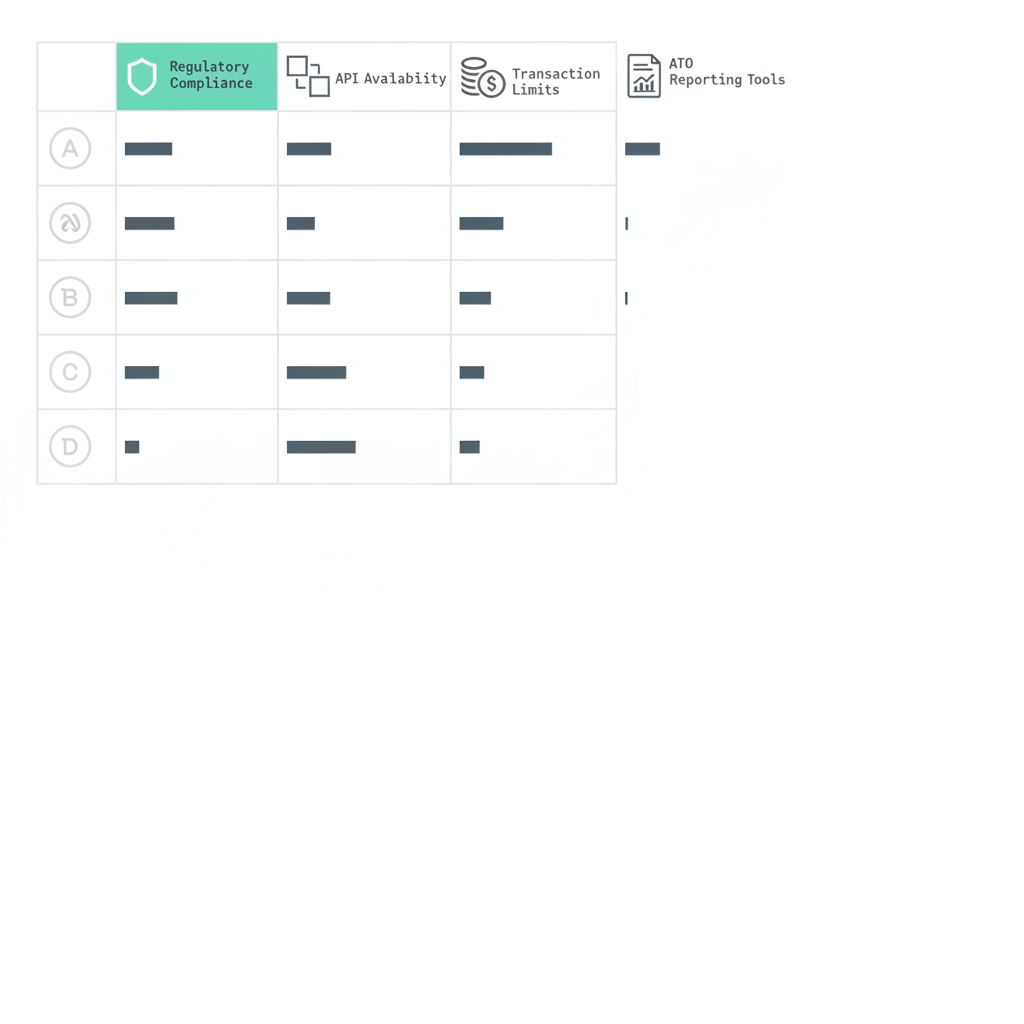
Every exchange reviewed on CryptoAlgo.com.au is assessed with Australian-specific criteria: AUSTRAC registration status, AUD deposit and withdrawal options, trading fee structure (maker/taker and spread), available trading pairs, and whether the platform supports API access for automated trading. This last point matters more than most comparison sites acknowledge. An exchange might look fine for manual trading but be almost unusable for algo strategies if its API rate limits are too restrictive or if it does not support certain order types.
Reviews are updated when fee structures or compliance status changes, not just when a platform asks for a refresh.
Trading Bots and Tools
This pillar covers the broader ecosystem: not just the bots themselves but the charting platforms, portfolio trackers, and tax software that sit around them. A grid bot review, for instance, will mention which exchanges it connects to in Australia, whether it handles AUD pairs natively, and what the tax reporting output looks like. Crypto tax software reviews focus specifically on Australian CGT treatment, including the 12-month discount rule and the handling of DeFi income.
Algo Trading Guides
This is where CryptoAlgo.com.au is most differentiated from other Australian crypto resources. The guides cover grid trading, DCA automation, Pine Script development, backtesting methodology, and AI signal platforms. Critically, they are practical rather than theoretical. A grid bot guide will walk through actual price range settings, not just explain what a grid bot is. A Pine Script article will show you what a first strategy looks like in code, not just describe what Pine Script is used for.
Both no-code approaches (Cryptohopper, 3Commas-style DCA) and code-based frameworks (Pine Script, Freqtrade, QuantConnect) are covered, so traders at different technical comfort levels can find a starting point.
[INTERNAL LINK PLACEHOLDER: “grid bot guide” → grid trading strategy guide]
Algorithmic Crypto Trading in Australia: What the Site Covers on Legality and Tax
This is the section of CryptoAlgo.com.au that fills a genuine gap in Australian crypto content, so it is worth explaining in some detail.
Trading your own account algorithmically is legal in Australia. There is no requirement for a financial licence to run a bot on your own portfolio. You can connect Freqtrade to your Binance Australia account, set a grid strategy running on BTC/AUD, and do so without triggering any licensing obligations, as long as you are trading your own capital.
The line gets crossed when you start running an algo service for other people. Operating a trading bot on behalf of clients, managing pooled funds algorithmically, or marketing a strategy subscription where others’ capital is deployed can trigger AFSL (Australian Financial Services Licence) requirements or managed-investment-scheme obligations under ASIC. This is not a grey area, and CryptoAlgo.com.au covers it clearly in its dedicated legality guide.
On the tax side, the ATO treats every crypto disposal as a taxable event, and automated trading does not get an exemption. A bot that executes 400 trades in a month has created 400 taxable events, each of which needs to be recorded with the AUD cost base, the AUD proceeds, and the resulting capital gain or loss. Most standard spreadsheets break down under that volume, which is why crypto tax software becomes not optional but necessary for active algo traders.
The 12-month CGT discount rule still applies to algo trading, but in practice most automated strategies hold positions for hours or days rather than more than a year, so the discount rarely applies. CryptoAlgo.com.au’s dedicated article “Crypto Trading Bot Tax in Australia: What Automation Actually Costs You,” published June 2026, works through the specific scenarios in detail.
AUSTRAC registration context is also covered. Australian exchanges must register with AUSTRAC under the Anti-Money Laundering and Counter-Terrorism Financing Act. When CryptoAlgo.com.au reviews an exchange, AUSTRAC status is confirmed before publication. Traders connecting bots to unregistered or offshore-only platforms take on additional risk, and the site flags this explicitly.
[INTERNAL LINK PLACEHOLDER: “Crypto Trading Bot Tax in Australia” → crypto bot tax article]
[INTERNAL LINK PLACEHOLDER: “AFSL requirements” → algo trading legality guide]
The Algo Trading Strategies CryptoAlgo.com.au Explains
The strategy content on the site is built around the approaches that are actually accessible to retail traders in Australia, rather than the institutional stuff that requires Bloomberg terminals and seven-figure capital.
Grid trading is covered in depth, including how to set upper and lower price bounds, how to size the grid levels relative to your total capital, and how grid bots perform during flat versus trending markets. The honest version of this is that grid bots are good in sideways conditions and can bleed badly in a sustained downtrend if you have not set a stop-loss or lower bound below current price.
Dollar-cost averaging automation gets its own guide covering how to set up periodic buys on a schedule, which platforms support this natively in Australia, and why automating DCA removes the temptation to pause purchases when prices drop, which is exactly when you should not pause.
Pine Script development is covered starting from a genuine beginner level. The April 2026 article walks through writing your first strategy on TradingView, including the basic structure of a Pine Script file, how to define entry and exit conditions, and how to read the strategy tester output without being misled by it.
Backtesting is an area where the site is deliberately cautious. Common traps get named and explained: look-ahead bias (where your strategy accidentally uses future data), overfitting (tuning so specifically to historical data that the strategy falls apart on live markets), survivorship bias in data sets, unrealistic fill assumptions, and ignoring fees. A backtest that ignores 0.1% taker fees on every trade can show a profitable strategy that is actually a loser in practice.
AI signal platforms get sceptical treatment. The site’s position is straightforward: verify the track record independently, paper trade before risking real capital, and be very suspicious of anything that cannot show audited historical performance.
[INTERNAL LINK PLACEHOLDER: “Pine Script beginner guide” → Pine Script strategy article]
[INTERNAL LINK PLACEHOLDER: “backtesting traps” → backtesting methodology guide]
Platforms and Tools Reviewed on the Site
CryptoAlgo.com.au reviews tools across several categories, and the coverage goes deeper than most comparison sites because the focus is on how these platforms work for Australian algo traders specifically, including API reliability, AUD pair availability, and tax reporting output.
TradingView Premium with webhooks is the recommended starting point for most Australian traders wanting to deploy Pine Script strategies. You write the strategy in TradingView’s Pine Script editor, use webhooks to send buy/sell signals to a compatible exchange, and keep the execution logic centralised. It is not the most powerful setup, but it is the most accessible without self-hosting anything.
QuantConnect suits traders who are comfortable with Python or C#, want tick-level historical data, and need to backtest with a level of rigour that TradingView’s strategy tester cannot match. It supports live brokerage deployment. The learning curve is real, but so is the capability.
Freqtrade is an open-source Python framework for self-hosted algo trading. It connects to multiple exchanges via CCXT, has a decent community strategy library, and gives you full control over your bot’s logic. If you are comfortable with a command line and basic Python, it is worth the setup time.
Hummingbot is reviewed specifically in the context of market-making and liquidity-mining strategies. It is a narrow use case but a legitimate one for traders who want to earn spread income on supported pairs.
Cryptohopper covers DCA automation, trailing stops, AI signal integration, and copy trading in a no-code interface. It connects to Australian-accessible exchanges and is one of the more accessible entry points for traders who do not want to write code.
Interactive Brokers Australia and Pepperstone are covered for API-driven automation, particularly relevant for traders who want to run strategies across both crypto and traditional asset classes from a single platform.
Crypto tax software is reviewed separately, with Australian CGT treatment, DeFi income handling, and the ability to manage high-volume algo trade records as the primary assessment criteria.
[INTERNAL LINK PLACEHOLDER: “best algo trading platforms Australia” → platforms comparison article]
How CryptoAlgo.com.au Compares to Other Australian Crypto Resources
There are several Australian crypto education and research platforms worth knowing about, but most of them are solving a different problem.
CryptoEducation Australia, CCI (Crypto Consulting Institute), AusBlock Academy, and similar platforms focus on broad crypto literacy: what blockchain is, how to use a wallet, why DeFi works the way it does. That content has real value for newcomers, but it is not aimed at traders who want to automate a grid strategy on Swyftx or run a Pine Script backtest on TradingView.
Collective Shift is strong on market analysis and research, with altcoin reports and daily insights. It is not trying to teach you how to build or deploy an automated strategy, and it does not cover the tax and compliance specifics of running bots.
Orange Brick Road connects Australian traders to consultants across tax, security, and trading. It is a referral and consulting network rather than a self-serve content resource. Useful if you want to pay for personalised advice; not the same as a free library of strategy guides.
The gap that CryptoAlgo.com.au occupies is the combination of exchange compliance reviews, practical strategy guides for automated trading, and Australian-specific tax content in one place. No other Australian resource does all three with the same editorial focus. That is not a marketing claim; it is just a description of what exists in the Australian crypto content market as of mid-2026.
CryptoAlgo.com.au is not a financial advice service. Everything published is general information, editorially independent, and intended to help traders do their own research more effectively.
What You Get From the Free Newsletter
The weekly newsletter is the lowest-commitment way to stay across what the site covers. Each edition includes exchange updates relevant to Australian traders, such as fee changes, new AUD pairs, or compliance news, alongside a bot strategy breakdown and algo trading tips written for the Australian market.
It is free, there is no paid tier, and it does not exist to sell you something. The main practical value is staying current without having to check the site manually. Exchange offerings and regulatory conditions in Australia change often enough that a weekly update is genuinely useful rather than just more inbox noise.
You can subscribe via the newsletter form on the homepage. If it stops being useful, unsubscribe. No dark patterns.
[INTERNAL LINK PLACEHOLDER: “newsletter sign-up” → newsletter homepage section]
Frequently Asked Questions
Is algorithmic crypto trading legal in Australia?
Yes. Trading your own account algorithmically is legal and requires no financial licence. Operating an algo service that trades other people’s capital is a different matter and can trigger AFSL or managed-investment-scheme obligations under ASIC. CryptoAlgo.com.au covers this distinction in detail.
Do I need to know how to code to use algo trading strategies?
Not necessarily. Platforms like Cryptohopper offer no-code automation including DCA and trailing strategies. If you want more control or custom logic, tools like Pine Script on TradingView are approachable for non-developers with some patience. Full code-based frameworks like Freqtrade and QuantConnect do require Python or C#.
How does the ATO treat bot-generated crypto trades?
Every trade your bot executes is a taxable disposal event. The ATO does not distinguish between manual and automated trades. You need to record the AUD cost base and proceeds for each trade. At high volumes, this makes dedicated crypto tax software effectively mandatory.
How do I track tax on hundreds of algo-generated trades in Australia?
Crypto tax software that connects to your exchange API and automatically imports trade history is the practical solution. CryptoAlgo.com.au reviews several options with Australian CGT treatment and high-volume handling as specific assessment criteria.
What are the most common backtesting mistakes?
Look-ahead bias, overfitting to historical data, survivorship bias in data sets, assuming fills happen at the exact signal price, and failing to account for maker/taker fees. A strategy that looks good in backtesting while ignoring fees can be a consistent loser in live trading.
Should I trust AI signal platforms?
Scepticism is warranted. The site recommends verifying any claimed track record independently, paper trading a strategy before committing real capital, and being very cautious of platforms that cannot provide audited historical performance data.