Crypto Algo Trading Australia 2026: Platforms, Rules & Tax Guide
My feed in early 2026 looks nothing like it did three years ago. The questions have shifted from “is Bitcoin legit?” to “which bot do I run, and will ASIC come knocking?” Crypto algo trading in Australia is no longer a fringe activity, it is becoming mainstream fast, and the regulatory ground underneath it just moved significantly.
> TL;DR
> Crypto algo trading Australia is legal, growing, and now operating under a much clearer (and stricter) rulebook. The Corporations Amendment (Digital Assets Framework) Act 2026 passed April 1 and takes effect April 9, 2027, requiring exchanges to hold an AFSL. AUSTRAC now covers all Digital Asset Service Providers and launched a public VASP register on April 2, 2026. Check any platform there before you deposit a cent.
What Is Crypto Algo Trading in Australia? (2026 Overview)
Crypto algo trading in Australia covers a wide spectrum. At one end, you have simple rule-based bots executing a dollar-cost averaging strategy on Swyftx every Tuesday at 9am. At the other end, you have quantitative models running thousands of calculations per second across multiple exchanges, using machine learning to identify price inefficiencies before any human could blink.
The basic definition: algorithmic trading is the automated execution of buy and sell orders based on pre-programmed rules, quantitative models, or artificial intelligence, without requiring you to manually click a button for each trade. The “algo” removes emotion and reaction time from the equation.
The practical split worth understanding is between simple bots and advanced platforms. Simple bots, like grid trading (buying and selling within a price range) or DCA bots (buying fixed amounts on a schedule), are accessible to everyday traders and available on platforms like Cryptohopper. Advanced quant or AI platforms use statistical models, sentiment analysis, and real-time market data, and are closer to what institutional traders have used in traditional finance for years.
Crypto trading is entirely legal in Australia. ASIC and AUSTRAC jointly oversee the sector, and automated trading strategies carry no special prohibition. What matters is where you’re trading and whether that platform is properly registered.
The big news for 2026 is the Corporations Amendment (Digital Assets Framework) Act, which passed April 1 and received Royal Assent April 8. It commences April 9, 2027, and it fundamentally changes how crypto platforms must operate in Australia. More on that shortly.
Locally, SaintQuant launched an AI-powered automated trading platform out of Cairns on April 29, 2026, which is a genuine milestone for Australian-built algo infrastructure. It uses real-time data analysis and quantitative execution models, and it represents what this space looks like when it starts maturing domestically.
One number worth keeping in the back of your mind throughout this entire guide: Australians lost over $330 million to crypto scams in the year to December 2025. That is not a scare statistic. It is a reason to check registrations before doing anything else.
Australian Crypto Regulation in 2026: ASIC, AUSTRAC & the DAF Act
If you have been ignoring regulatory updates because they seemed abstract, 2026 is the year to stop doing that.
The DAF Act 2026
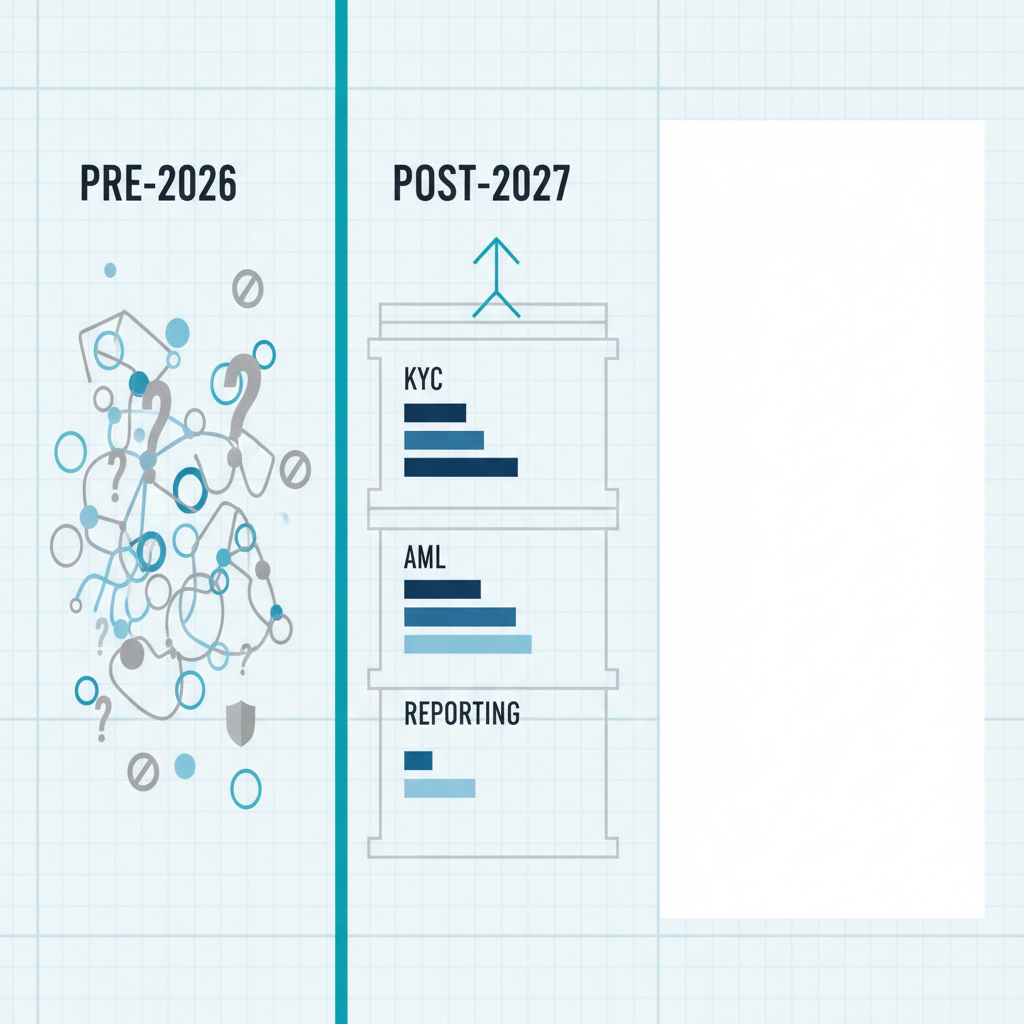
The Corporations Amendment (Digital Assets Framework) Act 2026 is Australia’s first comprehensive legislative framework for digital assets. The Bill passed on April 1, received Royal Assent on April 8, and officially commences April 9, 2027. That gives existing platforms roughly six months from commencement to obtain an Australian Financial Services Licence (AFSL) or face the consequences.
What this means practically: crypto exchanges, Digital Asset Platforms (DAPs), and tokenised custody providers will be regulated under the financial services licensing regime, the same framework that governs stockbrokers and managed funds. Operating a crypto platform without an AFSL from commencement is illegal, with potential fines reaching $16.5 million AUD.
[INTERNAL LINK PLACEHOLDER: “Australian Financial Services Licence” → AFSL explainer for crypto exchanges]
ASIC’s Role
ASIC identified both cryptocurrency and artificial intelligence as top regulatory risks in its 2026 Corporate Plan, which tells you exactly where their attention is focused. On April 21, 2026, ASIC released its digital assets roadmap covering the next 12 months, detailing how it plans to bring DAPs and tokenised custody platforms under the licensing regime ahead of the April 2027 commencement date. If you are running automated crypto trading strategies through a platform in Australia, you want that platform to either already hold an AFSL or have a credible pending application.
AUSTRAC’s Expanded Scope
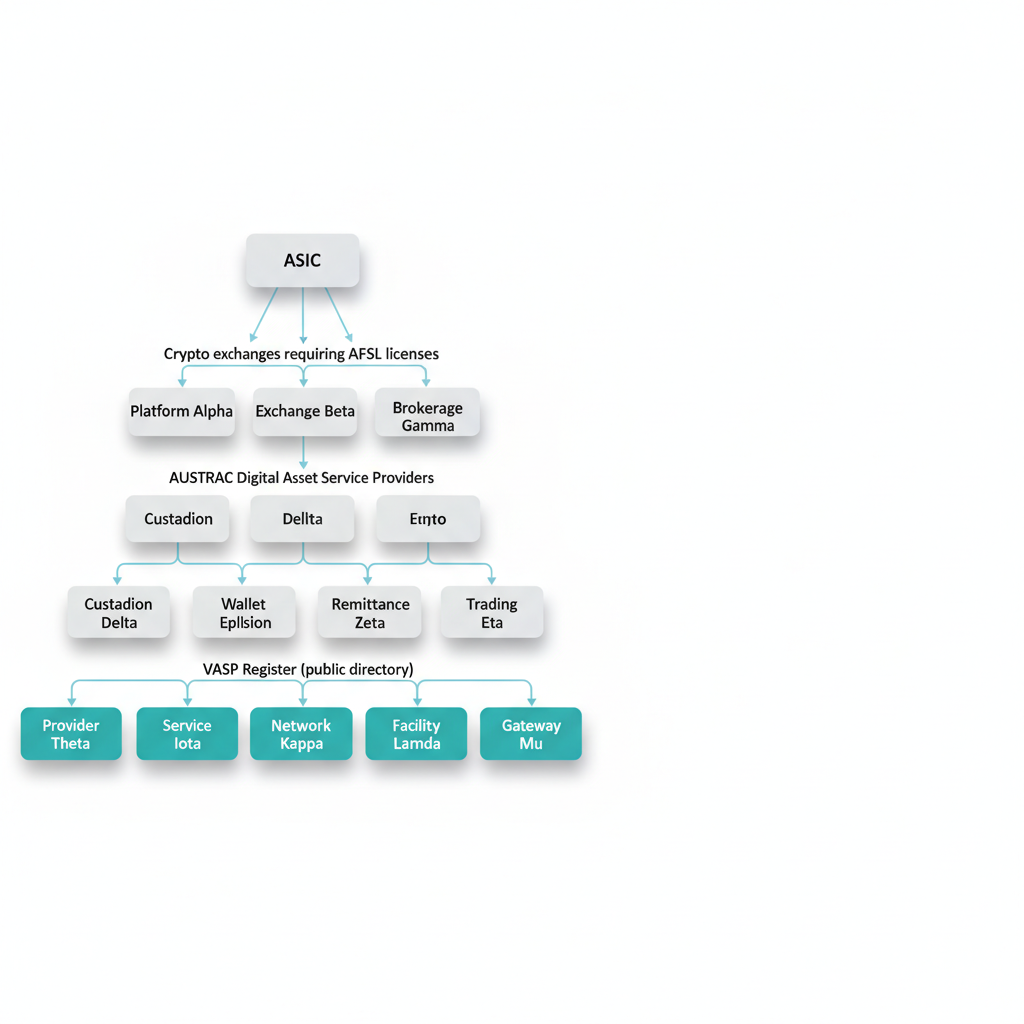
AUSTRAC has been the primary crypto regulator for years through its Digital Currency Exchange (DCE) registration scheme. On March 31, 2026, its scope expanded significantly to cover all Digital Asset Service Providers (DASPs), not just businesses exchanging fiat for crypto but a broader range of virtual asset services.
The practical tool that came out of this: on April 2, 2026, AUSTRAC launched a public searchable register for Virtual Asset Service Providers (VASPs). Anyone can check it. You should.
The Debanking Problem
Coinbase filed a formal complaint to the Australian parliament in February 2026, accusing major Australian banks of imposing what it called an “unlawful regulatory ban” through account closures and transaction restrictions on crypto businesses. This is not a fringe problem. ANZ Plus and Bank Australia both have monthly transfer limits to crypto exchanges of around $10,000. It directly affects which platforms can support smooth AUD deposits and withdrawals, so it’s worth factoring into your platform choice.
How to Verify a Crypto Algo Platform Is Legitimate in Australia
Given that $330 million-plus in losses happened in one year, the verification steps below are not optional formalities.
Step 1: Check the AUSTRAC VASP register. Go directly to the AUSTRAC website and search the public register launched April 2, 2026. If a platform offering crypto services to Australians is not on it, that is a serious red flag. Legitimate operations register. [INTERNAL LINK PLACEHOLDER: “AUSTRAC VASP register” → AUSTRAC registration guide]
Step 2: Confirm AFSL status via ASIC Connect. Search the ASIC Connect register for the company name or ABN. From April 2027, holding an AFSL becomes mandatory for crypto platforms. In 2026, you are looking either for an existing licence or evidence the company has applied. Pepperstone and IG Australia already hold AFSLs from their broader financial services operations, which is why they are lower-risk choices for algo trading right now.
Step 3: Look for transparent, specific fee schedules. Legitimate platforms publish their fees clearly. If you cannot find exact numbers on the website, that is a problem. Guaranteed return claims are an immediate disqualifier. No legitimate trading platform guarantees returns.
Step 4: Research the company’s background and physical presence. Who are the founders? Is there a registered Australian business address? SaintQuant, for example, is based in Cairns with a verifiable April 2026 launch. Offshore platforms with no traceable ownership structure deserve heavy scrutiny.
Step 5: Check independent reviews and ASIC’s scam warnings. ASIC’s MoneySmart website maintains an active list of platforms it has warned against. Cross-reference any platform you’re considering. Pressure to deposit quickly, bonuses that require large deposits, and unregistered operators are the three most consistent patterns in crypto fraud cases ASIC has flagged.
Top Crypto Algo Trading Platforms Available in Australia (2026)
Here is where crypto algo trading in Australia gets interesting, because the options range from purpose-built AI systems to CFD platforms that support automated strategies as a secondary feature.
SaintQuant
Launched April 29, 2026 in Cairns, SaintQuant is the most notable domestically-built AI trading platform to emerge this year. It is designed for automated market execution using real-time data analysis and quantitative models. Being Australian-built means it is structured around AUD and the local regulatory environment from the ground up, not retrofitted. It is early days, and I would want to see at least six months of live performance data before going in heavily, but it is worth watching closely.
Cryptohopper
Cryptohopper is a cloud-based bot platform that Australians have been using for a few years now. It supports DCA bots, grid strategies, trailing stop-losses, AI signals, and copy trading. Subscription-based pricing means you are paying a monthly fee regardless of trading performance, so factor that into your cost calculations. It connects to major exchanges via API rather than holding your funds directly.
Interactive Brokers Australia
Interactive Brokers Australia is the choice if you want serious algorithmic infrastructure. It supports multiple programming languages for strategy development, has broad asset access beyond just crypto, and is built for traders who know what they’re doing. The learning curve is steep and the interface is not designed for casual users.
Pepperstone
Pepperstone uses the cTrader platform, which has solid cBot functionality for automated strategies. It is ASIC-regulated, offers fast execution, competitive spreads, and advanced charting. Better known for forex, but crypto CFDs are available. The ASIC regulation is a genuine advantage in the current environment.
IG Australia
IG Australia is another ASIC-regulated option with strong trading technology and wide asset selection. Like Pepperstone, it operates in the CFD space for crypto rather than spot trading, which means different tax and risk considerations apply.
Kraken
Kraken supports AUD deposits, has a professional-grade interface, offers staking, and handles both manual and semi-automated strategies reasonably well through its API. Fees are competitive for Australian traders and the exchange has a strong global security track record.
Binance Australia
Binance Australia offers 0.1% trading fees and the largest cryptocurrency selection available to Australians. The ongoing AUD deposit and withdrawal issues are a real operational problem, though, stemming from its banking relationships in Australia. Low fees matter less if getting money in and out is unreliable. Worth keeping an eye on as the situation continues to evolve under the new regulatory framework.
Platform Comparison Table: Crypto Algo Trading in Australia
| Platform | AUSTRAC/ASIC Registered | Trading Fees | AUD Support | Algo/Bot Features | Best For |
|---|---|---|---|---|---|
| SaintQuant | AUSTRAC (verify) | TBC | Yes | AI-powered automated execution | AI algo trading, Australian-built |
| Cryptohopper | N/A (bot connector) | Subscription + exchange fees | Via connected exchange | DCA, grid, AI signals, copy trading | Bot-based strategies |
| Interactive Brokers AU | AFSL held | ~0.12% AUD | Yes | Multi-language algo support | Advanced quant traders |
| Pepperstone | AFSL held (ASIC) | From 0.0% spread | Yes | cTrader cBots, automated strategies | ASIC-regulated algo/CFD |
| IG Australia | AFSL held (ASIC) | Spread-based | Yes | Advanced platform, automated orders | Broad asset algo trading |
| Kraken | AUSTRAC registered | 0.16–0.26% maker/taker | Yes (PayID) | API access, semi-automated | Semi-automated, AUD spot |
| Binance Australia | AUSTRAC registered | 0.1% | Limited (ongoing issues) | API, grid bots | Low-fee spot, high volume |
| Swyftx | AUSTRAC registered | ~0.6% spread | Yes (PayID, bank) | Limited automation, API | Beginners, AUD-first |
| Digital Surge | AUSTRAC registered | From 0.1% | Yes (free AUD withdrawal) | Basic, API available | Low-fee spot trading |
AUD deposits via PayID and bank transfer are free on most Australian platforms. Credit card deposits typically attract 2% to 3.5% depending on the platform and card type. Always check whether the “fee” is a flat rate or embedded in the spread, as some exchanges show low explicit fees but widen the spread instead.
[INTERNAL LINK PLACEHOLDER: “Digital Surge review” → Digital Surge full review]
[INTERNAL LINK PLACEHOLDER: “Swyftx review” → Swyftx full review]
Frequently Asked Questions
Is crypto algo trading legal in Australia?
Yes. Algorithmic and automated crypto trading is legal in Australia. There is no law prohibiting automated execution of trades. What matters is using registered, compliant platforms. The DAF Act 2026 (commencing April 2027) adds licensing requirements for the platforms themselves, not for traders using automated strategies.
Do I need to pay tax on profits from automated crypto trading in Australia?
Yes. The ATO treats cryptocurrency as property for Capital Gains Tax (CGT) purposes. Profits from crypto trading, whether manual or automated, are taxable. If you hold for more than 12 months before selling, you may be eligible for the 50% CGT discount. Frequent, high-volume automated trading could potentially be characterised as trading stock income rather than capital gains. Speak to a tax accountant who understands crypto, as the characterisation matters significantly.
How do I check if a crypto platform is registered in Australia?
Check the AUSTRAC VASP public register (launched April 2, 2026) for AUSTRAC registration, and the ASIC Connect register for AFSL status. Both are free and publicly searchable. If a platform is not on either register, treat it as unregistered and proceed with extreme caution.
What is the DAF Act 2026 and how does it affect crypto traders?
The Corporations Amendment (Digital Assets Framework) Act 2026 is Australia’s first comprehensive crypto legislation. It passed April 1, 2026, and commences April 9, 2027. It requires crypto exchanges and custody providers to hold an AFSL within six months of commencement. For individual traders, the practical effect is that using an unlicensed platform becomes riskier, as those platforms will be operating illegally from mid-2027.
Which Australian crypto exchange has the lowest fees?
Digital Surge and Binance Australia both offer trading fees from 0.1%. CoinSpot sits at around 1%, which is at the expensive end for active traders. Note that spreads can add hidden costs on top of stated fees on some platforms. Check both the fee schedule and the buy/sell spread before committing to a platform for regular algo trading.
Are crypto trading bots actually profitable?
Honestly, it depends entirely on the strategy, market conditions, and how well the bot is configured. Bots remove emotion and execute consistently, but a poorly configured bot can lose money just as consistently as a poorly disciplined manual trader. No platform can legitimately guarantee profits. Start with small capital, understand exactly what your bot is doing and why, and monitor it actively rather than setting and forgetting.
What happened with Coinbase and Australian banks?
In February 2026, Coinbase formally complained to the Australian parliament that major Australian banks were imposing effective restrictions on crypto businesses through account closures and transaction caps. Several banks, including ANZ Plus and Bank Australia, have monthly limits of around $10,000 on transfers to crypto exchanges. This is an ongoing tension between the banking sector and the crypto industry that has direct practical effects on AUD deposit and withdrawal availability.
CryptoAlgo may earn a commission if you sign up through links on this page. This does not affect our editorial independence — we only recommend platforms we have actually used and would recommend to a mate. This article is general information, not financial advice. Crypto is volatile and you can lose money. Always do your own research and consider speaking to a licensed Australian financial adviser before investing.