Algorithmic Crypto Trading Australia: How It Works (And Whether It’s Right for You)
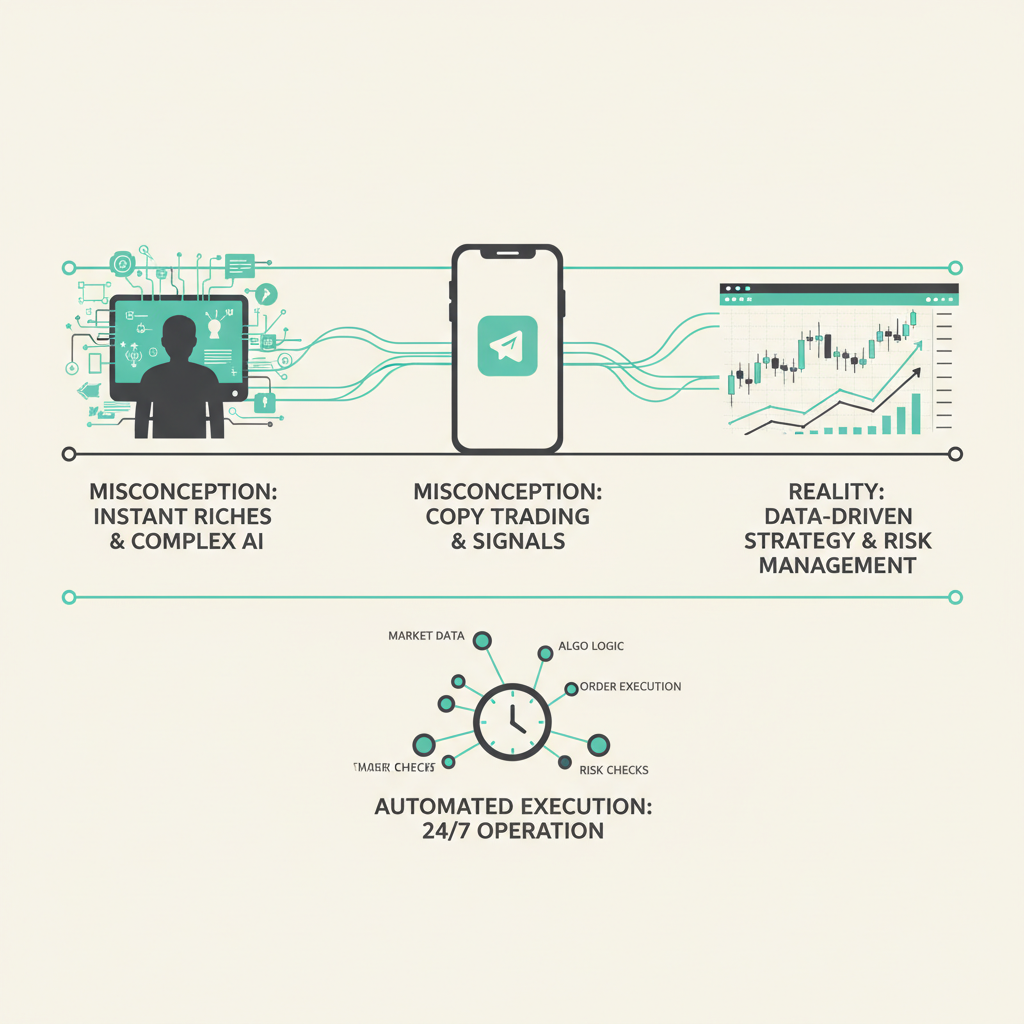
Algorithmic crypto trading Australia has a reputation problem. Half the people who ask me about it imagine hedge fund quants running supercomputers. The other half think it’s just a Telegram bot promising 40% monthly returns. The reality sits somewhere more practical, and more accessible, than either of those pictures.
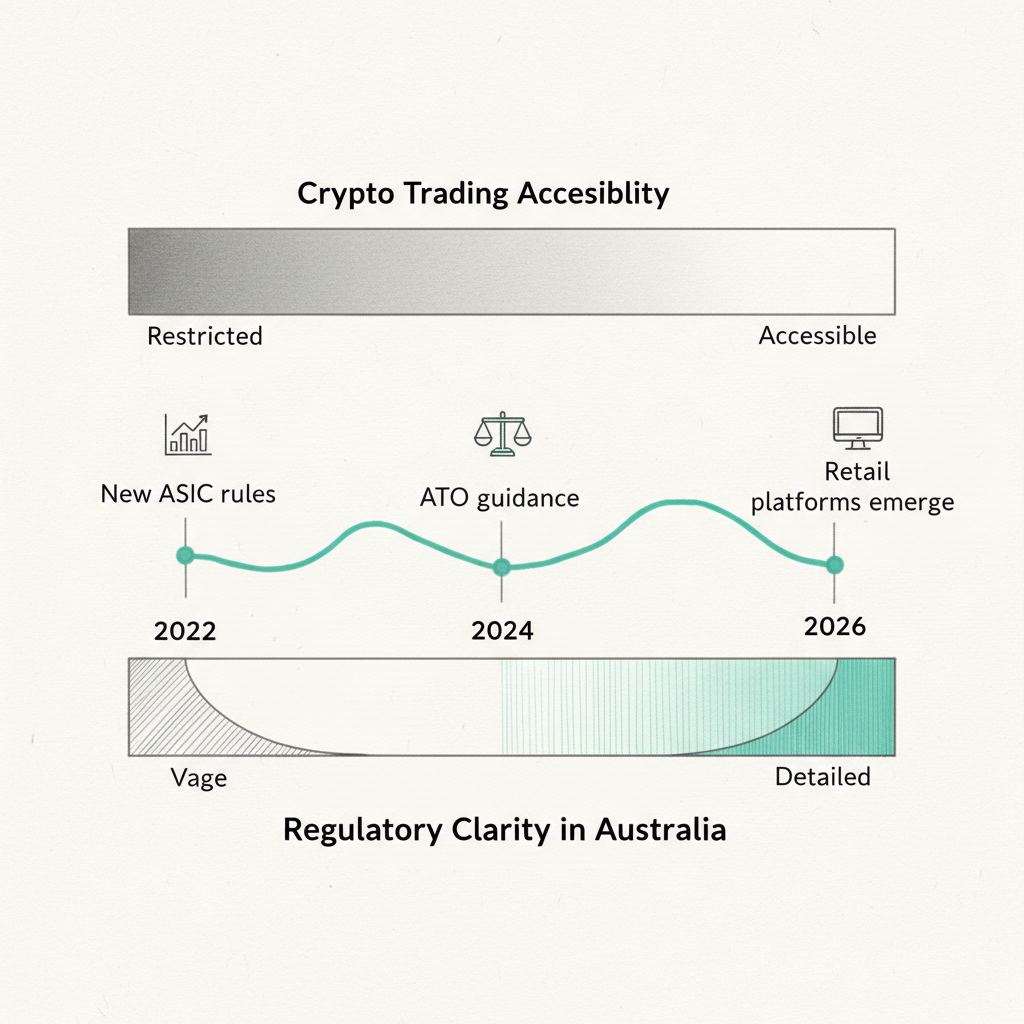
I have been watching the Australian algo trading space since 2022, and the combination of new ASIC licensing rules, the ATO’s increasingly detailed crypto guidance, and a wave of genuinely usable retail platforms has made this worth a proper look in 2026.
> TL;DR
> Algorithmic crypto trading Australia is the practice of using automated strategies and mathematical models to execute trades 24/7 without emotional interference. The regulatory picture shifted significantly in April 2026 when the Corporations Amendment (Digital Assets Framework) Bill 2025 passed, requiring exchanges to hold an AFSL and meet bank-grade standards. Platforms like Cryptohopper, Binance, Swyftx, and Eightcap each offer algo tools ranging from simple bots to advanced quantitative models, but your ATO obligations stack up fast when your bot fires dozens of trades per day.
What Is Algorithmic Crypto Trading?

Algorithmic crypto trading uses pre-programmed rules, built around price, volume, timing, and other mathematical signals, to execute trades automatically without a human pressing buttons. You define the logic once. The bot runs it continuously.
The mechanical advantage over manual trading is straightforward. A human watching a BTC/AUD chart can react in a few seconds at best. An algorithm hosted on a cloud server can respond to the same signal in milliseconds, before the price has moved meaningfully against you.
The common strategy types break down roughly like this. Trend-following algos buy when momentum is building and exit when it reverses. Arbitrage strategies exploit price differences between exchanges or trading pairs, which in crypto can appear and close within seconds. Mean reversion assumes prices drift from their average and will return, so the bot fades the move. Market-making bots post buy and sell orders simultaneously to collect the spread. Grid trading places a ladder of limit orders above and below a set price, profiting from volatility within a defined range.
Where crypto differs from equities is the 24/7 trading clock. The ASX closes at 4pm. Bitcoin does not. Running a manual overnight position on a volatile asset is uncomfortable at best. An algorithm does not need to sleep, and it does not panic when it wakes up to a 12% candle at 3am.
The other genuine benefit is consistency. Emotional trading is expensive. Most traders know what they should do and do something different under pressure. A rule-based system executes the same logic whether the market is up 20% or down 30%, which is both its strength and the thing that will hurt you if the logic is wrong.
[INTERNAL LINK PLACEHOLDER: what is crypto trading → beginners guide to crypto in Australia]
How Algo Trading Bots Actually Execute Trades
The mechanics are less mysterious than they sound. The bot connects to your chosen exchange via API keys. You generate those keys inside your exchange account and paste them into the bot platform. The keys grant trade execution permissions but, critically, should never grant withdrawal permissions. If a bot service asks for withdrawal access, walk away.
Once connected, the algorithm pulls in a continuous feed of market data: current price, order book depth, recent volume, and any other inputs the strategy requires. It runs that data through its logic rules and, when conditions are met, fires an order to the exchange. Depending on the strategy, that order might be a market order (execute immediately at current price), a limit order (execute only at a specific price or better), a stop-loss (exit if price drops to a set level), or a trailing stop that moves with the price to lock in gains.
Before you risk real money, two testing stages are worth taking seriously. Backtesting runs your strategy against historical price data to see how it would have performed. Every platform worth using offers this. The catch is that backtesting can be gamed, whether intentionally or accidentally, through overfitting the strategy to past data that looks clean. A backtest showing 200% annual returns should be treated with suspicion, not excitement.
Paper trading, or demo mode, is the next step. You run the strategy against live market conditions with simulated funds. Swyftx has a demo account feature that works well for this. Some dedicated bot platforms offer the same. It costs nothing and will tell you things backtesting misses, particularly around order slippage and fill rates during volatile periods.
Latency is a real consideration at the more serious end. A bot running on your home laptop will underperform a bot running on a cloud server physically located near the exchange’s matching engine. For most retail traders this is a minor issue. If you are running high-frequency or arbitrage strategies where milliseconds matter, co-located or cloud-hosted infrastructure becomes relevant.
Top Platforms for Algorithmic Crypto Trading in Australia
The market has matured enough that Australian traders now have genuine options across a few different categories: dedicated bot platforms, local exchanges with automation features, and ASIC-regulated brokers offering crypto CFDs with MetaTrader integration.
Dedicated Bot Platforms
Cryptohopper is the platform I point most retail algo traders toward first. It supports dollar-cost averaging, trailing stops, AI-powered signals, and copy trading, meaning you can follow the strategy of another trader rather than building your own from scratch. It connects to most major exchanges via API and has a reasonable free tier to get started. The interface is not the most elegant, but the documentation is solid.
Altrady sits a step up in complexity and is better suited to traders who want to work with quantitative signals rather than simple rule triggers. Its Quick Scanner monitors price movements across multiple markets simultaneously. The Signal Bot and QFL (Quick Fingers Luc) Bot both have active communities sharing strategies. Multi-exchange management is Altrady’s core strength.
Global Exchanges with Native Bot Tools
Binance offers native grid bots, DCA bots, and rebalancing bots built directly into the platform, no third-party API connection required. The liquidity is deep, the fees are competitive, and the range of instruments (spot, perpetuals, margin) means sophisticated strategies are possible from a single account. Worth noting: Binance was fined $6.9 million by Australian regulators in March 2026 over client misclassification, so the compliance picture there deserves attention.
Australian Exchanges
Swyftx is not a full algo platform, but it offers stop-loss orders, recurring buys, and a demo account, which covers the basics for most Australian retail traders who want some automation without running a proper bot. It is AUSTRAC-registered, AUD-native, and supports SMSF accounts, which is relevant for a specific but growing cohort of Australian investors. The spread on BTC/AUD sits around 0.6% for standard users.
ASIC-Regulated CFD Brokers
Eightcap is an ASIC-regulated Australian broker offering access to over 95 crypto CFDs. It supports MT4 and MT5, meaning Expert Advisors (automated trading scripts) work out of the box. The proprietary CryptoCrusher tool provides crypto-specific market analysis, and TradingView integration means you can build and deploy Pine Script strategies. For traders who want the regulatory comfort of an AFSL-holding broker alongside genuine automation capability, Eightcap is the strongest local option.
IC Markets is primarily a forex and CFD broker but offers crypto CFDs with ultra-low spreads and full MT4/MT5 Expert Advisor support. Third-party automation through ZuluTrade and MyFXBook adds copy trading functionality. Execution speed is among the fastest available to Australian retail traders.
Capital.com covers over 100 crypto CFDs with no commissions on trades, an AI-powered assistant for market analysis, and integration with both TradingView and MetaTrader. It is worth comparing directly against Eightcap depending on which instruments you need.
AI Portfolio Management
Strovemont Capital takes a different approach entirely: fully automated AI-driven portfolio management designed specifically for the Australian market. You allocate capital and the platform handles allocation, rebalancing, and execution. It suits investors who want automation without building or monitoring a strategy themselves.
Platform Comparison
| Platform | Bot/Algo Tools | ASIC Regulated | AUD Support | Fees From | Best For |
|---|---|---|---|---|---|
| Cryptohopper | DCA, grid, trailing, copy | No | Via exchange | Free tier available | Retail bot traders |
| Binance | Native grid, DCA, rebalancing | No (AUSTRAC registered) | Yes | 0.1% spot | Advanced traders, deep liquidity |
| Swyftx | Stop-loss, recurring buys, demo | No (AUSTRAC registered) | Yes | ~0.6% spread | Australian beginners, SMSFs |
| Eightcap | MT4/MT5 EAs, TradingView, CryptoCrusher | Yes (AFSL) | Yes | Variable spread | Regulated CFD automation |
| IC Markets | MT4/MT5 EAs, ZuluTrade, MyFXBook | Yes (AFSL) | Yes | Ultra-low spreads | High-frequency CFD traders |
| Capital.com | TradingView, MetaTrader, AI assistant | Yes (AFSL) | Yes | 0% commission | CFD traders wanting AI tools |
| Altrady | Signal Bot, QFL Bot, Quick Scanner | No | Via exchange | Subscription | Quantitative retail traders |
| Strovemont Capital | Fully automated AI portfolio | Australia-focused | Yes | Management fee | Hands-off investors |
[INTERNAL LINK PLACEHOLDER: best crypto exchanges Australia → Australian crypto exchange comparison]
Australian Regulations Every Algo Trader Needs to Know
The regulatory framework for algorithmic crypto trading Australia changed materially in the twelve months to mid-2026. If you last read about this in 2024, the picture is different now.
AUSTRAC has been the baseline requirement for years. Any digital currency exchange operating in Australia must register with AUSTRAC for anti-money laundering and counter-terrorism financing compliance. This is not optional and not new, but it remains the first question to ask about any platform you are considering. If a platform is not AUSTRAC-registered and is accepting Australian customers, that is a problem.
ASIC’s October 2025 guidance was the first major signal that the rules were tightening. ASIC clarified that a significant portion of the digital asset sector already fell under the Corporations Act 2001, including many tokens, staking programs, and tokenised products that providers had been treating as unregulated. This was not new law; it was ASIC making clear that existing law applied more broadly than many in the industry had been acting.
The structural change came with the Corporations Amendment (Digital Assets Framework) Bill 2025, which passed on 1 April 2026. Crypto exchanges and custody providers operating in Australia now need to hold an Australian Financial Services Licence and meet what ASIC has described as bank-grade standards for custody, capital adequacy, and client asset protection. The transition period matters here: ASIC granted a sector-wide no-action position until 30 June 2026 for firms actively seeking an AFSL. After that date, the tolerance for unlicensed operation narrows considerably.
ASIC has been specific about algo-related risks. The regulator is actively monitoring platforms using AI tools and digital payment systems to avoid standard licensing obligations. Algorithmic platforms are explicitly not exempt from this scrutiny.
The Binance fine in March 2026 is worth noting as a practical illustration. A $6.9 million penalty for client misclassification shows that even a platform of Binance’s scale and resources is not insulated from local enforcement action. For Australian retail traders, the lesson is to understand whether the platform you are using holds appropriate licensing, and to document that understanding.
For retail traders personally using bots on licensed platforms, you do not generally need to hold your own financial services licence. The obligation sits with the platform. That said, if you are running strategies for third parties, charging for signals, or managing funds on behalf of others, the licensing question becomes yours to answer.
[INTERNAL LINK PLACEHOLDER: ASIC crypto regulations → ASIC digital asset licensing Australia guide]
How the ATO Taxes Your Algorithmic Trading Profits
This is where most Australian algo traders underestimate their administrative burden. When your bot runs a grid strategy that completes 50 trades in a day, that is potentially 50 taxable events. Scale that over a year and you are looking at thousands of disposal records.
The foundational rule from the ATO is that cryptocurrency is property and a CGT asset. A disposal event, meaning a transaction that triggers a tax obligation, includes: selling crypto for AUD, trading one crypto for another (BTC to ETH is a disposal of BTC), and using crypto to pay for goods or services. Transferring between your own wallets is not a disposal, which matters if you are moving funds between exchange accounts that you control.
Gains from disposals are added to your assessable income and taxed at your marginal rate, which for Australian individuals currently ranges from 0% to 45% plus the Medicare levy. There is no flat crypto tax rate; it layers on top of everything else you earn.
The 50% CGT discount is available if you hold an asset for more than 12 months before disposal. For most algorithmic strategies, this discount is largely irrelevant. Grid bots, arbitrage bots, and short-term trend strategies cycle positions in hours or days, not years. The discount was designed for long-term investors, not for a bot flipping ETH/AUD positions three times a week.
Income from staking rewards, mining, and airdrops is treated differently. The ATO taxes this as ordinary income at marginal rates in the year it is received, with no CGT discount available. The cost base for a staking reward is its AUD value on the date of receipt, which then becomes relevant if you later sell that asset.
GST has not applied to crypto transactions since 1 July 2017, which simplifies things slightly.
The question of whether your trading constitutes a business is worth considering carefully if your activity is intensive. Business traders can access deductions for expenses, platform fees, and infrastructure costs, but they also lose access to the 50% CGT discount entirely, and gains are taxed as ordinary income. The ATO looks at factors including frequency of trading, commercial intent, and whether you operate in a business-like manner.
For algo traders with high transaction volumes, using dedicated crypto tax software is not optional, it is essential. Koinly and CoinTracker both support Australian tax rules, integrate with major exchanges via API, and can generate ATO-compatible reports. Doing this manually with hundreds or thousands of trades is how you end up paying an accountant a lot of money to fix a spreadsheet mess in July.
[INTERNAL LINK PLACEHOLDER: crypto tax Australia → complete ATO crypto tax guide for Australians]
Frequently Asked Questions
Is algorithmic crypto trading legal in Australia?
Yes. Using bots and automated strategies to trade crypto is legal for individual Australian traders. The regulatory requirements apply to the platforms and services you use, not to you personally as a retail trader executing strategies on a licensed platform.
Do I need an AFSL to run a crypto trading bot in Australia?
Generally no, if you are trading your own funds on a licensed platform. You would need an AFSL if you are managing money on behalf of others, operating a bot-as-a-service for clients, or providing financial product advice for a fee. If any of those descriptions fit your situation, speak to a lawyer before proceeding.
Which Australian exchanges support algo trading bots?
Swyftx supports stop-loss orders and recurring buys natively. Binance has built-in grid and DCA bots. For full bot platform integration via API, most major exchanges including Binance, Kraken, and KuCoin are supported by third-party tools like Cryptohopper and Altrady. ASIC-regulated brokers Eightcap and IC Markets support Expert Advisors through MT4/MT5.
How are algo trading profits taxed in Australia?