Crypto Algo Trading in Australia 2026: Complete Guide
Crypto algo trading in Australia has moved well past the hobbyist phase. In 2026, retail traders are running sophisticated bots on multiple exchanges, backtesting strategies against years of historical data, and sleeping soundly while their algorithms grind through the 2 AM volatility that would otherwise have them staring at their phones. I have been watching this space closely since 2021, and the tooling available to ordinary Australians now rivals what institutional desks were running five years ago.
> TL;DR
> Crypto algo trading Australia is legal, AUSTRAC-regulated at the exchange level, and increasingly accessible to retail traders. Automated bots run 24/7, remove emotion from your decision-making, and support strategies ranging from DCA and grid trading to arbitrage and short selling. Australian traders need to stay across ATO capital gains tax obligations, AUSTRAC registration requirements when choosing a platform, and the patchwork of bank restrictions that can interrupt your cash flow at the worst possible moment.
What Is Crypto Algo Trading in Australia?
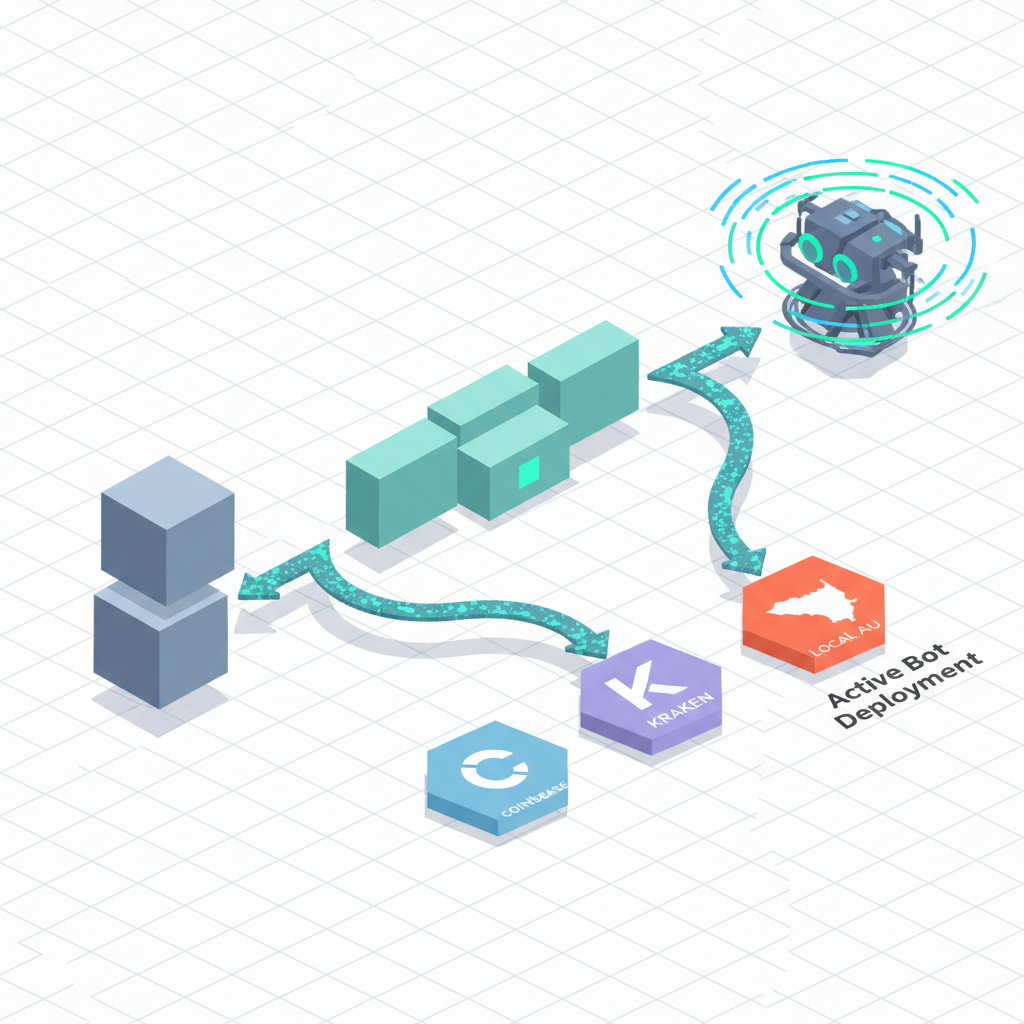
Crypto algo trading in Australia refers to the use of automated software programs that execute cryptocurrency trades according to predefined rules, without you needing to sit at a screen and click buttons. The bot analyses market data in real time, applies your chosen logic (price thresholds, moving averages, volume signals, or more complex multi-factor models), and fires off orders faster than any human can.
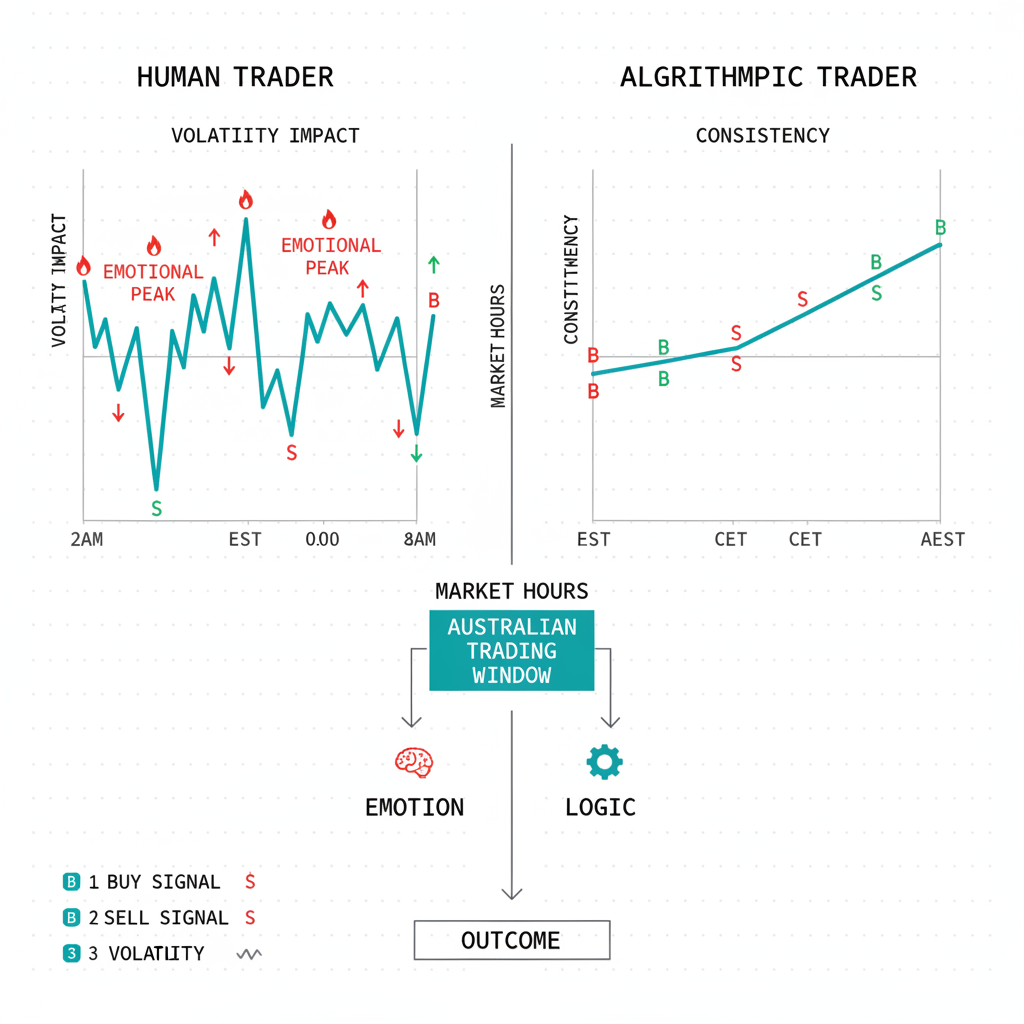
The core appeal is straightforward. Crypto trades 24 hours a day, 7 days a week, including Christmas morning and every public holiday the states can invent. Manual traders get tired, emotional, and distracted. A bot does not. When Bitcoin dropped 12% in 90 minutes on a Tuesday night in March 2026, the traders who had stop-losses and grid strategies running managed their exposure automatically. Everyone else woke up to a nasty surprise.
The difference between manual and algorithmic trading is not just speed. It is discipline. A well-configured bot executes the same strategy on the 500th trade as it did on the first. No second-guessing, no “I’ll just wait and see,” no revenge trading after a loss.
Common strategies used in automated crypto trading include Dollar Cost Averaging (DCA, buying fixed amounts at regular intervals to smooth out entry price), grid trading (placing buy and sell orders at set price intervals above and below a baseline), trend-following (entering positions in the direction of a confirmed price move), arbitrage (exploiting price discrepancies across exchanges), and short selling (profiting from price declines).
Australian retail interest in algorithmic crypto trading has grown sharply since 2023, driven by more accessible platforms, better APIs from local exchanges, and a general maturation of the market. It is no longer just quant developers running these tools.
[INTERNAL LINK PLACEHOLDER: “how crypto bots work” → crypto-trading-bots-guide]
Is Crypto Algo Trading Legal in Australia?
Yes, crypto algo trading is legal for retail traders in Australia. There is no regulation that prohibits individuals from using automated software to execute trades on their own behalf. The regulatory framework sits at the exchange and platform level, not at the level of the individual trader’s strategy.
AUSTRAC and the DCE Registration Requirement
AUSTRAC, Australia’s financial intelligence agency, requires every Digital Currency Exchange (DCE) operating in Australia to register and comply with the Anti-Money Laundering and Counter-Terrorism Financing Act 2006 (AML/CTF Act). That means registered DCEs must complete Know Your Customer (KYC) checks on all users, monitor transactions for suspicious activity, and report cash transactions of AUD $10,000 or more. AUSTRAC has a dedicated cryptocurrency taskforce and has taken enforcement action against non-compliant operators, including suspension of registrations.
When you are choosing a platform for automated crypto trading in Australia, AUSTRAC registration is the first box to tick. You can verify an exchange’s registration status directly on the AUSTRAC website. If a platform is not listed, do not use it regardless of how attractive the fee structure looks.
ASIC’s Expanding Role
ASIC’s oversight of crypto has been growing steadily. In late 2025, proposed legislation signalled that exchanges like Coinbase would need to obtain an Australian Financial Services Licence (AFSL) to continue operating here. Coinbase confirmed in February 2026 that it faces these new AFSL requirements. This is a meaningful shift. AFSL obligations include internal dispute resolution, adequate financial resources, and compliance frameworks that go well beyond AUSTRAC’s AML/CTF focus.
For traders, this means the regulatory bar for platforms is rising. Exchanges that were operating in a grey area two years ago are either getting compliant or getting out. That is generally a good thing for your fund safety, though it may narrow your platform options in the short term.
What to Look For
When evaluating a platform, confirm AUSTRAC DCE registration, check whether an AFSL has been obtained or applied for (increasingly important post-2025 legislation), and verify that the platform performs proper KYC at onboarding. If a platform lets you deposit and trade without any identity verification, that is a red flag under Australian law, not a feature.
[INTERNAL LINK PLACEHOLDER: “AUSTRAC crypto exchange registration” → austrac-dce-registration-guide]
How Crypto Trading Bots Work: Features and Strategies
At the mechanical level, every crypto trading bot does three things: generates a signal, manages risk, and executes an order. The sophistication happens in how those three steps are implemented.
Signal generation is where the bot decides whether to buy, sell, or hold. Rule-based bots use predefined technical indicators: a 50/200 moving average crossover, an RSI threshold, a specific price level. AI-powered bots attempt to learn from historical patterns and adapt their signals over time, though the marketing around AI bots often outpaces the actual performance.
Risk management is where most retail traders underinvest their attention. Stop-loss orders automatically close a position if the price falls to a defined level. Take-profit orders lock in gains at a target price. Trailing stops move with the price, preserving profits as the market runs in your favour while cutting losses if it reverses. Position sizing rules prevent the bot from allocating too large a proportion of your portfolio to a single trade.
Order execution is about getting your trades filled at the price you want. This is where exchange API quality matters enormously. A bot connected to an exchange with slow API response times or low liquidity will experience slippage, paying more than expected on buys and receiving less than expected on sells.
Strategies Worth Understanding
DCA bots are the most beginner-friendly. They buy a fixed AUD amount of an asset at regular intervals, reducing the impact of short-term price swings on your average entry cost. Grid bots place a ladder of buy orders below the current price and sell orders above it, profiting from price oscillation within a range. They work well in sideways markets and fall apart in strong trends.
Arbitrage bots look for price differences for the same asset across multiple exchanges and trade to capture the spread. In 2026, genuine arbitrage opportunities in Australian crypto markets are small and fleeting. The bots that catch them need very fast execution and low fees.
Backtesting is non-negotiable before you go live with any strategy. Good platforms let you run your configuration against historical market data to see how it would have performed. Backtesting is not a guarantee of future results, but a strategy that lost money on every historical test is not going to magically start winning in live markets.
Multi-exchange support and API connectivity matter if you want to spread activity across Swyftx, Binance, and a CFD broker simultaneously. Copy trading features, available on platforms like Cryptohopper, let you mirror the bot configurations of experienced traders, which can be useful when you are still building your own strategy knowledge.
[INTERNAL LINK PLACEHOLDER: “backtesting crypto strategies” → crypto-backtesting-guide]
Top Crypto Algo Trading Platforms Available in Australia (2026)
The platforms available to Australian traders fall into two broad categories: crypto-native bot platforms that connect to exchanges via API, and CFD brokers with algorithmic trading infrastructure built into their platforms. Both have a legitimate place depending on what you are trying to do.
Crypto-Native Bot Platforms
Cryptohopper is the most widely used third-party bot platform among Australian retail traders. It supports DCA, trailing strategies, and AI-assisted signal selection, and connects to major exchanges including Binance, Coinbase, and Kraken. The copy trading feature lets you subscribe to another trader’s strategy configuration. Subscription plans start around USD $19/month for the basic tier.
SpeedBot is an algorithmic execution platform focused on creating, testing, and deploying automated strategies. It offers strategy building without requiring coding knowledge, alongside backtesting tools. Better suited to traders who want to build their own logic rather than subscribe to someone else’s.
UltraAlgo provides pre-tested crypto trading indicators and strategy packages. It is less a full bot platform and more a strategy intelligence layer that can feed into your execution setup.
CFD Brokers with Algo Capabilities
IC Markets is the standout choice here for traders who want raw execution quality. It supports Expert Advisors (EAs) on both MT4 and MT5, offers spreads from 0.0 pips on major pairs with a USD $7/round turn commission on raw accounts, and its execution speed is genuinely impressive. I have run EAs on IC Markets and the slippage is minimal compared to most retail alternatives. It is ASIC-regulated and well-suited to experienced traders.
Pepperstone is my preferred pick for cTrader users. The cBots framework on cTrader is cleaner than MT4’s EA architecture, the backtesting engine is solid, and Pepperstone’s spreads on BTC/USD CFDs are competitive. ASIC-regulated, strong local support.
Eightcap is ASIC-regulated and offers crypto CFDs on MT4, MT5, and through TradingView integration. The TradingView connection is particularly useful if you are already building strategies using Pine Script. AUD deposits supported.
Interactive Brokers Australia is the most powerful platform on this list if you have the technical skills to use it. IBKR supports algorithmic trading in Python, Java, C++, and several other languages through its Trader Workstation API. The asset coverage goes well beyond crypto. It is not the right tool for someone who wants a GUI-based bot setup, but for developers it is hard to beat.
AvaTrade runs MT5 with a reasonably wide instruments list. Spreads on crypto instruments are slightly wider than IC Markets or Pepperstone, but the platform is stable and the regulatory coverage (including ASIC) is solid.
Vantage focuses on MT4 and offers crypto instruments with low latency execution. Good option if your existing EAs are built for MT4 and you do not want to migrate them.
Australian Crypto Exchanges
Swyftx, CoinSpot, CoinJar, and Cointree are the primary AUSTRAC-registered Australian exchanges. None of them have native bot functionality built into the platform, but Swyftx and CoinJar both offer APIs that third-party bots like Cryptohopper can connect to. CoinSpot’s API is more limited. Binance Australia offers extensive API support and is the preferred exchange connection for many bot setups, though it operates under different regulatory conditions than the domestic-first platforms.
For pure algo trading setups using bot platforms, Swyftx’s API reliability and AUD support make it a reasonable base exchange for Australian traders.
Comparison Table: Best Crypto Algo Platforms for Australians
The table below covers the main platforms worth considering for crypto algo trading in Australia in 2026. “Bot/Algo Support” refers to the type of automated trading supported, not whether a platform has a marketing page mentioning automation.
| Platform | Regulation | Bot/Algo Support | AUD Deposits | Fees/Spreads | Best For |
|---|---|---|---|---|---|
| IC Markets | ASIC (AFSL) | MT4/MT5 Expert Advisors | Yes | From 0.0 pips + USD $7/RT | Experienced algo traders, EA runners |
| Pepperstone | ASIC (AFSL) | cTrader cBots, MT4/MT5 EAs | Yes | From 0.0 pips + USD $7/RT | cTrader users, backtesting |
| Eightcap | ASIC (AFSL) | MT4/MT5 EAs, TradingView | Yes | From 0.0 pips | TradingView Pine Script traders |
| Interactive Brokers AU | ASIC (AFSL) | API (Python, Java, C++ etc.) | Yes | Tiered commission | Developers, multi-asset traders |
| AvaTrade | ASIC (AFSL) | MT5 EAs | Yes | From ~0.13% spread | MT5 users, diverse instruments |
| Vantage | ASIC (AFSL) | MT4 EAs | Yes | From 0.0 pips + commission | MT4 loyalists |
| Cryptohopper | Unregulated (bot platform) | DCA, grid, copy trading, AI | Via connected exchange | From ~USD $19/month | Retail bot users, copy trading |
| SpeedBot | Unregulated (bot platform) | Strategy builder, backtesting | Via connected exchange | Subscription-based | DIY strategy builders |
| Swyftx | AUSTRAC DCE | API (third-party bots) | Yes (AUD-first) | ~0.6% spread on BTC/AUD | Australian exchange base for bots |
| CoinSpot | AUSTRAC DCE | Limited API | Yes (AUD-first) | ~1% standard, 0.1% market | Beginners, AUD-first trading |
| CoinJar | AUSTRAC DCE | API (third-party bots) | Yes | ~0.1% maker/taker | Longer-term holders, API users |
| Binance Australia | AUSTRAC DCE | Full API, native bots | Yes (AUD pairs) | From 0.1% spot | Advanced traders, bot connectivity |
Note: CFD platforms trade derivatives, not actual crypto assets. This has meaningful tax and ownership implications. If you want to hold actual Bitcoin or ETH, use an AUSTRAC-registered exchange.
ATO Tax Rules for Crypto Algo Traders in Australia
The ATO’s position on crypto has not softened. Cryptocurrency is classified as property, not currency, and almost every disposal event triggers a tax obligation. For algorithmic traders executing dozens or hundreds of trades per month, this adds up fast and the record-keeping burden is real.
Capital Gains Tax Basics
When you dispose of a crypto asset, whether by selling it for AUD, trading it for another crypto, or using it to pay for something, you trigger a CGT event. Your capital gain is the difference between the cost base (what you paid, including fees) and the proceeds. If that number is positive, it gets added to your taxable income for the year.
The 50% CGT discount applies if you held the asset for more than 12 months before disposal. This is the rule that catches a lot of algo traders. If your bot is running a grid strategy and turning over positions every few hours, those gains are all short-term, meaning you pay tax on 100% of the profit at your marginal income tax rate. A high-frequency bot running on a $50,000 portfolio could generate significant taxable events before you have made any net profit after tax.
When You Become a “Trader” Rather Than an “Investor”
The ATO distinguishes between investors (who hold assets for capital growth) and traders (who carry on a business of trading). If you are classified as a trader, all your crypto gains and losses are treated as ordinary income, not capital gains. This means no 50% CGT discount, but it also means losses are deductible against other income rather than being quarantined as capital losses. Frequent automated trading activity is exactly the kind of pattern the ATO looks at when making this classification.