CoinSpot Review Australia 2026 — Fees, Features & Honest Verdict
CoinSpot has been operating in Australia since 2013, making it one of the longest-running local crypto exchanges. It’s verified over 2.5 million users, won multiple industry awards, and built a reputation as the easiest place for Australians to buy their first crypto. That reputation is largely deserved.
But CoinSpot’s greatest strength — simplicity — comes with a trade-off that most reviews underplay: cost. The platform is designed around instant buy/sell, and instant buy carries a 1% fee plus a spread that can add another 1–2% on top. Most beginners never discover the 0.1% market orders hidden behind the simple interface. That means CoinSpot’s average user is paying significantly more per trade than they would on platforms like Kraken or even Swyftx.
Is CoinSpot still worth using despite the higher costs? For many Australians, yes — but the answer depends entirely on how you plan to use it.
Verdict: 4 / 5
The easiest crypto exchange in Australia for beginners. Widest coin selection (530+), strongest local track record, and genuinely excellent customer support. The cost of convenience is real though — instant buy fees plus spreads make CoinSpot one of the more expensive ways to buy crypto once you move beyond your first few purchases.
Who CoinSpot is best for
CoinSpot works best for people who value simplicity and familiarity above all else. If you’re buying your first crypto and want the least friction between “I’ve never done this” and “I own some Bitcoin,” CoinSpot delivers that better than any other Australian exchange.
It’s also a reasonable choice for investors who buy infrequently — say, a lump sum once a month — and who are willing to accept the convenience premium. If you’re buying $500 of Bitcoin every few weeks and not actively trading, the fee difference between CoinSpot and a cheaper platform is a few dollars per transaction. Whether that matters depends on your perspective.
CoinSpot is less ideal for anyone trading regularly, anyone who cares about getting the best price per trade, and anyone who wants features beyond basic buy/sell. There’s no demo mode, no meaningful charting, no auto-invest for DCA, and no derivatives. Active traders should look at Kraken or Bybit instead.
Fees — the real numbers
The fee structure on CoinSpot is straightforward on paper but deceptive in practice, because the platform defaults to the most expensive buying method.
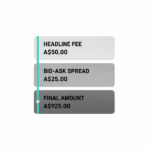
Instant buy/sell: 1% flat fee. This is the big green “Buy” button that every new user sees first. It’s fast, it’s simple, and it’s expensive. On top of the 1% fee, there’s a spread — the difference between the price CoinSpot quotes you and the actual market price. Spreads on Bitcoin are typically 1–2%, meaning your real cost per BTC purchase via instant buy can be 2–3%.
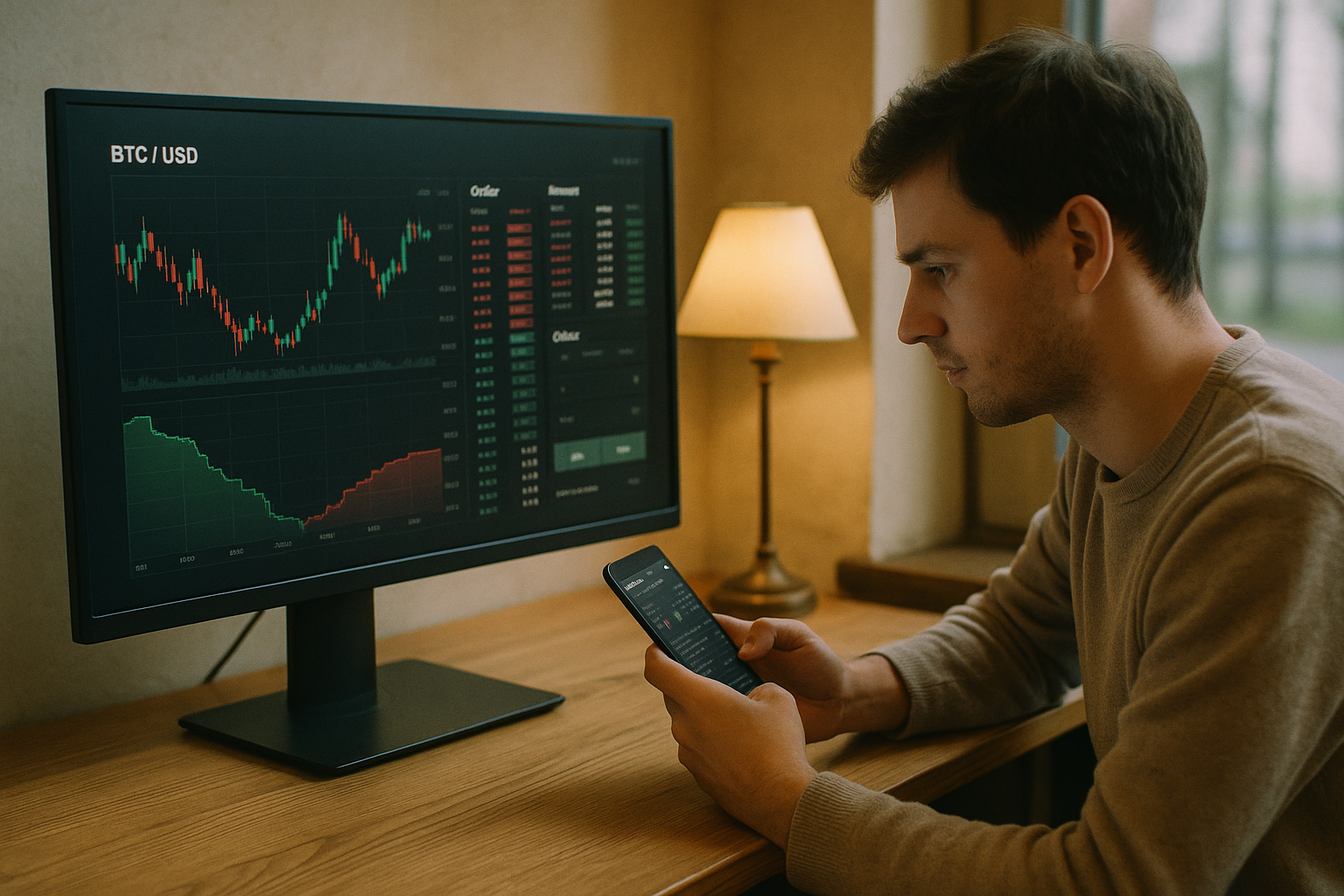
Market orders: 0.1% maker/taker fee. This is CoinSpot’s order book — functionally the same as trading on any other exchange. The fees here are competitive with Binance and undercut Swyftx. The catch: market orders are only available for major coins (Bitcoin, Ethereum, and roughly 50 other popular pairs), and they’re not prominently featured in the interface. CoinSpot doesn’t nudge beginners toward this cheaper option.
OTC trading: 0.1% for trades over $50,000 AUD. Dedicated account manager, locked-in pricing, no slippage. If you’re making large purchases, this is the way to go.
Deposits: Free via PayID, bank transfer, and POLi. BPAY charges 0.9%. Cash deposits at newsagents: 2.5%. Card deposits: 1.88%. Stick with PayID.
Withdrawals: Free AUD withdrawals to Australian bank accounts. No minimum, no maximum. Crypto withdrawals incur standard network fees.
The bottom line on fees: CoinSpot is cheap if you use market orders (0.1%), expensive if you use instant buy (~2–3% all-in), and most beginners use instant buy because that’s what the interface promotes. My biggest criticism of CoinSpot is this design choice — the platform optimises for simplicity at the user’s financial expense.
Coin selection — widest in Australia
CoinSpot supports over 530 cryptocurrencies, which is the largest selection of any Australian exchange. Swyftx offers 420+, Kraken around 420+, and Binance AU about 440+.
For beginners, this doesn’t matter much — you don’t need 530 coins on day one. But if you like exploring altcoins, meme coins, or newer projects without leaving your primary exchange, CoinSpot has the widest menu.
CoinSpot also offers Bundles — pre-made portfolios that let you buy a basket of coins in one transaction (e.g., the “Top 10 by Market Cap” bundle). This is a nice diversification shortcut for beginners who don’t want to pick individual coins.
Security — genuinely strong
This is where CoinSpot deserves full credit. The platform’s security credentials are among the strongest in the Australian market.
CoinSpot was the first Australian exchange to achieve ISO 27001 certification (the international standard for information security management). It’s AUSTRAC-registered, a member of the Digital Economy Council of Australia (DECA), and a voluntary member of the Australian Financial Complaints Authority (AFCA) — that last one matters because it gives users access to an independent complaints resolution process, which most crypto exchanges don’t offer.
The majority of user assets are held in cold storage. The platform supports 2FA, biometric login, anti-phishing phrases, geo-lock logins, and session timeouts. There are no known security breaches in CoinSpot’s history — over a decade of clean operation.
For users concerned about exchange safety (and you should be), CoinSpot’s security track record is one of the best reasons to consider it.
Customer support — the benchmark
CoinSpot’s customer support is genuinely excellent. The team is based in Melbourne, available 24/7 via live chat, and consistently connects you to a real human — not a bot — within seconds.
This matters more than it sounds. When you’re new to crypto and something goes wrong — a deposit doesn’t arrive, verification gets stuck, you accidentally sell when you meant to buy — having fast, human, Australian support is the difference between a frustrating experience and a fixable one.
In independent testing, CoinSpot consistently ranks as having the best customer support among Australian crypto exchanges. It’s a genuine competitive advantage.
SMSF support
CoinSpot supports SMSF (Self-Managed Super Fund) crypto investment and provides the reporting tools trustees need for ATO compliance. The platform is one of the most established options for Australians looking to include crypto in their self-managed super.
As always, work with a qualified accountant who understands both SMSF rules and crypto tax obligations.
What CoinSpot doesn’t do well
No demo mode. Unlike Swyftx, CoinSpot doesn’t let you practice with fake money before committing real dollars. For complete beginners, this is a meaningful gap.
No auto-invest or recurring buys. If you want to set up a regular DCA strategy — buy $100 of Bitcoin every Monday automatically — CoinSpot can’t do that. Swyftx and Kraken both offer this feature.
Limited charting. The charting tools on CoinSpot are basic at best. If you want to do any kind of technical analysis, you’ll need a separate tool like TradingView.
No derivatives. No margin trading, no futures, no leverage. If you want those, look at Bybit or Binance.
The interface feels dated. CoinSpot works, but the design feels a generation behind Swyftx. It’s functional rather than polished.
Liquidity on market orders can be thin. Even for popular coins, the CoinSpot order book doesn’t have the depth of a major global exchange. You might experience worse fills on larger market orders.
CoinSpot vs the competition
| Feature | CoinSpot | Swyftx | Kraken | Binance AU |
|---|---|---|---|---|
| Best for | Simplest onboarding | Most Australians overall | Active traders | Low fees |
| Instant buy fee | 1% + spread | ~0.6% + spread | ~1.5% | Varies |
| Market order fee | 0.1% | 0.6% (tiered) | 0.16%/0.26% | 0.1% |
| Coins | 530+ | 420+ | 420+ | 440+ |
| Demo mode | ❌ | ✅ | ❌ | ❌ |
| Auto-invest | ❌ | ✅ | ✅ | ✅ |
| AFCA member | ✅ | ❌ | ❌ | ❌ |
| ISO 27001 | ✅ | ✅ | ✅ | ❌ |
| No known breaches | ✅ | ✅ | ✅ | N/A |
For the full breakdown: Best Crypto Exchanges in Australia 2026.
The bottom line
CoinSpot is the easiest crypto exchange in Australia. That’s not a small thing. Ease of use, a decade of clean operation, 530+ coins, AFCA membership, and genuinely excellent Australian support make it a strong choice for beginners and infrequent investors.
But ease comes at a cost. If you’re using instant buy (and most CoinSpot users are), you’re paying 2–3% per trade when you could be paying 0.1–0.6% elsewhere. That adds up. As you become more comfortable with crypto, learning to use market orders — or switching to a platform like Swyftx or Kraken — will save you real money.
Use CoinSpot to start. Know when to grow out of it.
FAQ
Is CoinSpot safe?
Yes. ISO 27001 certified, AUSTRAC-registered, AFCA member, cold storage for the majority of assets, no known breaches in over a decade. It’s one of the most security-credentialed exchanges in Australia.
What are CoinSpot’s real fees?
Instant buy costs 1% plus a spread of 1–2%, making your real cost roughly 2–3% per trade. Market orders cost 0.1% but are only available for major coins and aren’t the default interface. Free AUD deposits via PayID, free withdrawals.
Is CoinSpot better than Swyftx?
For absolute beginners who just want the simplest possible path to owning crypto, CoinSpot has a slight edge. For most other users, Swyftx offers better value — demo mode, auto-invest, better charting, and lower effective fees via instant buy. See our beginners comparison.
Does CoinSpot have recurring buys?
No. CoinSpot doesn’t offer automated recurring purchases. If DCA is your strategy, Swyftx (Auto Invest) or Kraken offer this feature.
Can I use trading bots with CoinSpot?
CoinSpot has a basic API, but it’s limited compared to Binance or Kraken. Most trading bot platforms don’t support CoinSpot as a primary exchange. If bot trading is a priority, use a different exchange.
—
Affiliate disclosure: CryptoAlgo may receive a commission if you sign up through links on this page. This does not affect our editorial independence. This content is not financial advice — please do your own research before making investment decisions.
—