Crypto Friendly Banks Australia: Which Ones Actually Support Transfers in 2026?
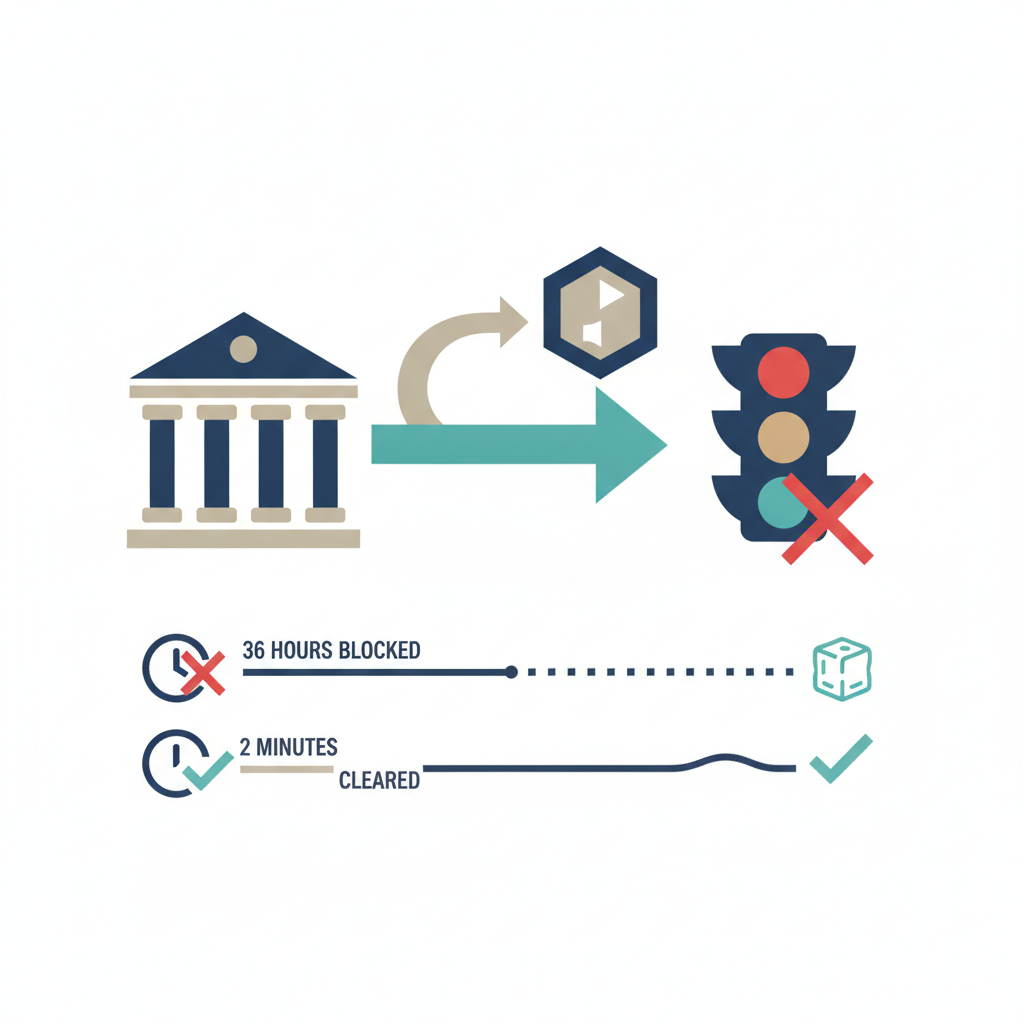
Crypto friendly banks Australia is not a settled list. I have had a PayID transfer to Swyftx sit in limbo for 36 hours because of an automated fraud flag, and I have had a $10,000 deposit clear in under two minutes. The difference was not the exchange. It was the bank I sent from.
If you are funding an account on any Australian exchange in 2026, your bank’s internal policy on crypto transfers matters more than most people realise. A blocked transfer does not just mean a delay. It can freeze your funds during a market move you were specifically trying to catch, trigger an account review, or in some cases lead to a restriction on your banking account itself.
> TL;DR
> Crypto friendly banks Australia options include ANZ, NAB, Westpac, ING, and UBank, which are the most accommodating for transfers to AUSTRAC-registered exchanges in 2026. CBA, Bankwest, Macquarie, BOQ, and HSBC apply stricter controls, daily limits, or outright blocks. PayID from a friendly bank is the fastest, cheapest, and most reliable way to fund any Australian exchange account.
Why Your Bank Matters More Than Your Exchange Choice
The assumption most people make when they start out is that picking a good exchange is the hard part. Find something AUSTRAC-registered, check the fees, verify the reviews, done. The bank is just a pipe.
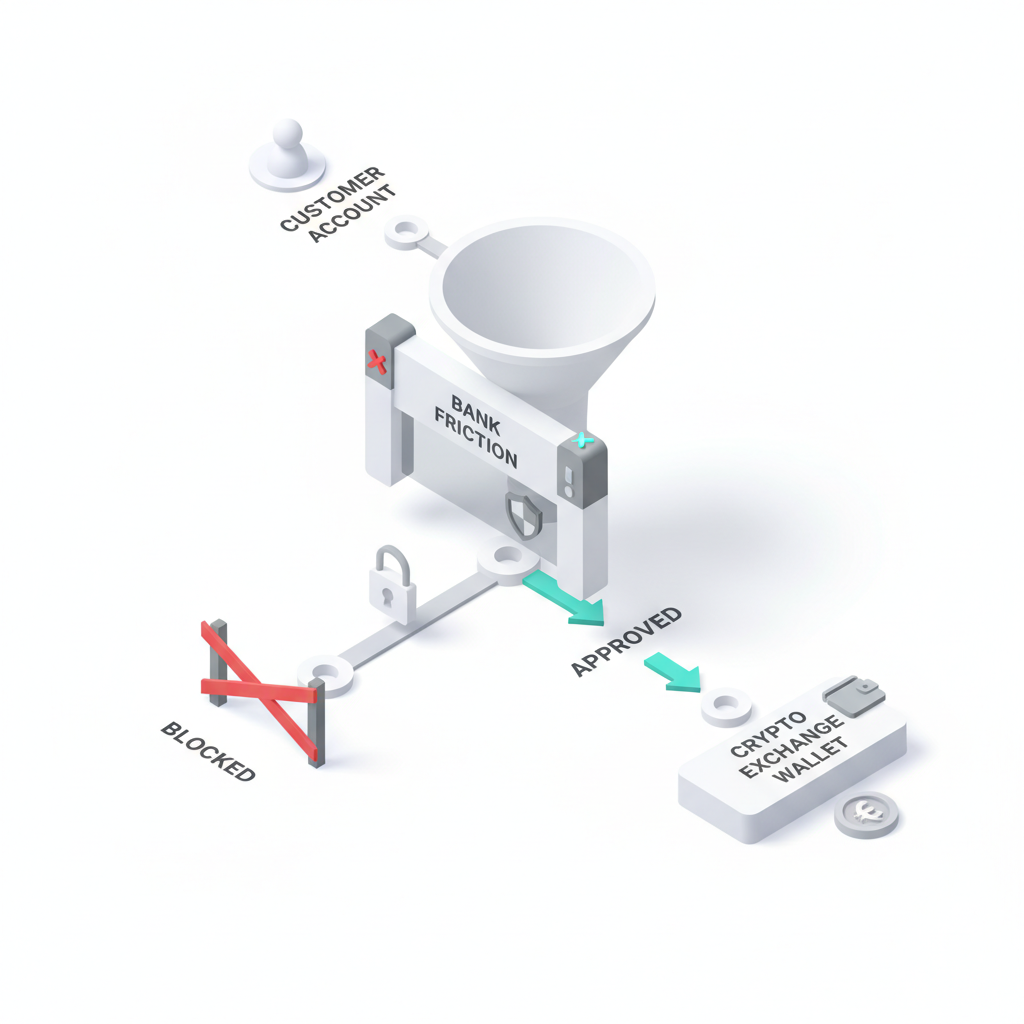
It is not. Australian banks have broad legal discretion to block, delay, or flag outgoing payments to crypto platforms under their Anti-Money Laundering and Counter-Terrorism Financing (AML/CTF) obligations. They do not need to tell you specifically why a payment was held. They just hold it.
The consequences of a blocked transfer are not trivial. Your funds can be unavailable for anywhere from a few hours to several business days. In some cases the bank’s fraud team will contact you to verify the transaction, which is fine, except that call might not come until the next business day. Meanwhile, BTC/AUD has moved 8% and the position you wanted to take no longer makes sense. Beyond the timing issue, repeated flagged transactions can trigger a formal account review, which is an uncomfortable situation even if you have done nothing wrong.
AUSTRAC registration gives exchanges legal legitimacy in Australia’s financial system. It signals that the platform complies with AML/CTF reporting requirements. But it does not compel any bank to accept transfers to that exchange. Each bank sets its own risk appetite independently, and some have set it very conservatively.
This article covers which banks are generally accommodating, which apply tight restrictions, what deposit methods work best, and practical steps to reduce the chance of a transfer being blocked.
The Quick Answer: Friendly vs. Restrictive Banks at a Glance
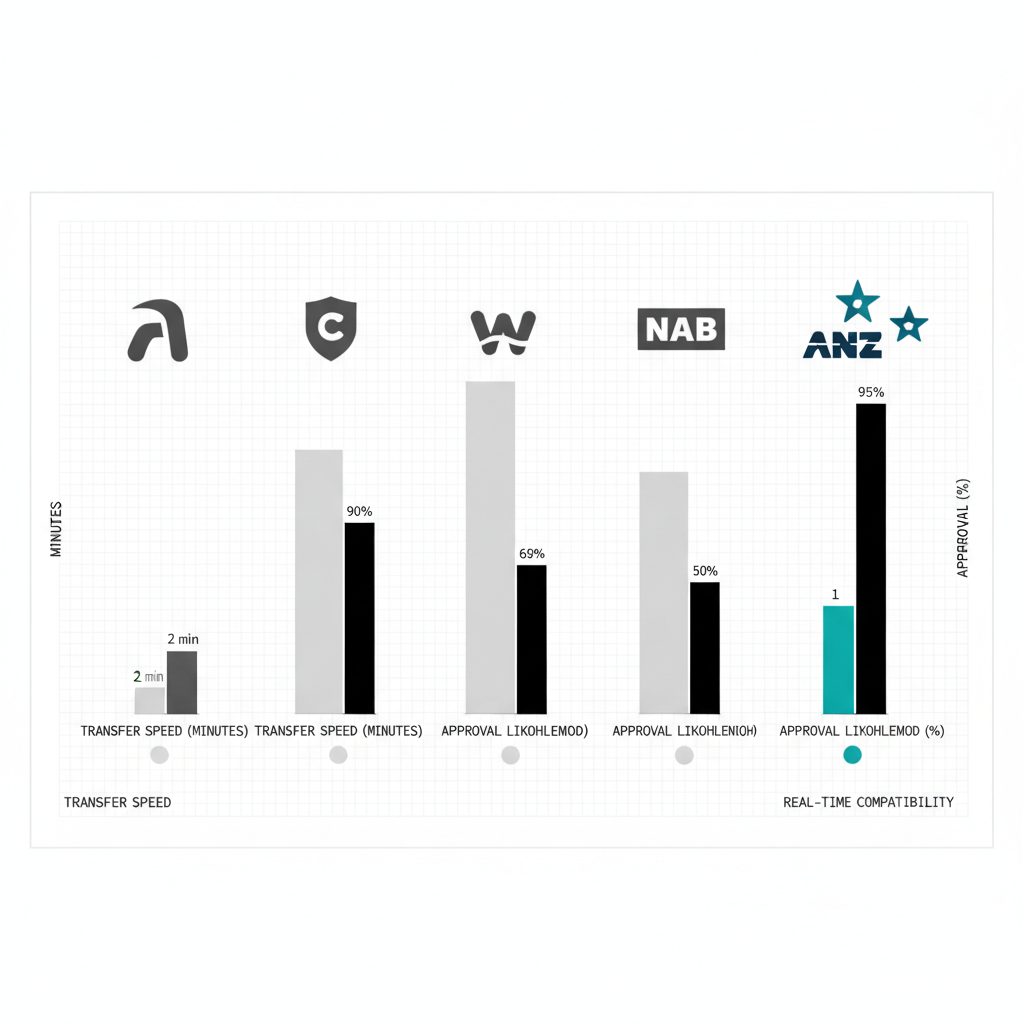
Here is the core picture as of mid-2026. Policies do shift, so verify with your bank directly before making a significant deposit.
| Bank | General Stance | Typical Limits | Deposit Methods Supported | Notes |
|---|---|---|---|---|
| ANZ | Friendly | No reported blanket caps | PayID, bank transfer | Few reported blocks to AUSTRAC-registered exchanges |
| NAB | Friendly | Standard AML thresholds | PayID, bank transfer | Consistent performance for registered platforms |
| Westpac | Friendly | No standard cap reported | PayID, bank transfer | Occasional manual review on large first-time deposits |
| ING Australia | Friendly | No blanket restriction | PayID, bank transfer | Online-first; PayID clears quickly |
| St. George Bank | Friendly | Follows Westpac policy | PayID, bank transfer | Westpac subsidiary; broadly similar behaviour |
| UBank | Friendly | No blanket restriction | PayID, bank transfer | Popular with younger traders; fewer legacy restrictions |
| Bank Australia | Friendly | No aggressive blocking | PayID, bank transfer | Community bank; generally permissive |
| Great Southern Bank | Friendly | No aggressive blocking | PayID, bank transfer | Less common but accommodating |
| CBA | Restrictive | Daily limits imposed (2023, ongoing) | PayID sometimes limited | Real-time scam detection blocks or delays many transfers |
| Bankwest | Restrictive | Inherits CBA restrictions | Limited | Owned by CBA; similar policy applies |
| Macquarie Bank | Restrictive | Conservative | Limited | Blanket blocks reported by multiple users |
| BOQ | Restrictive | Conservative | Limited | Manual review common; declines reported |
| HSBC Australia | Restrictive | Conservative | Limited | Restrictive crypto policy both globally and locally |
‘Restrictive’ does not always mean your transfer will be blocked outright. It may mean a daily cap of $10,000, a 24-hour hold, or a phone verification process. For a small deposit it might be no issue at all. For a trader funding a $50,000 account, it is a meaningful obstacle.
Crypto-Friendly Australian Banks: What Makes Them Stand Out
‘Friendly’ in this context has a specific meaning. It means higher or no caps on transfers to AUSTRAC-registered exchanges, fewer automated blocks, faster PayID clearance, and customer service that treats crypto deposits as a normal banking activity rather than a suspected scam.
ANZ is consistently the name that comes up in trader communities when this question is raised. There are no widely reported blanket blocks on transfers to major Australian exchanges. Standard AML monitoring applies, as it does at every bank, but it does not seem to translate into routine payment holds the way it does at some competitors.
NAB has a solid track record for allowing transfers to AUSTRAC-registered platforms. The bank applies standard AML monitoring but has not, as of 2026, implemented the kind of aggressive real-time payment interception that CBA built out post-2023. I have been using a NAB account as my primary crypto funding source since 2022 and the only time a transfer was held was during a period when I sent an unusually large first-time deposit to a new exchange, which is understandable.
Westpac broadly supports crypto-related transfers. Some users do report a manual review process triggering on large first-time deposits, which can delay clearance by a few hours. That is not a major issue if you plan ahead, but it is worth knowing if you are trying to fund during a fast-moving market. St. George Bank, being a Westpac subsidiary, operates under the same general policy framework.
ING Australia suits the online-first trader well. As a digital bank without legacy infrastructure, it applies fewer blanket restrictions. PayID transfers from ING to exchanges like CoinSpot and Kraken clear quickly and reliably.
UBank, which is backed by NAB, has become a genuine favourite among younger crypto traders in Australia. Digital-native, no branch network to maintain, and fewer legacy risk flags built into older banking systems. The pattern is consistent: digital-first and challenger banks tend to apply fewer blanket restrictions than the traditional Big Four, with CBA being the notable exception.
Bank Australia and Great Southern Bank are less common among crypto traders but worth mentioning for people who already bank with them. Neither is known for aggressive blocking policies.
One practical note that applies regardless of which friendly bank you are using: even accommodating banks may place a temporary hold on a first-time large transfer to an exchange they have not seen you use before. Always do a small test deposit first, $50 to $100, before sending a large sum to a new exchange account. It takes five minutes and can save you a significant amount of stress.
Banks That May Block or Restrict Crypto Transfers
The banks in this section are not doing anything illegal. They are applying risk controls they are entitled to apply. But if you are a regular crypto trader, their policies create friction that compounds over time.
Commonwealth Bank is the most significant case. In 2023, CBA implemented real-time scam-detection technology that specifically screens payments to cryptocurrency exchanges. It imposed daily limits on transfers to crypto platforms and introduced a delay mechanism on payments it flagged as potentially scam-related. Those controls have continued and in some cases expanded into 2026. The bank has framed this as consumer protection, which is fair, but the practical effect for legitimate traders is that PayID deposits can be blocked, held for review, or capped in ways that make it difficult to fund larger trades. CBA has approximately 17 million customers in Australia, which means a lot of crypto traders are dealing with this problem.
Bankwest is owned by CBA and inherits broadly similar restrictions. If you have heard positive things about Bankwest’s general banking experience but assumed it would behave differently from CBA on crypto, it will not.
Macquarie Bank has stricter controls on payments to crypto platforms than its premium positioning might suggest. Multiple users across Australian trading forums have reported blanket blocks rather than just holds or limits. This is notable because Macquarie attracts a relatively sophisticated customer base who might reasonably expect more flexibility.
Bank of Queensland applies conservative AML monitoring that frequently results in manual reviews or declined transactions. It is not impossible to fund a crypto account from BOQ, but it requires more patience and sometimes a phone call.
HSBC Australia has a history of restrictive crypto policies that aligns with its global stance. The local operation has not diverged meaningfully from that position.
The legal basis for all of this is the AML/CTF Act, AUSTRAC obligations, and more recently the pressure from the Scam-Safe Accord signed in 2023. Banks that adopted aggressive real-time payment screening did so partly in response to genuine scam losses and partly in anticipation of potential liability if they were seen to have facilitated scam payments.
If your primary bank is on this list and you are serious about crypto trading, the practical solution is to open a secondary transaction account at a friendlier bank specifically for exchange funding. It takes about ten minutes to open an account with ING or UBank online. The AUD just sits there until you need it for a deposit.
Best Deposit Methods for Funding Your Crypto Exchange From an Australian Bank
Knowing which bank to use matters, but so does knowing which transfer method to use. Not all deposit methods are equal in speed, cost, or reliability.
PayID / Osko is the method I use for almost every deposit. It is near-instant, available 24 hours a day and seven days a week, and free on virtually every major Australian exchange. Swyftx, CoinSpot, Kraken, and Digital Surge all support PayID deposits. The combination of a PayID transfer from a crypto-friendly bank is the fastest way to move AUD to an exchange without paying anything beyond the trading spread.
Direct bank transfer using BSB and account number still works but has largely been superseded by PayID. Settlement takes one to two business days, which is a real limitation if you are trying to act on a market opportunity. Most exchanges offer it, and it is free, but there is almost no reason to use it now that PayID is universal.
Credit and debit card deposits are instant, which sounds appealing until you see the cost. Exchanges typically charge between 1.5% and 3% on card deposits. On top of that, some Australian banks classify crypto exchange purchases as cash advances, which means you get hit with a cash advance fee and interest from the day of the transaction. On a $5,000 deposit, a 2.5% exchange fee alone is $125. Use card deposits only if you genuinely cannot get a PayID transfer through and the opportunity cost of waiting justifies it.
| Method | Speed | Typical Exchange Fee | Bank Fee | Availability |
|---|---|---|---|---|
| PayID / Osko | Near-instant | Free | Free | Widely supported |
| Bank transfer (BSB) | 1–2 business days | Free | Free | Most exchanges |
| Credit/debit card | Instant | 1.5%–3% | Possible cash advance fee | Most exchanges |
| BPAY | 1–3 business days | Free | Free | Some exchanges |
| PayPal | Near-instant | Varies | Nil typically | Limited exchanges |
BPAY is offered by a handful of exchanges and works reliably, but settlement speed is similar to a bank transfer. It suits people who want a familiar payment method and are not in a hurry.
PayPal is accepted on some Australian exchanges but not all. Check the specific exchange’s terms before assuming it is available. It is not a standard option across the market.
The practical takeaway is simple: PayID from a crypto-friendly bank costs nothing, settles in seconds, and works at every major Australian exchange. It is the combination to optimise for.
How Scam-Prevention Rules Affect Your Crypto Transfers
Understanding why banks block transfers helps you work with the system rather than against it.
Australian banks operate under the AML/CTF Act, with AUSTRAC as the enforcement body. That framework requires banks to monitor and report suspicious transactions, and gives them broad discretion to delay or block payments they assess as higher-risk. The legal obligation is real, but the way individual banks implement it varies enormously, which explains the difference in behaviour between ANZ and CBA on identical transaction types.
The Scam-Safe Accord, signed by major Australian banks in 2023, added another layer. It committed banks to implementing real-time payment screening, confirmation of payee checks, and liability frameworks for scam losses. CBA moved fastest and most aggressively on implementation. Other banks have followed more cautiously.
From a bank’s algorithm perspective, a payment to an AUSTRAC-registered exchange is significantly lower-risk than a payment to an unregistered overseas platform. The registration signals that the exchange has gone through a compliance process. This is why sticking to AUSTRAC-registered platforms reduces your friction with banks. [INTERNAL LINK PLACEHOLDER: AUSTRAC-registered exchanges → pillar page on best Australian crypto exchanges]
Banks can legally delay or block a transfer without giving you a specific reason. If you call and ask why your transfer was held, you may get a general answer about fraud prevention rather than a specific explanation. That is within their rights.
Practical steps that genuinely reduce the chance of a block:
Send a small test transfer first, particularly to a new exchange or after a long period of inactivity. $50 is enough to confirm the payment path works. Then send the larger amount.
Avoid sending an unusually large single transfer to an exchange you have never funded before. If you are moving $30,000 to a new account, consider splitting it across two or three transfers over a couple of days.
If you know you are about to make a large transfer, call your bank first. Tell them you are moving funds to a cryptocurrency exchange, give them the exchange name, and let them note it on the account. Most bank operators are familiar with this request now and it removes the automated flag.
If a transfer is blocked, call the fraud team directly rather than waiting for them to contact you. Reference the exchange’s AUSTRAC registration number when you call. Every AUSTRAC-registered exchange has a publicly searchable registration number on the AUSTRAC website. Providing it demonstrates that the recipient is a compliant financial services entity, which helps the fraud team process the review faster.
At CryptoAlgo.com.au, every exchange we review and recommend is AUSTRAC-verified. Using one of those platforms gives you the best possible starting position when dealing with bank payment screening, because the exchange already has a compliance track record that a bank’s algorithm can assess.
[INTERNAL LINK PLACEHOLDER: Australian crypto exchange reviews → pillar page on reviewed exchanges]
Frequently Asked Questions
Which Australian bank is most crypto-friendly in 2026?
ANZ and NAB are consistently the most accommodating for transfers to AUSTRAC-registered exchanges. Both allow standard PayID deposits without blanket caps or routine automated blocks. ING Australia and UBank are strong alternatives, particularly for traders who prefer digital-only banking.
Does CBA block all crypto transfers?
Not all of them. CBA applies real-time payment screening that can block or delay transfers to crypto exchanges, and has imposed daily limits on payments to certain platforms. Smaller transfers sometimes clear without issue. Larger or first-time transfers to exchanges are more likely to be held for review. If CBA is your main bank, opening a secondary account at a friendlier bank for crypto funding is a practical solution.
Does AUSTRAC registration guarantee my bank will accept transfers to an exchange?
No. AUSTRAC registration means the exchange has met Australia’s AML/CTF compliance requirements. It does not legally compel any bank to process payments to that exchange. In practice, transfers to AUSTRAC-registered platforms face fewer automated blocks than transfers to unregistered overseas platforms, but each bank’s risk controls operate independently.
What is the cheapest way to fund an Australian crypto exchange?
PayID from a crypto-friendly bank. The transfer is free at both ends and settles near-instantly. Avoid credit card deposits, which typically cost 1.5% to 3% at the exchange level and may attract cash advance fees from your bank on top of that.