Algo Crypto Trading Australia: Is It Legal and Worth It?
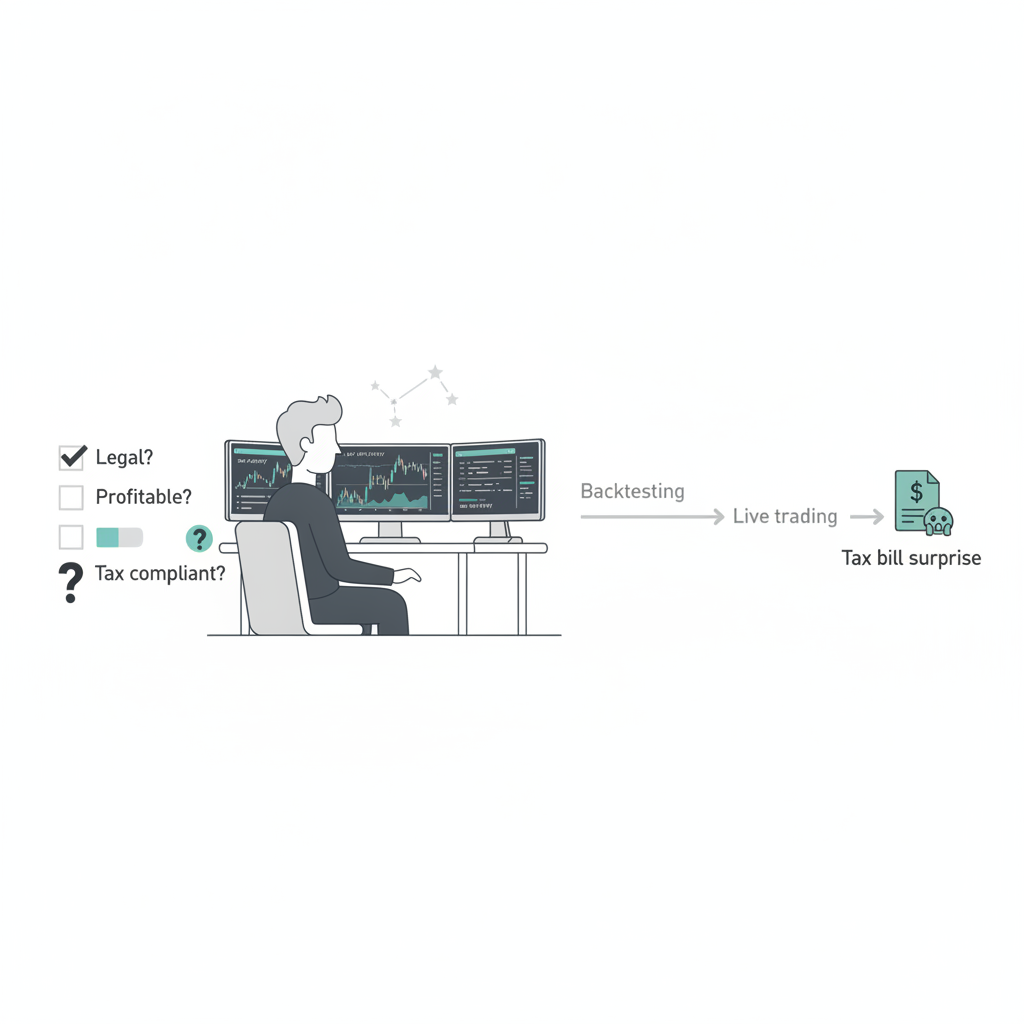
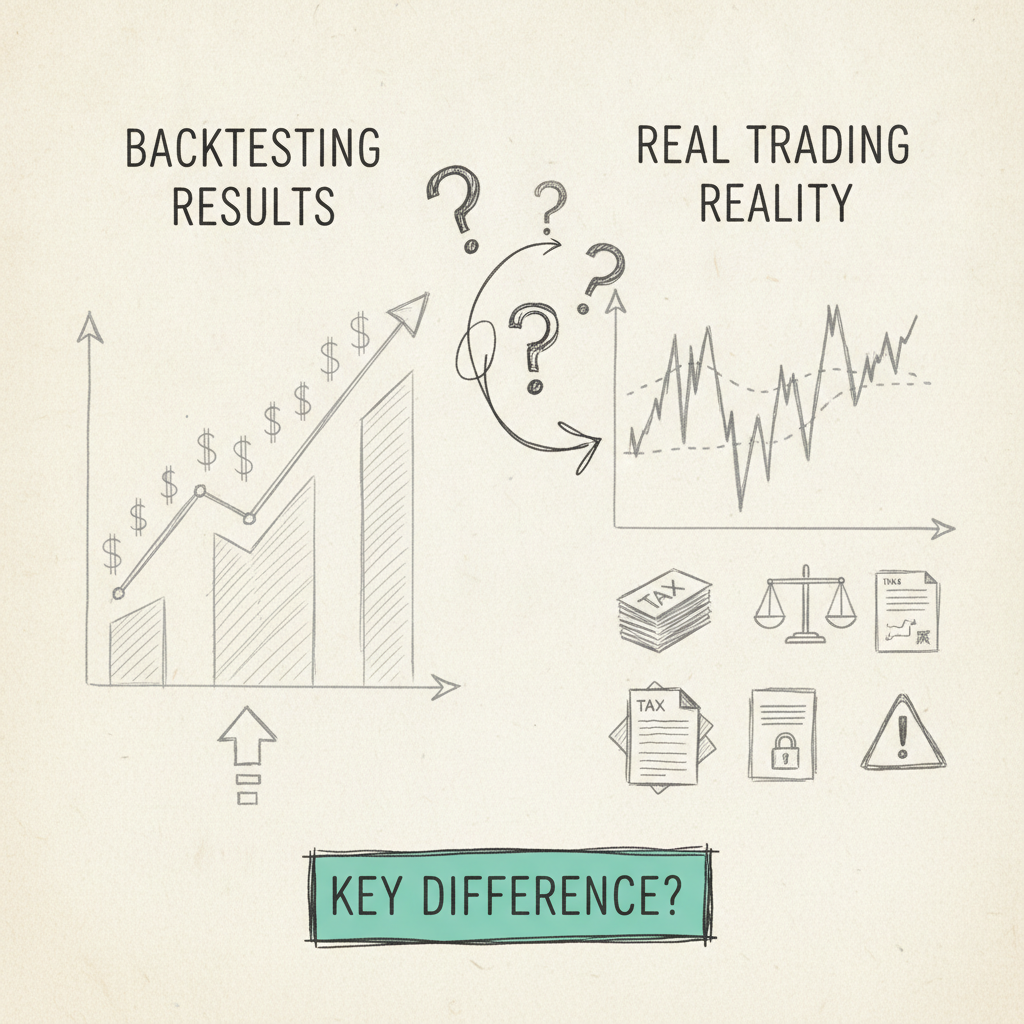
Algo crypto trading in Australia is legal for self-directed retail traders, and more Australians are doing it seriously than most finance media acknowledges. But “legal” and “profitable” are different questions, and the regulatory and tax environment here adds friction that can quietly kill a strategy that looks great in backtesting.
I’ve been running automated strategies on Australian exchanges since 2022, and the number of questions I get from people who’ve either been scammed by fake algo platforms or who’ve set up a bot and then panicked at tax time tells me this topic needs a proper, Australia-specific treatment. So here it is.
> TL;DR
>
> Algo crypto trading Australia is legal for retail traders running their own accounts, but operating a service for others requires an AFSL. You need at least $5,000 in capital for fees and tax drag not to swallow your returns, and solid ATO record-keeping is non-negotiable given the volume of taxable events bots can generate. This guide covers the legal framework, tax obligations, platform options, and realistic capital requirements.
The Short Answer: Yes, It’s Legal — With Important Caveats
Algo crypto trading in Australia is legal for individual traders managing their own accounts. ASIC and AUSTRAC have not prohibited automated or algorithmic trading for self-directed retail participants, and there’s nothing in the current regulatory framework that treats a bot-executed trade differently from a manually placed one on a compliant exchange.
The caveats start when you move beyond your own account. If you’re running strategies on behalf of friends, family, or any third party, you’re potentially operating a managed investment scheme or providing a financial service, both of which trigger Australian Financial Services Licence obligations under the Corporations Act. ASIC takes this seriously. It doesn’t matter if you’re not charging fees or if it’s your mate from footy — managing other people’s money algorithmically without an AFSL can result in civil penalties.
ASIC issued a scam alert in May 2026 specifically about fraudsters using fake crypto-asset trading platforms and messaging app groups to push fraudulent investments. These operations dress themselves up as legitimate algo trading services with guaranteed returns. They’re not. Legitimate algo trading involves no guaranteed returns, no one else holding your keys, and execution through exchanges you control via your own API keys. If someone is asking you to deposit funds onto their platform so “their algorithm can trade for you,” that’s the scam.
On the exchange side, any platform you use to deploy live bots must be registered with AUSTRAC under Australia’s anti-money laundering and counter-terrorism financing laws. This is your compliance baseline as a trader.
Legality aside, whether algo trading is actually worth your time and capital in Australia is a more complicated question. The answer depends on your strategy, your capital base, your tax situation, and your technical capability. The rest of this guide covers all of that.
How Algorithmic Crypto Trading Actually Works in Australia
At its core, algo trading is rule-based strategy execution. You define the conditions, and software places the orders automatically via an exchange’s API. A human isn’t clicking buy or sell. The logic does it.
There are two broad categories of tooling available to Australian traders. No-code bot platforms like Pionex, Cryptohopper, and 3Commas give you pre-built strategy templates such as grid bots and dollar-cost averaging bots that you configure through a UI. You don’t write a line of code. These connect to exchange APIs, including AUSTRAC-registered exchanges, and run strategies continuously. For code-based work, platforms like QuantConnect and open-source tools like Freqtrade let you write custom strategies in Python, backtest against historical tick data, and deploy to live markets. Freqtrade is self-hosted, which means you manage the infrastructure. QuantConnect is cloud-based with its own data and execution layer.
The most common strategy types you’ll encounter in the Australian retail space are grid bots (buying and selling within a defined price range at set intervals), DCA bots (accumulating at regular intervals or on dips), trend-following systems, and market-making bots via tools like Hummingbot. Arbitrage is theoretically possible but the latency disadvantages for most retail traders in Australia, combined with exchange withdrawal limits and banking friction, make it hard to execute profitably at small scale.
For anything beyond basic grid or DCA bots, you need at minimum a working knowledge of Python or Pine Script. Pine Script is TradingView’s proprietary scripting language and is useful for strategy prototyping and signal logic, though it can’t execute live orders on crypto exchanges directly without a webhook bridge. Python is the more transferable skill and is what Freqtrade, QuantConnect, and most serious backtesting frameworks use.
Deployment is either cloud-based or self-hosted. Cloud-based (QuantConnect, Cryptohopper) means the platform runs your bot on their servers. Self-hosted (Freqtrade on a VPS) means you spin up a virtual private server, typically AWS or a Sydney-region DigitalOcean droplet for lower latency to Australian exchange endpoints, and manage it yourself. Self-hosted gives you more control and lower ongoing costs but requires basic Linux comfort.
[INTERNAL LINK PLACEHOLDER: How algorithmic crypto trading works → /how-algorithmic-crypto-trading-works-australia]
ASIC, AUSTRAC, and the Regulatory Framework You Need to Know
Exchange-Side Compliance
Every digital currency exchange operating in Australia must be registered with AUSTRAC. This is a legal requirement under the Anti-Money Laundering and Counter-Terrorism Financing Act 2006. AUSTRAC registration means the exchange has AML/CTF programs in place, conducts identity verification, and reports suspicious transactions. When you deploy a bot to an AUSTRAC-registered exchange, you’re operating within that compliant framework. When you connect a bot to an offshore exchange with no Australian presence or AUSTRAC registration, you’re on your own from a compliance standpoint, and your banking options become significantly more limited.
Major AUSTRAC-registered exchanges that support API trading include Swyftx, CoinSpot, Independent Reserve, and BTC Markets. Binance’s Australian entity operated under AUSTRAC registration until 2023, when it exited the Australian market. Australian traders using Binance today are using the international platform, which sits outside the AUSTRAC framework.
Trader-Side Obligations Under ASIC
ASIC’s jurisdiction covers financial services law. Whether ASIC regulation applies to your algo trading activity depends primarily on whether the crypto assets you’re trading are classified as “financial products” under the Corporations Act. Most spot crypto trading, including BTC/AUD and ETH/AUD pairs, doesn’t currently trigger AFSL requirements for self-directed traders. Crypto derivatives, on the other hand, are financial products, and trading them algorithmically on margin requires a different compliance framework.
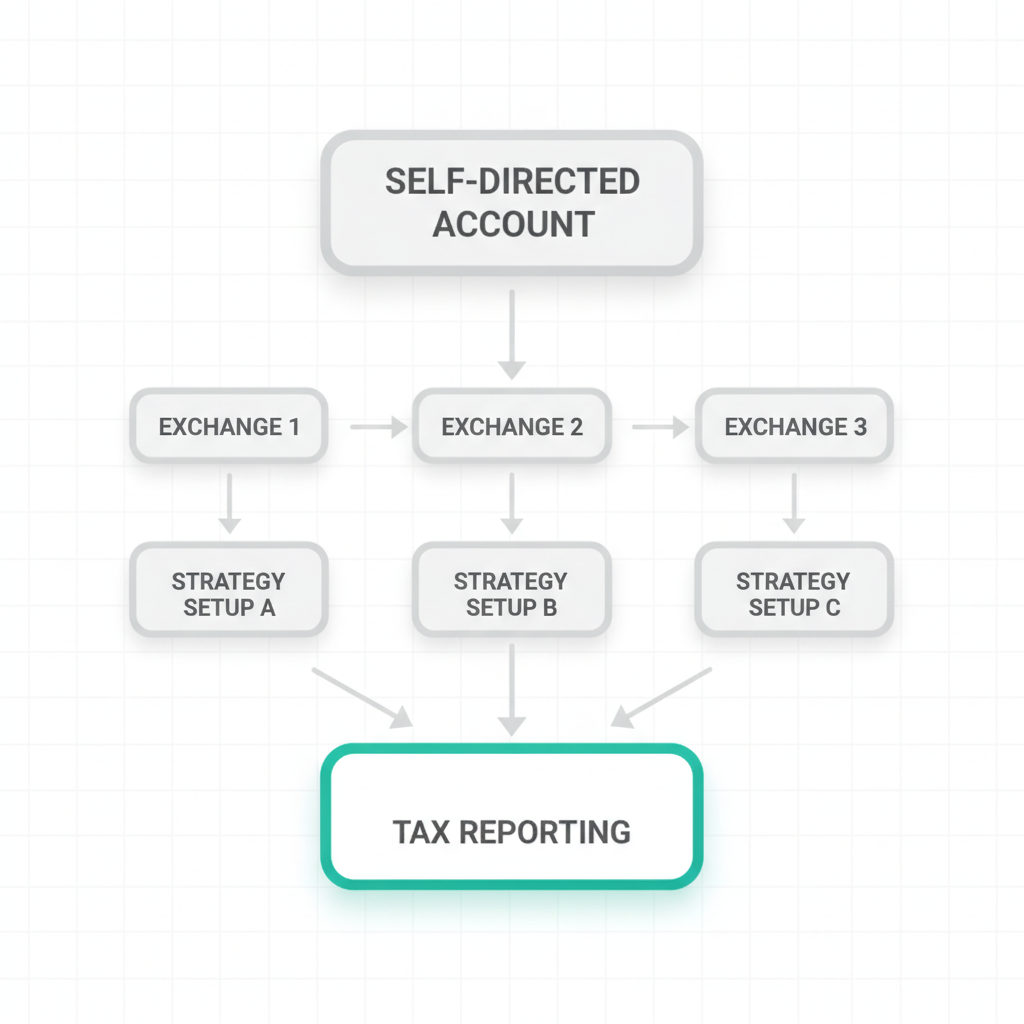
The critical line is self-directed versus third-party. Running a strategy on your own account: no AFSL required. Running a strategy that pools or controls other people’s funds, even informally, even for free: potential managed investment scheme. The Australian Banking Association has publicly supported stronger crypto regulation as a scam prevention measure, and ASIC’s enforcement posture has been moving in that direction since 2025.
ASIC’s May 2026 Scam Alert
ASIC’s May 25, 2026 warning specifically identified fraudsters posing as legitimate algo trading platforms and using messaging apps like WhatsApp and Telegram to recruit victims. The playbook typically involves a small initial “return” to build trust, followed by requests for larger deposits, then withdrawal freezes and demands for “tax payments” before funds are released. Legitimate platforms don’t operate this way. Your API keys stay in your control. You withdraw funds at will. Returns aren’t guaranteed.
How the ATO Taxes Algo-Generated Crypto Trades
This is where algo trading gets complicated for Australians, and where most newcomers underestimate the admin burden.
The ATO treats cryptocurrency as a CGT asset. Every disposal is a taxable event. Disposing means selling crypto for AUD, exchanging one crypto for another, or spending crypto on goods or services. A bot executing a sell order at 2am on a Tuesday is a disposal. So is the buy-back two minutes later if it’s a separate asset pair. A grid bot running on BTC/AUD that executes 150 trades in a month has generated 150 taxable events, each of which needs to be reported with the AUD value at the time of the transaction.
The 50% CGT discount applies to assets held longer than 12 months before disposal. The overwhelming majority of algo-generated trades won’t qualify. A grid bot cycling through positions over hours or days, a DCA bot that sells accumulated positions after a few weeks, a trend-following strategy that closes in under a year: none of these get the discount. Short-term capital gains are taxed at your marginal income tax rate. At the top marginal rate of 47% (including the Medicare levy), that’s a significant drag on gross returns that your backtesting almost certainly didn’t account for.
Volume and frequency can also shift your tax classification. If the ATO determines you’re carrying on a business of trading crypto, the CGT framework doesn’t apply at all. Instead, your crypto holdings become trading stock, profits are assessable as ordinary income, and losses are immediately deductible against other income. This can be advantageous in a losing year but eliminates the CGT discount pathway entirely. There’s no bright-line rule for when activity crosses into “business” territory. The ATO considers factors like whether you operate in a businesslike manner, whether you intend to profit, and the scale of activity.
Staking rewards, airdrops, and any interest earned on crypto are taxed as ordinary income at their AUD fair market value on the date received. If your bot runs on a staking-enabled wallet or your exchange account earns yield, those receipts are income events, not just CGT events.
Record-keeping is mandatory and must include transaction dates, amounts of crypto acquired and disposed, AUD values at the time of each transaction, wallet addresses, and exchange statements. For a bot generating hundreds of trades monthly, manual record-keeping is not realistic. Use crypto tax software that connects directly to exchange APIs. Koinly, CoinTracker, and CryptoTaxCalculator all support Australian tax rules and can import directly from most AUSTRAC-registered exchanges. CryptoTaxCalculator was built by an Australian team and handles ATO-specific edge cases better than some of the US-centric alternatives.
[INTERNAL LINK PLACEHOLDER: Crypto trading bot tax in Australia → /crypto-trading-bot-tax-australia]
Australian Banking Restrictions: Moving Money to and from Exchanges
The major banks have made life harder for Australian crypto traders over the past few years, and if you’re planning to fund algo trading accounts, you need to know what you’re working with before you get caught mid-strategy with a blocked deposit.
CBA, Westpac, ANZ, and NAB have all, at various points, implemented restrictions on transfers to crypto exchanges. This has ranged from outright account closures for customers engaged in crypto activity to per-transaction limits and delays on outbound payments. Restrictions vary by account type and change periodically, so what was true six months ago may not be accurate today.
ANZ Plus and Bank Australia have both imposed a $10,000 per calendar month cap on transfers to crypto exchanges. Bank Australia framed this as a scam prevention measure. ANZ Plus has similar language around protecting customers from fraud. Withdrawals from exchanges back to bank accounts are generally not restricted at the bank’s end, though exchanges have their own AML-triggered review processes for large withdrawals.
PayID and OSKO transfers are typically free for AUD deposits to AUSTRAC-registered exchanges. Same-day settlement via OSKO is available on most exchanges during business hours. These are your most practical deposit channels.
The practical workaround for traders running into restrictions is to use neobanks or smaller institutions with more permissive policies toward crypto. This is worth researching current options directly, as the landscape shifts regularly. The funding friction is real, and a $10,000 monthly transfer cap can genuinely limit the scale of strategies you can deploy if you’re trying to build capital across multiple exchanges simultaneously.
How Much Capital Do You Actually Need to Start?
The honest answer is $5,000 minimum before algo trading in Australia makes sense from a returns-to-friction ratio. Below that, the maths starts working against you in ways that aren’t obvious until you’ve run the numbers.
Here’s a simple illustration. Say you’re running a bot that executes 100 round-trip trades per month, each with a 0.1% fee per side (the best-case fee tier on a platform like Binance). On $1,000 capital, that’s 0.2% per trade × 100 trades = 20% of your capital gone in fees before you’ve made a cent. On $10,000 capital running the same strategy, the same fee structure costs 2% of capital per month, which is at least within a range where a functioning strategy can overcome it.
Spreads compound this. CoinSpot charges 1% on instant buys. Swyftx is around 0.6% spread on BTC/AUD. Binance’s spot market is the tightest for Australian traders at roughly 0.1% maker/taker, but Binance’s Australian entity no longer holds AUSTRAC registration. The platform choice genuinely changes the economics at lower capital levels.
Tax drag on short-term gains is the third leg. If your strategy is generating consistent 2% monthly returns but every gain is taxed at your marginal rate, say 34.5% (the $45,001–$120,000 bracket), your after-tax return drops to around 1.3%. That’s before fees and spreads. At $2,000 capital, you’re working very hard for relatively small absolute dollars.
Pionex is worth calling out specifically for traders starting with less capital. It offers built-in grid and DCA bots with no separate bot subscription fees, running on its own internal liquidity layer. The effective spread is still there, but the absence of a monthly bot platform fee reduces one layer of cost friction. It’s a reasonable starting point at lower capital if you’re learning strategy mechanics before deploying serious money.
Larger capital also opens up more meaningful diversification across bot strategies: one grid bot on BTC/AUD, a DCA accumulator on ETH/AUD, a trend-following strategy on a more volatile alt. At $5,000 split three ways, you’re working with tight position sizes but at least learning the mechanics across different strategy types. At $500 per strategy, the numbers stop making sense.
Frequently Asked Questions
Is algo crypto trading legal in Australia?
Yes. Trading your own account algorithmically is legal under current ASIC and AUSTRAC frameworks. You don’t need a licence to run bots on your own crypto holdings. Managing other people’s money algorithmically is a different matter and can trigger AFSL or managed investment scheme obligations.
Do I need to know how to code to do algo crypto trading in Australia?
Not to get started. No-code platforms like Pionex and Cryptohopper let you configure pre-built bots through a UI. For custom strategy development, meaningful backtesting, and anything beyond off-the-shelf templates, Python knowledge is effectively required. Pine Script is useful for strategy prototyping on TradingView.
How does the ATO tax algo-generated crypto trades?
Every sell or swap is a taxable event, regardless of whether a human or a bot placed the order. Short-term gains (assets held under 12 months) are taxed at your marginal income tax rate. The 50% CGT discount won’t apply to most algo trades. At high trading volumes, the ATO may classify your activity as a business, which changes the tax treatment entirely.
Which Australian exchanges support API trading for bots?
AUSTRAC-registered exchanges with API support include Swyftx, CoinSpot, Independent Reserve, and BTC Markets. API features, rate limits, and supported order types vary across platforms.
How much money do I need to start algo crypto trading in Australia?
A minimum of $5,000 is the practical threshold where fees, spreads, and CGT drag don’t immediately overwhelm returns. Below that, the economics are unfavourable unless you’re using a zero-bot-fee platform like Pionex and trading pairs with very tight spreads.
What crypto tax software works best for high-volume algo trading in Australia?
CryptoTaxCalculator, Koinly, and CoinTracker all support ATO tax rules and can import trade history directly from exchange APIs. CryptoTaxCalculator is built by an Australian team and handles edge cases like staking income and wash-sale scenarios in an ATO-relevant way.
**How do I avoid the fake algo trading platform scams ASIC warned about?