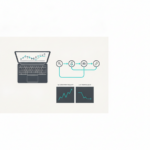
Pine Script for Beginners: Write Your First Crypto Strategy
Pine Script is TradingView’s built-in programming language for creating custom trading indicators and strategies. It’s the most accessible way to learn algorithmic trading without jumping straight into Python.
If you can follow a recipe — “when this happens, do that” — you can write basic Pine Script. The syntax is readable, the development environment is built into TradingView (no setup required), and the Strategy Tester lets you backtest your ideas against years of historical data.
This guide walks you through writing your first strategy from scratch.
Why Pine Script?
Pine Script sits in a sweet spot. No-code bots like Pionex limit you to pre-built strategies. Python requires real programming knowledge and infrastructure. Pine Script gives you the ability to express custom trading ideas and test them — without the overhead of a general-purpose programming language.
Once your strategy works in backtesting, you can connect it to 3Commas via webhooks for automated execution on your Australian exchange. That’s the TradingView → 3Commas pipeline described in our algo trading platforms guide.
Your first strategy: moving average crossover
The simplest meaningful strategy: buy when a fast moving average crosses above a slow moving average (signalling upward momentum), sell when it crosses below.
Open TradingView, navigate to any crypto chart (e.g., BTCUSD), and open the Pine Editor (bottom panel). Paste this:
//@version=6

strategy("Simple MA Crossover", overlay=true)


fastMA = ta.sma(close, 20)
slowMA = ta.sma(close, 50)


if ta.crossover(fastMA, slowMA)
strategy.entry("Buy", strategy.long)


if ta.crossunder(fastMA, slowMA)
strategy.close("Buy")


plot(fastMA, color=color.blue, title="Fast MA (20)")
plot(slowMA, color=color.red, title="Slow MA (50)")
Click “Add to Chart.” The Strategy Tester tab appears with backtest results showing net profit, win rate, and trade history.
What the code does
- `ta.sma(close, 20)` — calculates the 20-period simple moving average
- `ta.crossover(fastMA, slowMA)` — returns true when the fast MA crosses above the slow MA
- `strategy.entry(“Buy”, strategy.long)` — opens a long position
- `strategy.close(“Buy”)` — closes the position
That’s it. Six functional lines. The rest is plotting the moving averages on the chart so you can see them.
Next steps
Modify the parameters. Change 20 and 50 to different periods. See how it affects backtest results. This builds intuition for how moving averages behave.
Add filters. Add an RSI condition so you only buy when RSI is below a threshold. Add a volume filter. Each condition makes the strategy more selective.
Study community scripts. TradingView has thousands of published scripts. Read them, modify them, learn from them. Most of what you need to know about Pine Script syntax can be learned by studying working examples.
Paper trade. Once you have a strategy that backtests well, run it in paper trading mode on TradingView to see how it performs in real-time market conditions.
Automate. When you’re confident, set a webhook alert on your strategy and connect it to 3Commas Signal Bot for execution. See our TradingView review for the complete workflow.
FAQ
Do I need programming experience?
No. Pine Script reads almost like English. If you can understand “if fast average crosses above slow average, then buy” — you can write Pine Script. Start by modifying existing scripts rather than writing from scratch.
Is Pine Script free?
Yes. The Pine Editor is available on TradingView’s free plan. Strategy Tester backtesting is also free. Webhook alerts for automation require a paid plan (Essential or above).
How long does it take to learn?
Basic strategies: a few days of practice. Intermediate strategies with multiple conditions and risk management: a few weeks. The TradingView documentation and community are excellent learning resources.