Algorithmic Crypto Trading Australia: How It Actually Works for Retail Traders
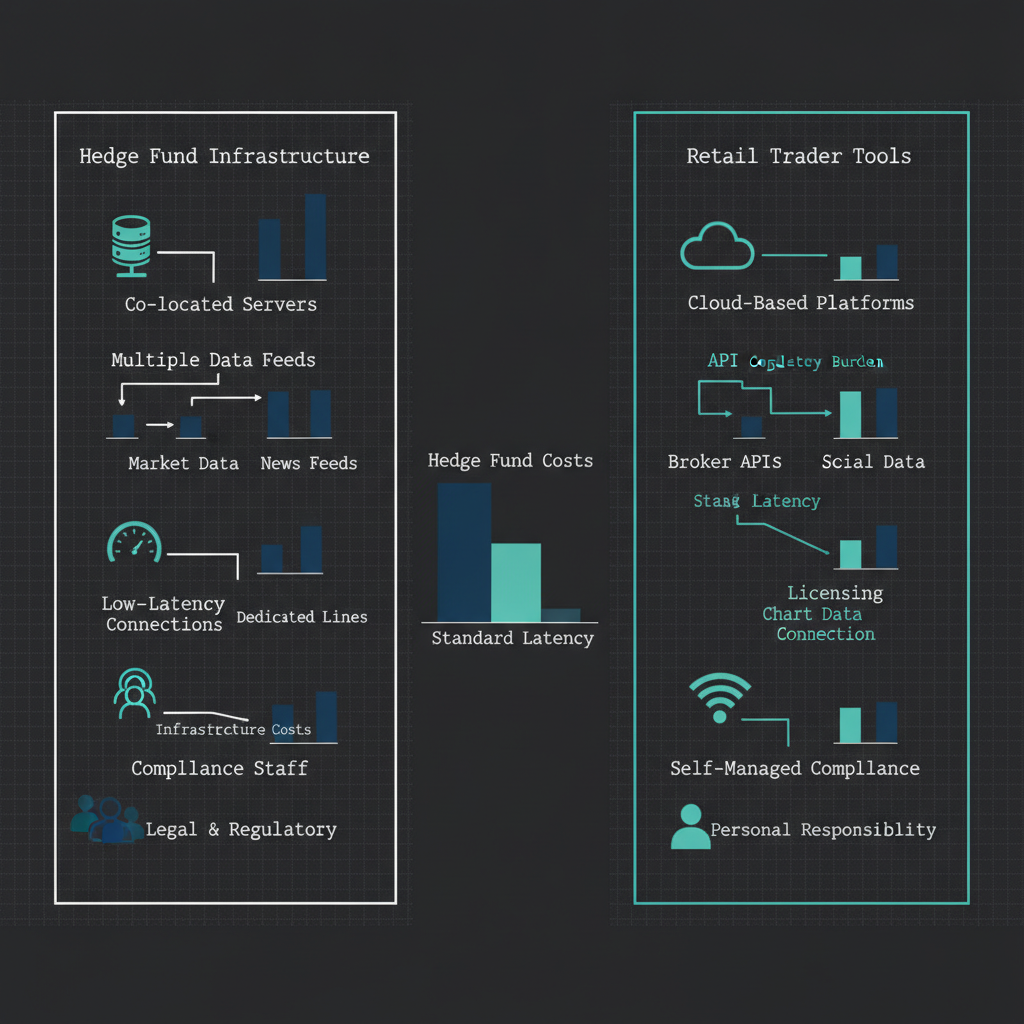
Algorithmic crypto trading in Australia is no longer the exclusive territory of hedge funds running co-located servers in Sydney data centres. I have watched this space shift considerably since 2022, and the tooling available to self-directed retail traders today is genuinely different from what existed even three years ago.
> TL;DR: Algorithmic crypto trading Australia is legal for retail traders managing their own accounts, but understanding your ASIC, AUSTRAC, and ATO obligations is not optional. This guide covers how algo trading actually works, which platforms suit Australian retail traders, what the real costs are (including tax drag from short-term CGT), and whether the effort is worth it for self-directed accounts.
What Algorithmic Crypto Trading Actually Means (And What It Does Not)
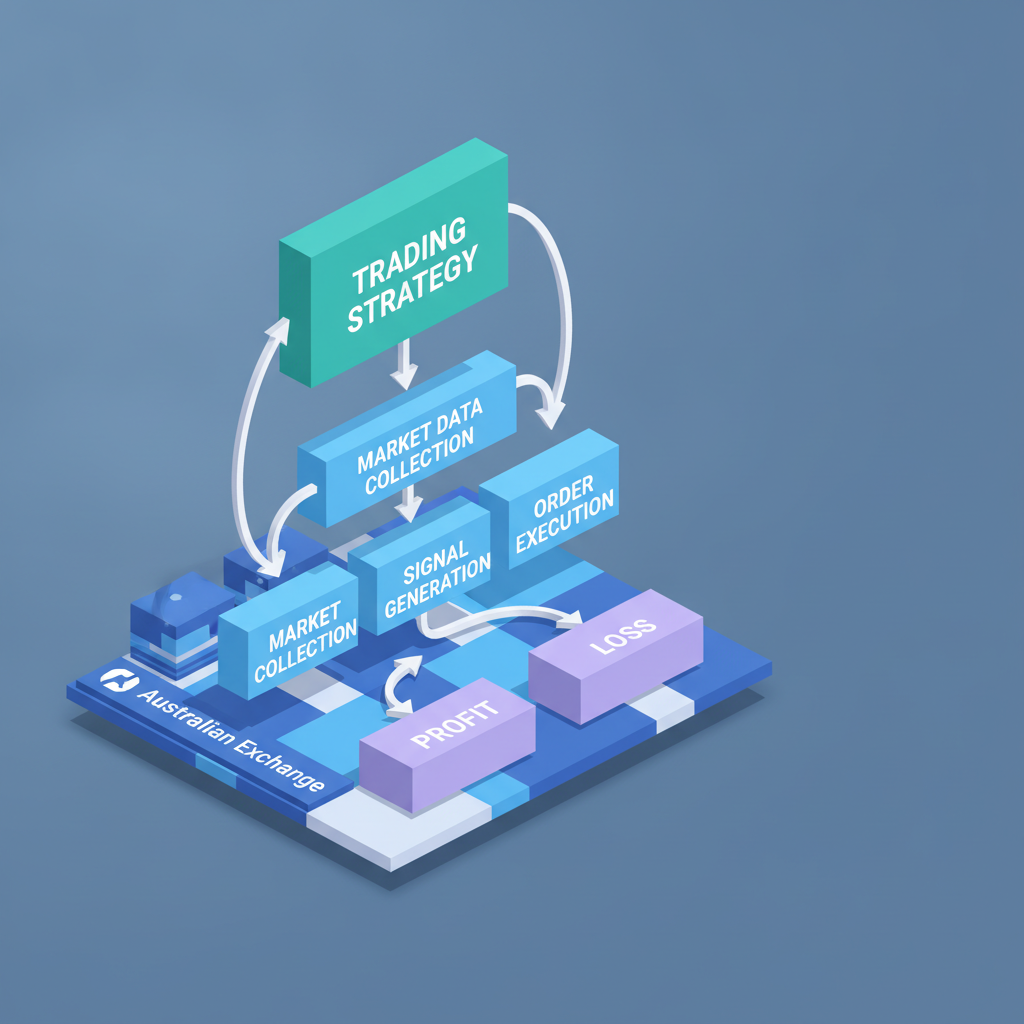
At its core, algorithmic trading is just a set of pre-programmed rules that execute trades automatically based on conditions you define. Those conditions might be price levels, volume thresholds, time intervals, or technical indicators like RSI crossovers or moving average signals. When the conditions are met, the bot places the order. You are not clicking a button.
The spectrum is wide. On one end, you have a simple DCA bot that buys $50 of Bitcoin every Monday regardless of price. On the other end, you have a custom Python strategy running on a VPS, pulling live order book data from an exchange API, backtesting against two years of tick data on QuantConnect, and executing in milliseconds. Both count as algorithmic trading.
Retail platforms like Cryptohopper, Bitsgap, and Freqtrade have genuinely closed the access gap. You do not need to write a single line of code to run a grid bot or a trailing stop strategy on Cryptohopper. Freqtrade requires more technical comfort, Python knowledge specifically, but it is open-source, well-documented, and costs nothing beyond your VPS hosting.
Two misconceptions come up constantly. The first is that algo trading is passive. It is not. Strategies drift, market regimes change, and a bot that worked well in a trending market will bleed in a range-bound one. Ongoing monitoring and periodic recalibration are part of the job. The second misconception is that automation equals profit. Automation means consistent, emotionless execution of a strategy. If the strategy is poor, the bot executes it poorly with great consistency.
There is also an important legal distinction worth flagging here before we go further. Running an algorithm on your own account is one thing entirely. Building and operating an algorithmic trading service that manages funds for other people is a completely different situation with serious ASIC implications, which the next section covers directly.
Is Algorithmic Crypto Trading Legal in Australia?
Yes, trading your own account algorithmically is legal in Australia. There is no licence requirement for self-directed activity. If you want to set up a grid bot on Swyftx or run a Freqtrade strategy on your own capital, you are operating within the law.
Where it gets complicated is the distinction between trading your own funds and providing an algo trading service to others. The moment you are managing or controlling third-party funds, executing trades on their behalf, or offering a managed strategy service, ASIC’s attention is warranted. This kind of activity typically triggers requirements under the Corporations Act for either an Australian Financial Services Licence (AFSL) or, depending on the structure, could be characterised as a managed investment scheme. Neither is a casual undertaking. If you are considering building something for other people’s money, get legal advice first.
For the retail trader using their own capital, the relevant regulatory touchpoint is AUSTRAC, and it applies to the exchanges you use, not directly to you. All crypto asset exchanges operating in Australia are required to be registered with AUSTRAC as digital currency exchange providers under anti-money laundering and counter-terrorism financing laws. This registration exists to ensure platforms have AML/CTF programs, know-your-customer procedures, and transaction monitoring in place.
As a trader, your practical obligation is to verify that any exchange you deposit funds with is AUSTRAC-registered before committing capital. An unregistered exchange operating in Australia is operating outside the law, and your consumer protections are essentially non-existent. CryptoAlgo.com.au publishes independent reviews of AUSTRAC-registered Australian crypto exchanges specifically to help traders confirm compliant platforms before signing up.
The regulatory environment is also not static. ASIC has been progressively tightening its position on crypto asset products, and the framework governing exchanges is expected to evolve as Treasury’s crypto asset licensing reforms move through Parliament. It is worth checking ASIC’s website periodically if you are running anything more sophisticated than a basic retail bot.
[INTERNAL LINK PLACEHOLDER: “AUSTRAC-registered Australian crypto exchanges” → AUSTRAC-registered-exchanges-guide]
ATO Tax Obligations for Australian Algo Crypto Traders
The ATO treats crypto as property and a CGT asset. This has been the ATO’s position since 2014 and it has not shifted. Every time you sell, trade one cryptocurrency for another, or convert to fiat, you trigger a CGT event. That includes bot trades. Each individual trade your algorithm executes is a separate CGT event.
For assets held fewer than 12 months, any capital gain is included in your assessable income and taxed at your marginal rate. At the $120,001 to $180,000 income bracket, that is 37 cents on the dollar plus the 2% Medicare levy. At $180,001 and above, it is 45 cents plus levy.
The 50% CGT discount applies when you hold an asset for at least 12 months before disposing of it. A bot that is actively trading, entering and exiting positions over hours or days, will almost never satisfy that threshold. You need to factor this into your return modelling before you start. A strategy that looks profitable on paper at a 15% marginal tax rate looks very different at 47%.
The 50% discount is also set to change. The 2026-2027 federal budget will replace it with an inflation-based discount and a minimum 30% tax floor, effective July 2027. The full details are still being worked through, but if your strategy does involve any longer-term holds, this is worth tracking closely.
Beyond CGT, there are income tax scenarios that catch people off guard. Staking rewards, yield farming returns, airdrops, and any activity that classifies you as carrying on a crypto trading business are all taxed as ordinary income in the year received, not as capital gains. The “trading business” classification is a grey area, but if you are running high-frequency strategies with significant capital and treating it as a commercial enterprise, the ATO may form that view.
One that trips people up unnecessarily: transferring crypto between wallets you own is not a taxable event. Moving BTC from your exchange wallet to a hardware wallet and back does not trigger CGT.
Record-keeping is non-negotiable. Every trade, timestamp, AUD value at time of transaction, and fee paid needs to be documented. For algo traders running hundreds or thousands of trades annually, doing this manually is not realistic. Koinly integrates with most Australian exchanges and major bot platforms via API and can automate the bulk of this work. It generates ATO-compliant reports and handles the cost basis calculations. I consider it a baseline requirement, not an optional extra.
For scenarios specific to trading bots, including how the ATO might treat automated strategies and wash-sale-adjacent activity, the CryptoAlgo article on Crypto Trading Bot Tax in Australia published June 23, 2026 goes into considerably more detail.
[INTERNAL LINK PLACEHOLDER: “automated crypto trading ATO tax” → crypto-trading-bot-tax-australia]
Which Platforms and Bots Are Best Suited to Australian Retail Algo Traders?
The honest answer is that your choice of platform depends heavily on how sophisticated your strategy is and how much time you want to invest in setup versus ongoing management.
Australian Exchanges With API Access
For most retail algo traders in Australia, the exchange is where the trades actually land, so API quality and AUD funding matter enormously.
Swyftx is the exchange I have been using since 2022 and it is one of the more straightforward options for Australians. AUSTRAC-registered, PayID deposits, a functional REST API, and a wide range of assets. The spread on BTC/AUD sits around 0.6% which is acceptable for lower-frequency strategies.
CoinSpot has strong brand recognition in Australia and is AUSTRAC-registered, but its API is less capable for automated trading than Swyftx or Kraken. The 1% instant buy fee is also a real cost for algo traders who need fast fills.
Kraken is the most technically capable of the three for algo work. It offers AUD deposits and withdrawals, a well-documented API with WebSocket support for real-time data, competitive maker fees (0.16% at the base tier), and it is AUSTRAC-registered. The interface is less beginner-friendly but the API reliability is consistently better.
Bot Platforms for Non-Developers
Cryptohopper is probably the most feature-complete no-code option for Australians. It supports DCA, trailing stop, grid, and AI-assisted strategies, plus copy trading if you want to mirror someone else’s configuration. It connects to Binance, Kraken, Coinbase, and others via API. Monthly subscriptions start around USD $19 for basic plans.
Bitsgap covers AI bots, a portfolio tracker, and a manual terminal in one interface. Its GRID and DCA bots are straightforward to configure and it has a paper trading mode which is genuinely useful before going live with real capital.
Tradetron sits between no-code and developer-grade. It offers prebuilt strategies you can deploy immediately, but also allows meaningful customisation. Integration with some exchanges is more limited than Cryptohopper, so confirm your preferred exchange is supported.
Developer Frameworks
Freqtrade is open-source, Python-based, and genuinely powerful. You write your strategy in Python, backtest it against historical data, then deploy it to a VPS. Monthly costs are whatever your VPS costs, typically AUD $5 to $20. The learning curve is real but the documentation is comprehensive and the community is active.
TradingView with Pine Script is the best environment for prototyping ideas quickly. You can write a strategy, backtest it visually, and run paper trades before committing capital. It does not execute live trades directly on most Australian exchanges without an intermediary webhook setup, but for testing and refining logic it is hard to beat.
For serious quantitative work, QuantConnect provides tick-level historical data across crypto, equities, FX, and futures. It is cloud-based, uses C# or Python, and is what you would use if you are building something genuinely systematic.
ASIC-Regulated Broker Options (Crypto CFDs)
If you want to trade crypto via CFDs rather than spot, two ASIC-regulated brokers worth knowing are Eightcap, which offers 95+ crypto CFDs with MT4/MT5 and TradingView integration, and Capital.com, which supports 100+ crypto CFDs with no commissions and an AI trading assistant built in. Note that CFDs have their own risk profile and tax treatment considerations.
Platform Comparison
| Platform | Type | AUD Support | API / Bot Support | Approx Monthly Cost | Best For |
|---|---|---|---|---|---|
| Swyftx | Spot Exchange | Yes (PayID) | REST API | Free (trade fees apply) | Australian retail, mid-frequency |
| CoinSpot | Spot Exchange | Yes (PayID, POLi) | Basic API | Free (trade fees apply) | Beginners, low-frequency |
| Kraken | Spot Exchange | Yes (bank transfer) | REST + WebSocket API | Free (trade fees apply) | Active traders, algo work |
| Cryptohopper | Bot Platform | Via exchange | Full automation | USD $19–$99 | No-code retail traders |
| Bitsgap | Bot Platform | Via exchange | Grid, DCA bots | USD $23–$119 | Grid and DCA strategies |
| Freqtrade | Developer Framework | Via exchange | Full Python API | AUD $5–$20 (VPS) | Python developers |
| TradingView | Charting + Pine Script | N/A | Backtesting, webhooks | Free–USD $59 | Strategy prototyping |
| QuantConnect | Quant Platform | N/A | Multi-asset, tick data | Free–USD $20+ | Serious quant work |
| Eightcap | CFD Broker | Yes | MT4/MT5, TradingView | Free (spread/commission) | Crypto CFD algo trading |
| Capital.com | CFD Broker | Yes | TradingView, MT4 | Free (spread) | CFD traders, AI tools |
Fees, Spreads, and Hidden Costs Australian Algo Traders Need to Know
Fee modelling before you start is not optional. I have seen traders backtest a strategy showing 15% annual returns and then discover the real-world fee stack cuts that to 4%, which after short-term CGT at their marginal rate is essentially nothing.
Exchange trading fees for Australian retail accounts typically sit between 0.1% and 1% per trade. Maker fees (where you add liquidity to the order book) are almost always lower than taker fees. Kraken’s base maker fee is 0.16%, its taker fee is 0.26%. At Swyftx, the trading spread is built in rather than a separate commission, sitting around 0.4% to 0.6% on major pairs.
Instant buy and swap functions carry higher costs. CoinSpot’s instant buy charges 1% flat. If your bot is using instant execution rather than limit orders, that cost compounds with every trade.
AUD deposit methods vary in cost. PayID and direct bank transfers are free on most Australian exchanges. Card deposits attract fees around 1.22% on platforms that support them. Cash deposits typically cost 2.5%, and PayPal deposits around 0.5% where available. For algo traders funding accounts regularly, PayID is the only sensible choice.
AUD withdrawal fees range from free at some exchanges to $25 per transaction at others. Check this before choosing your primary exchange, especially if you plan to withdraw profits regularly.
Crypto withdrawal fees (network fees, sometimes called gas) depend on the blockchain and current network congestion. On Ethereum, these can spike dramatically during busy periods. On Bitcoin, they are more predictable but not trivial. Factor this into any strategy that moves assets between exchanges or to cold storage.
Bitcoin spreads on major Australian exchanges in normal conditions run 0.1% to 0.8%. During high-volatility events, they widen materially, sometimes beyond 2%. If your strategy relies on tight spreads to be profitable, slippage during volatile conditions will hurt you.
Bot platform subscriptions add a fixed monthly cost on top of execution fees. Freqtrade is free if you self-host. Cryptohopper runs USD $19 to $99 per month depending on the plan. Bitsgap charges USD $23 to $119. These costs are real, recurring, and need to be covered by strategy returns before you are in profit.
The compounding effect is the thing most traders underestimate. At 0.5% per side in fees (1% round trip), a strategy that targets 1% net profit per trade is left with approximately nothing before tax. At a 47% marginal rate on short-term gains, you need gross returns well above what most backtests show just to break even. Model this honestly before going live.
[INTERNAL LINK PLACEHOLDER: “algo trading platforms Australian retail” → best-algo-trading-platforms-australia]
Which Australian Banks Are Crypto-Friendly for Funding Your Algo Setup?
Banking friction is one of those practical problems that does not show up in any platform review but causes real headaches. Some Australian banks block or restrict payments to crypto exchanges outright. Others let them through without issue.
From consistent community reports and my own experience, the banks that apply stricter controls on crypto payments include Commonwealth Bank (CBA), Bankwest, Macquarie Bank, Bank of Queensland (BOQ), and HSBC Australia.