Buying your first crypto in Australia is not complicated. But the exchange you choose for that first purchase matters more than most guides let on — not because you'll be locked in forever, but because the wrong starting point creates bad habits, hidden costs, and unnecessary confusion at a stage where you're already trying to learn something new.
Most "best exchange for beginners" articles treat the question as if beginners are a single type of person. They're not. Some people buying their first Bitcoin are cautious investors in their 40s who want to understand exactly what they're doing before committing $500. Others are 22-year-olds who just want to buy some SOL because a friend told them to, and they'll figure out the rest later.
Both are beginners. They need different things from their first exchange.
This guide covers the exchanges that work best for Australians who are genuinely new to crypto — with honest takes on where each one excels and where the trade-offs sit.
Quick answer:
- Best overall for beginners: Swyftx — the only major Australian exchange with a demo mode
- Easiest to get started: CoinSpot — simplest onboarding, widest coin selection
- Best to grow into: Kraken — beginner-friendly app now, professional tools when you're ready
What actually makes an exchange beginner-friendly?
Before getting into specific platforms, it helps to know what separates a genuinely beginner-friendly exchange from one that just has a clean homepage.
The things that matter most when you're starting out:
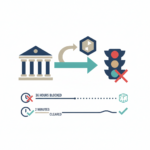
Easy AUD deposits. If you can't move Australian dollars onto the platform without jumping through hoops, the exchange has already failed the first test. PayID and bank transfer should work, they should be free or close to it, and the money should arrive quickly. Any exchange that makes you convert through USDT or use a third-party payment processor before you can buy Bitcoin is not a beginner exchange — it's a global platform that tolerates Australians.
A simple interface. When you first open the app or website, you should be able to figure out how to buy Bitcoin in under two minutes. If you're staring at candlestick charts, order books, and a dozen tabs you don't understand, the exchange was designed for someone else. Some platforms offer a "simple" mode alongside their advanced interface, and that works — as long as the simple mode isn't just the advanced one with fewer buttons.
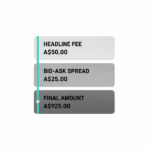
Transparent fees. Beginners almost always underestimate how much they're paying because exchanges love to hide real costs behind spreads. A platform that charges 0.6% but shows you the exact cost before you confirm is more honest than one advertising 0% fees while building a 1.5% spread into the price. This is one of the biggest traps for new buyers, and most guides gloss over it.
Demo or paper trading. Being able to practice buying and selling without risking real money is genuinely valuable for people who've never done this before. Very few Australian exchanges offer this. The one that does — Swyftx — gets extra credit for it.
Australian support. When something goes wrong (and eventually something will — a deposit doesn't arrive, a withdrawal gets delayed, you lock yourself out), you want to talk to someone in your timezone who understands Australian banking. This sounds minor until you actually need it.
AUSTRAC registration. Every exchange operating legally in Australia must be registered with AUSTRAC (the Australian Transaction Reports and Analysis Centre). This is the absolute baseline. If an exchange isn't registered, don't use it. Full stop.
Best overall for beginners: Swyftx
For most people buying crypto for the first time in Australia, Swyftx is the best place to start.
The single biggest reason is the demo mode. Swyftx is the only major Australian exchange that lets you practice trading with fake money before you put real dollars in. That might sound like a gimmick, but it genuinely helps. You can go through the full process — deposit, buy, sell, check your portfolio — without worrying about making an expensive mistake while you're still figuring out how things work.
Beyond the demo mode, the interface is clean without being oversimplified. The mobile app is well-designed. AUD deposits via PayID are free and usually arrive within minutes. There's an Auto Invest feature for setting up recurring buys (which is how most smart investors actually accumulate crypto over time), and the Learn & Earn section pays you small amounts of crypto for completing educational modules.
The coin selection is solid at 420+ assets, which is more than enough for any beginner. You're not going to run out of things to buy on Swyftx.
Where it's less ideal: Swyftx charges a 0.6% base fee on trades, and once you factor in the spread, your real cost per Bitcoin trade is closer to 1%. That's not outrageous for a beginner platform — convenience always costs something — but it means more active traders will eventually find better value elsewhere.
If you're buying $200 of Bitcoin a fortnight via Auto Invest, the fee difference between Swyftx and a cheaper platform is a couple of dollars. It only starts to matter at higher volumes or if you're trading frequently.
Best for: First-time buyers who want to learn before committing real money. Investors who value a clean interface and easy AUD access over chasing the absolute lowest fee.
Read our full Swyftx review.
Easiest to get started: CoinSpot
If your main priority is getting from "I've never bought crypto" to "I own some Bitcoin" with the least friction possible, CoinSpot is hard to beat.
CoinSpot has been operating in Australia since 2013, which makes it one of the longest-running local exchanges. It's verified over 3 million Australian users. The brand is familiar, the verification process is fast, and the whole experience is designed around making that first purchase feel as simple as buying something on eBay.
The coin selection is the widest in Australia at 540+ assets. That's not necessarily an advantage for beginners — nobody needs 540 coins on day one — but it means you won't hit a wall if you decide to explore beyond Bitcoin and Ethereum.
CoinSpot also has SMSF support and AFCA membership, which are relevant if you're thinking about crypto as a serious part of a longer-term investment strategy. AFCA membership means there's an independent complaints resolution process, which is a genuinely useful consumer protection that most other exchanges lack.
Where it's less ideal: The instant buy fee is 1%. That's the most common way beginners buy on CoinSpot, and it's steep. What CoinSpot doesn't make obvious to new users is that you can use the market order book instead, where fees drop to 0.1%. The problem is that the order book is tucked away behind the simple interface, and most beginners never find it.
This is my biggest criticism of CoinSpot for beginners: the platform is designed to be easy, but "easy" defaults to the most expensive way to buy. A truly beginner-friendly exchange would nudge new users toward the cheaper option once they've made their first couple of purchases. CoinSpot doesn't do that.
The interface also feels a bit dated compared to Swyftx. It works fine, but it doesn't have the polish that newer platforms have brought to the table.
Best for: People who want the absolute simplest path from zero to crypto ownership. Users who value familiarity and a long Australian track record.
Best to grow into: Kraken
Kraken is not the exchange I'd recommend if you've never touched crypto before and just want to buy your first $100 of Bitcoin this afternoon. For that, Swyftx or CoinSpot will feel easier.
But if you're someone who learns quickly, who'll probably move past the "just buying and holding" phase within a few months, and who doesn't want to switch platforms six months from now — Kraken is worth considering from the start.
The reason is that Kraken has a genuine two-tier experience. The standard Kraken app is genuinely beginner-friendly — simple buy/sell, clean portfolio view, straightforward onboarding. It doesn't overwhelm you with charts and order types. But underneath that is Kraken Pro, which gives you a professional trading environment with deeper order types, better fee tiers, and the kind of tools that active traders actually use.
That transition — from beginner mode to advanced mode on the same platform, with the same account, the same balances, the same verification — is something most other exchanges don't handle well. On CoinSpot, you kind of hit a ceiling. On Swyftx, the ceiling is higher but it's still there. On Kraken, the ceiling is very high.
The trade-off is that Kraken is a global platform first, Australian platform second. AUD support exists and works, but it doesn't feel as locally tailored as Swyftx. The instant buy fees on the Kraken app are also high — around 1.5% — so you'll want to move to Kraken Pro relatively quickly to get competitive rates (0.16% maker / 0.26% taker).
Best for: Beginners who know they'll become more active. People who don't want to outgrow their exchange within six months.
Comparison table
| Feature | Swyftx | CoinSpot | Kraken |
|---|---|---|---|
| Best for | Overall beginners | Simplest onboarding | Growing into advanced |
| Demo mode | ✅ Yes | ❌ No | ❌ No |
| Instant buy fee | ~0.6% + spread | 1% | ~1.5% |
| Cheapest trading option | 0.6% (tiered) | 0.1% (market orders) | 0.16%/0.26% (Pro) |
| Coins available | 420+ | 540+ | 420+ |
| Free AUD deposit | ✅ PayID | ✅ PayID | ✅ Bank transfer |
| Australian support | ✅ Live chat | ✅ 24/7 | ✅ (global team) |
| AUSTRAC registered | ✅ | ✅ | ✅ |
| Auto-invest / DCA | ✅ | ❌ | ✅ |
| Mobile app quality | Excellent | Good | Good |
For a deeper comparison of all major Australian exchanges including Bybit and Binance, see our full guide: Best Crypto Exchanges in Australia 2026.
Common beginner mistakes (and how to avoid them)
These are the mistakes I see new crypto buyers make most often. Every single one is avoidable.
Using instant buy for everything. Most exchanges have two ways to buy: an "instant buy" button (easy, expensive) and a market/limit order system (slightly less easy, much cheaper). The instant buy is fine for your first purchase while you're learning. After that, take ten minutes to figure out limit orders. On CoinSpot alone, the difference between instant buy (1%) and market orders (0.1%) saves you $9 on every $1,000 you invest.
Not enabling 2FA immediately. Two-factor authentication should be the very first thing you set up after creating your account — before you deposit a single dollar. Use an authenticator app (Google Authenticator, Authy), not SMS. SMS 2FA is better than nothing, but it's vulnerable to SIM-swap attacks, which are a real problem in Australia.
Investing more than you can afford to lose. Crypto is volatile. Bitcoin can drop 30% in a week. If that would cause you genuine financial stress, you've invested too much. A good rule: only invest money you wouldn't need for at least 2-3 years.
Ignoring tax obligations from day one. Every time you sell, trade, or swap crypto in Australia, it's a capital gains tax event. The ATO knows about your trades — exchanges report to them under CARF from 2026. Track everything from your very first transaction using a tool like Koinly. Sorting out two years of messy trading history later is genuinely painful. Read our complete crypto tax guide for the full breakdown.
Chasing pumps. If a coin is up 50% today and everyone on Twitter is talking about it, you're almost certainly too late to that trade. The people who made money bought before the hype. FOMO is the most expensive emotion in crypto.
Keeping large amounts on exchange long-term. Exchanges are convenient, but they're also targets. If you're holding more than you'd be comfortable losing, consider moving it to a hardware wallet (Ledger or Trezor). For small amounts you're actively trading, exchange storage is fine.
FAQ
What's the best exchange for a complete beginner in Australia?
Swyftx if you want to practice with a demo mode before using real money. CoinSpot if you just want the simplest possible path to buying crypto. Both are AUSTRAC-registered, support free AUD deposits via PayID, and have Australian support teams.
How much money do I need to start?
Most exchanges let you start with as little as $10–30 AUD. You don't need to buy a whole Bitcoin — you can buy a fraction. Starting small while you learn is smart, not timid.
Do I have to pay tax on crypto in Australia?
Yes. The ATO treats cryptocurrency as property. Selling, trading, or spending crypto triggers a capital gains tax event. If you hold for more than 12 months before selling, you get a 50% CGT discount. Start tracking from day one — see our crypto tax guide for the complete breakdown.
Can I use an overseas exchange like Binance?
You can, but local exchanges like Swyftx and CoinSpot are generally easier for Australians because AUD deposits and withdrawals are simpler. Binance is powerful but the local AUD experience can be less smooth. See our full exchange comparison for details.
What's the difference between a crypto exchange and a crypto wallet?
An exchange is where you buy and sell crypto. A wallet is where you store it. When you buy crypto on an exchange, the exchange holds it for you (like a bank holds your cash). A personal wallet (especially a hardware wallet) gives you direct control of your crypto. For beginners, exchange storage is fine for smaller amounts.
Should I start with Bitcoin or explore altcoins?
Starting with Bitcoin (BTC) and Ethereum (ETH) is the conventional advice, and it's conventional for a reason — they're the most established, most liquid, and least likely to go to zero. Once you understand how crypto works and have a feel for the volatility, you can explore altcoins with a portion of your portfolio. Putting your first $500 into a meme coin because someone on Reddit said it would 100x is a fast way to learn an expensive lesson.