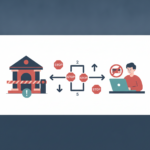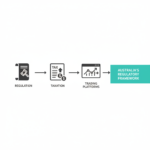
Nobody gets into crypto because they're excited about tax obligations. But if you buy, sell, trade, or earn crypto in Australia, you have them — and the consequences of ignoring them got significantly more serious in 2026.
This guide covers how crypto tax actually works in Australia, what triggers a tax event, how to calculate what you owe, and the tools that make compliance manageable. It's written for normal people who trade crypto, not for accountants. That said, it is educational content and not tax advice — everyone's situation is different, and for anything complex, you should talk to a qualified tax professional.
The reason this matters more now than it did a few years ago: CARF. From 1 January 2026, Australia participates in the Crypto-Asset Reporting Framework, which means exchanges are required to report your transaction data to the ATO regardless of the amount. From 2027, that data gets shared automatically between countries. The era of "they probably won't notice a few thousand dollars of trades" is genuinely over.
How the ATO treats cryptocurrency
The ATO's position is straightforward: all cryptocurrency is treated as property, not currency. This includes coins, tokens, stablecoins, NFTs, DeFi positions, wrapped tokens — all of it.
That means the same capital gains tax rules that apply to shares, investment properties, and other assets apply to your crypto. When you dispose of a crypto asset, you either make a capital gain or a capital loss. When you earn crypto (through staking, mining, or employment), it's treated as ordinary income.
The key word is "dispose." In tax terms, a disposal happens when you sell, swap, spend, or give away a crypto asset. Simply buying crypto with AUD or transferring it between your own wallets is not a disposal — though you still need to keep records of those transactions.
What triggers a tax event
These are the situations where you have a tax obligation:
Selling crypto for AUD. The most obvious one. You bought Bitcoin at $40,000, sold it at $60,000, you have a $20,000 capital gain (minus your cost base expenses).
Trading crypto for crypto. This is the one that catches most people off guard. Swapping ETH for SOL is a disposal of ETH. You need to calculate the AUD value of the ETH at the time of the swap. The same applies to converting any token to a stablecoin — swapping BTC to USDT is a taxable event, even though you haven't touched fiat currency.
Spending crypto on goods or services. Buying a coffee with Bitcoin is technically a disposal. If the BTC you spent is worth more now than when you bought it, you've made a capital gain on a cup of coffee. Yes, really.
Gifting crypto. Giving crypto to someone else is treated as a disposal at market value at the time of the gift. Both the giver and potentially the receiver may have tax implications.
What doesn't trigger a tax event
Buying crypto with AUD. No tax event when you purchase. But record the cost base — you'll need it when you eventually sell.
Holding crypto. Unrealised gains are not taxed. If your Bitcoin doubled in value but you haven't sold it, you don't owe anything yet.
Transferring between your own wallets. Moving crypto from your exchange to a hardware wallet, or between two exchanges you own, is not a disposal. But keep records — the ATO needs to see that both addresses belong to you. If you can't prove a transfer was between your own wallets, the ATO could treat it as a disposal.
How capital gains tax is calculated
The formula is simple in principle:
Capital gain = Disposal value (in AUD) − Cost base (in AUD)
Your cost base includes more than just the purchase price. It also covers transaction fees, exchange fees, gas fees, and any other costs directly related to acquiring or disposing of the asset. These costs reduce your taxable gain, so track them carefully.
Your net capital gain for the year gets added to your other assessable income and taxed at your marginal rate. In Australia, marginal tax rates range from 0% (up to $18,200) to 45% (above $190,000), plus the 2% Medicare levy.
This means the effective tax rate on your crypto gains depends on your total income. A student with no other income pays much less tax on the same crypto gain than someone earning $150,000 per year.
The 50% CGT discount — the most powerful tool for long-term holders
If you hold a crypto asset for more than 12 months before disposing of it, only half the capital gain is taxable. This is the 50% CGT discount, and it's one of the most significant tax advantages available to individual crypto investors in Australia.
The difference is substantial. Say you buy $10,000 of Bitcoin and sell it a year later for $20,000. Your capital gain is $10,000. Without the discount, the full $10,000 is added to your taxable income. With the 12-month discount, only $5,000 is added.
At a marginal tax rate of 37%, that's the difference between paying $3,700 in tax and paying $1,850. For larger gains, the savings compound dramatically.
The discount applies to individuals and trusts, but not companies. If you're trading through a company structure, you pay the full corporate tax rate on all gains regardless of holding period.
Practical implication: If you're close to the 12-month mark on a position you're planning to sell, it can be worth waiting a few extra days or weeks. The tax saving is real money.
Crypto income: staking, mining, airdrops, and DeFi
Not everything is a capital gain. Some crypto earnings are treated as ordinary income, which means they're taxed at your marginal rate with no 50% discount available.
Staking rewards are income. When you receive staking rewards, the AUD value at the time you receive them is added to your assessable income. Later, when you sell those rewards, you also face CGT — the cost base is the AUD value when you received them.
Mining income works the same way. If you mine crypto as a hobby, the rewards are income when received. If you mine as a business, different rules may apply around GST and deductions.
Airdrops are generally treated as ordinary income at the AUD market value when you receive them. If an airdrop is genuinely unsolicited and for tokens with zero market value at receipt, the position is less clear — but the safe approach is to declare it.
DeFi yield — whether from lending, liquidity provision, or farming — is treated as income. The complexity here is that DeFi transactions can be difficult to track, especially if you're interacting with multiple protocols. This is where a specialised tool like Koinly or Summ becomes essential.
CARF: what changed in 2026
The Crypto-Asset Reporting Framework is a global standard developed by the OECD, and Australia adopted it from 1 January 2026.
Under CARF, every crypto exchange and service provider operating in Australia is required to collect and report user transaction data to the ATO. This isn't limited to large transactions — it covers everything. From 2027, this data will be shared automatically between participating countries, which means offshore exchanges won't provide the privacy some users assumed they would.
The practical impact: the ATO now has a much more complete picture of your crypto activity than it did previously. Data-matching programs will flag discrepancies between what you report on your tax return and what exchanges have reported about you. If you've been lax about reporting, now is the time to get your records in order.
Record keeping requirements
The ATO requires you to keep records of every crypto transaction for at least five years. For each transaction, you need to record:
- The date of the transaction
- The AUD value at the time
- The purpose of the transaction
- The other party involved (if applicable)
- All fees and costs
- The cost base of the asset
The ATO's preferred cost allocation method is FIFO (first in, first out), meaning the first units of a crypto asset you bought are treated as the first ones you sell.
Doing this manually across multiple exchanges, DeFi protocols, and wallets is genuinely impractical for anyone making more than a handful of trades per year. This is why dedicated crypto tax software exists.
Best crypto tax tools for Australians
Koinly
Koinly is the most popular crypto tax tool globally, and it works well for Australians. It supports over 800 exchanges, 170 wallets, and 7,000 DeFi protocols. You connect your exchanges and wallets, Koinly imports your transactions, categorises them, and generates ATO-compliant tax reports.
The free tier lets you track up to 10,000 transactions, which is useful for seeing your portfolio in one place. Tax reports are pay-per-year, starting at approximately $69 AUD for the basic plan.
Koinly's strength is breadth. If you use multiple exchanges and a few DeFi protocols, Koinly will probably support all of them. The interface is clean, the categorisation is mostly automatic (with manual overrides where needed), and the ATO report format is accepted by tax agents.
Summ (formerly CryptoTaxCalculator)
Summ is Australian-made, which gives it a natural advantage for understanding Australian tax rules. It supports over 2,500 DeFi integrations and is an official partner of Coinbase and MetaMask.
Where Summ edges ahead of Koinly is complex DeFi. If you're deep into liquidity pools, yield farming, NFT trading, or multi-chain DeFi activity, Summ's transaction categorisation tends to be more granular.
The pricing is subscription-based rather than pay-per-year, which may or may not suit your situation depending on how often you need reports.
Which should you use?
For most Australians, Koinly is the better all-rounder — flexible pricing, broad exchange support, and a clean interface. If you have complex DeFi or NFT activity, Summ's deeper DeFi categorisation may be worth the subscription. Both offer free tiers, so try both and see which handles your specific transaction history better.
Capital losses: don't waste them
Capital losses can't be deducted from your ordinary income, but they can offset capital gains — either in the current year or carried forward to future years indefinitely.
This is important because a lot of people don't bother reporting losses. They shouldn't ignore them. If you sold a token at a loss, that loss has real value — it reduces the tax you owe on your gains.
Tax-loss harvesting is the practice of strategically realising losses before 30 June (the end of the Australian tax year) to reduce your overall CGT bill. If you hold a position that's significantly underwater, selling it before year-end crystalises the loss and lets you offset it against gains from other trades.
A word of caution: selling and immediately rebuying the same asset purely for tax purposes may be challenged by the ATO under anti-avoidance provisions. The rules here are less clear-cut than in some other jurisdictions, so if you're planning a significant tax-loss harvesting strategy, it's worth getting professional advice.
Common mistakes
Thinking crypto-to-crypto swaps aren't taxable. This is the most common mistake by far. Every swap, conversion, or trade between two crypto assets is a taxable event. Swapping ETH for SOL triggers CGT on the ETH, even though you never touched Australian dollars.
Not tracking from day one. Reconstructing two years of trading history across three exchanges and a DeFi wallet is genuinely painful. Set up Koinly or Summ when you create your first exchange account, not two years later at tax time.
Ignoring small transactions. Under CARF, the ATO has visibility into all transactions regardless of size. "It was only $50" is not a defence.
Not reporting losses. Capital losses are valuable. They offset current or future gains. If you sold at a loss and didn't report it, you're leaving tax savings on the table.
Assuming DeFi is invisible. On-chain transactions are permanent and public. The ATO has increasingly sophisticated tools for tracing DeFi activity. If you earned yield on Aave or traded on Uniswap, those transactions exist and can be matched to you.
FAQ
Do I pay tax just for holding crypto?
No. Holding does not trigger a tax event. You only owe tax when you dispose of crypto (sell, trade, spend, or gift).
What happens if I don't report?
The ATO data-matches with exchanges and now receives comprehensive data under CARF. Penalties for non-compliance range from 25% of the tax shortfall (lack of reasonable care) up to 75% (intentional disregard), plus interest. Voluntary disclosure typically reduces penalties — fixing it proactively is always better than waiting for the ATO to find the discrepancy.
Do I need an accountant?
For straightforward situations — buying on one or two exchanges, holding, and selling — a tool like Koinly can generate your ATO report directly. For complex situations involving DeFi, SMSF, business structures, or significant amounts, a tax professional who understands crypto is well worth the cost.
When do I need to file?
Crypto gains and losses are part of your annual tax return for the financial year ending 30 June. If you self-lodge, the deadline is 31 October. If you use a tax agent, you typically get an extension into the following year.
Does the 50% CGT discount apply to all crypto?
It applies to crypto assets held for more than 12 months by individuals and trusts. It does not apply to companies. It also does not apply to crypto earned as income (staking, mining, airdrops) — though the subsequent capital gain when you sell those earned tokens can qualify if you hold them for 12+ months after receiving them.
This content is for informational purposes only and does not constitute financial or tax advice. Consult a qualified tax professional for guidance specific to your situation. CryptoAlgo is not a registered tax agent.