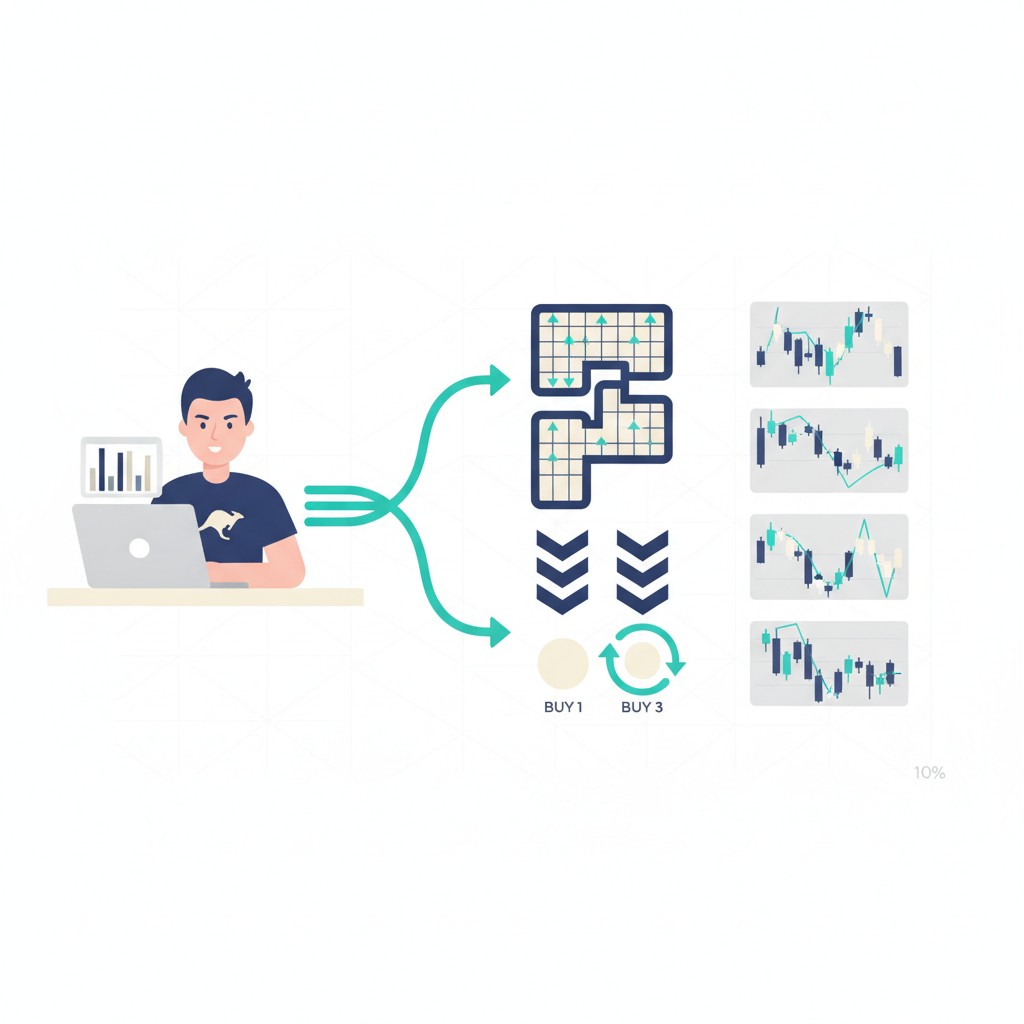
Algorithmic Crypto Trading Australia: What Every Self-Directed Retail Trader Needs to Know
Algorithmic crypto trading in Australia is no longer the exclusive territory of hedge funds running co-located servers in Sydney data centres. Retail traders are now running grid bots on Binance, automating DCA buys on Swyftx, and backtesting momentum strategies in TradingView Pine Script — all from a laptop. The tools exist, the exchanges support it, and the law permits it. What most people lack is a clear-eyed picture of where the legal lines sit, how the ATO treats every single bot-generated trade, and which strategies actually hold up outside of backtests.
This guide covers all of it.
> TL;DR
> Algorithmic crypto trading Australia is legal for retail traders managing their own accounts — no special licence required. You need no AFSL to automate your own trades, but AUSTRAC registration requirements, ATO tax obligations on every disposal, and the new Digital Assets Framework all shape how the exchanges you rely on operate. This guide covers the legal position, the 2026 regulatory changes, tax basics, and the main algo strategies — so you can automate confidently without stepping into grey zones.
What Is Algorithmic Crypto Trading and How Does It Work?
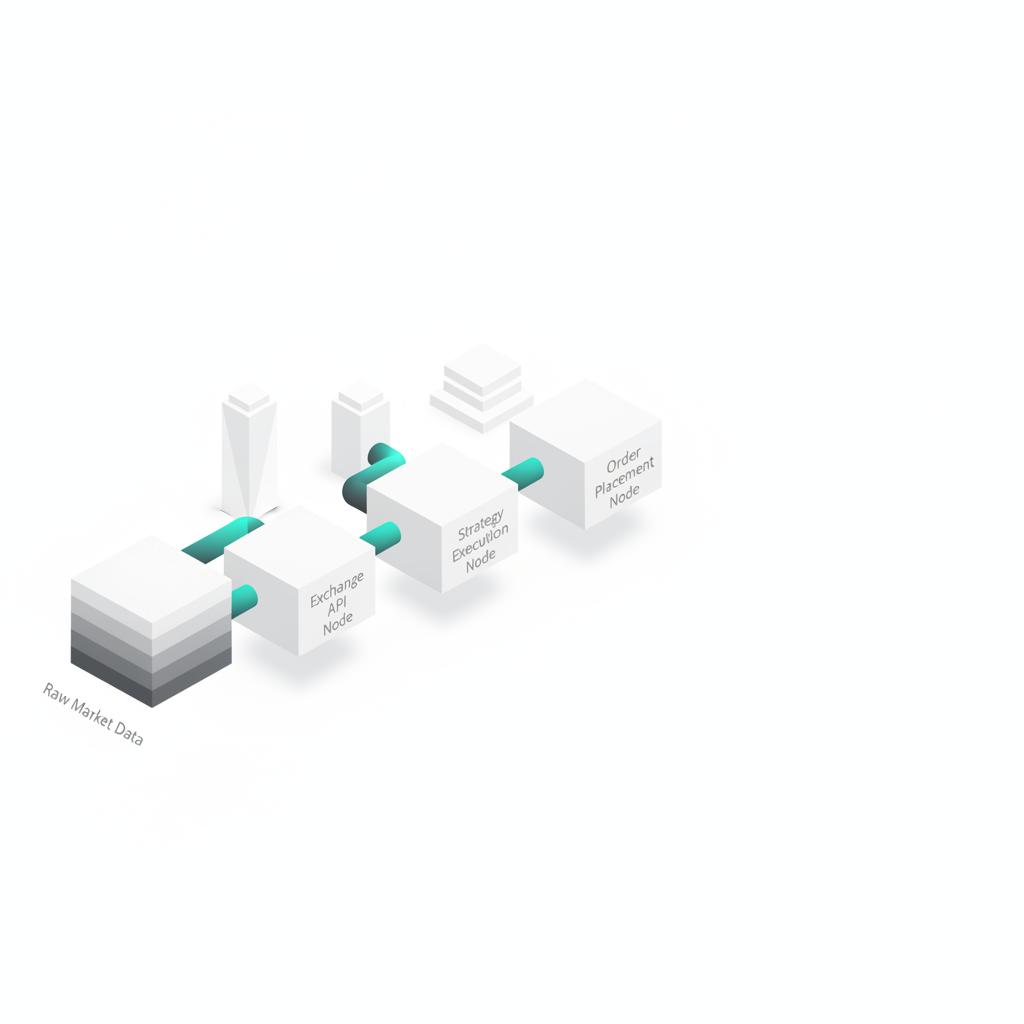
At its core, algo trading replaces a human clicking “buy” or “sell” with a set of pre-programmed rules that execute automatically. The bot doesn’t hesitate, doesn’t panic at 3am when BTC drops 8%, and doesn’t second-guess the strategy it’s been given. It just executes.
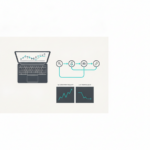
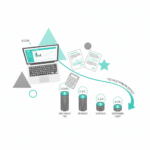
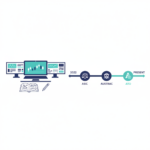
A functional algo trading setup has a few moving parts. First, you need strategy logic: the rules that define when to enter and exit a position. This might be as simple as “buy ETH every Monday at 9am with $50 AUD” or as complex as a multi-factor momentum model with dynamic position sizing. Second, you connect to an exchange via API — most Australian and international exchanges offer this. Third, there’s an order execution layer, whether that’s a third-party bot platform or your own code. Finally, risk management rules sit across all of it: maximum drawdown limits, position size caps, circuit breakers.
The appeal to retail traders is straightforward. Crypto markets run 24 hours a day, seven days a week. No human can monitor that consistently. Automation also strips out emotional decision-making, which is where most retail accounts bleed out. And before you commit real capital, you can backtest a strategy against historical price data to understand how it would have performed.
One distinction worth making early: semi-automated trading means a bot generates alerts or signals, but you manually confirm the order. Fully automated means the bot connects directly to the exchange via API and executes without your intervention. Both are legal for personal accounts. The strategies covered later in this guide — grid bots, DCA automation, momentum systems, arbitrage, and mean reversion — span both approaches depending on how you set them up.
Is Algorithmic Crypto Trading Legal in Australia?
Short answer: yes, if you are trading your own account.
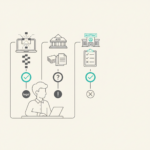
There is no legislation in Australia that prohibits a retail trader from using automated systems to manage their own crypto holdings. ASIC does not require you to hold an Australian Financial Services Licence to run a bot on your personal account. You are making decisions about your own capital, executing them automatically rather than manually. That distinction matters enormously.
The line shifts the moment other people’s money enters the picture. If you are running an algo that trades pooled capital from multiple investors, managing someone else’s portfolio, selling trading signals as a subscription service, or operating any structure where others participate in the returns, you are likely operating a managed investment scheme or providing a financial service. Both trigger ASIC licensing obligations. Getting that wrong is not a technicality — ASIC has shut down 95 firms in the crypto space as recently as April 2025.
The Corporations Amendment (Digital Assets Framework) Bill 2025, which received Royal Assent on 8 April 2026, extended the AFSL framework to Digital Asset Platforms (DAP) and Tokenised Custody Platforms (TCP). This covers exchanges, custodians, brokers, and tokenisation operators that handle client crypto. As a retail user of those platforms, you do not need an AFSL yourself. But the exchanges and infrastructure you trade on now do, which affects which platforms operate in Australia and how they structure their products.
The practical bright line: automating your own capital is fine. The moment you involve anyone else’s capital, get proper legal advice before you proceed.
[INTERNAL LINK PLACEHOLDER: “AFSL requirements for crypto” → ASIC and crypto licensing pillar]
AUSTRAC, ASIC, and the 2026 Regulatory Overhaul: What Changed
If you have been watching Australian crypto regulation, 2026 has been a significant year. Several changes came into effect in quick succession, and they affect which exchanges you can use, what data they collect from you, and how seriously ASIC treats the sector.
AUSTRAC’s Expanded VASP Scope
AUSTRAC’s expanded Virtual Asset Service Provider (VASP) registration requirements came into effect on 31 March 2026. Previously, AUSTRAC registration as a Digital Currency Exchange (DCE) covered businesses exchanging crypto for fiat. The expanded scope now captures crypto-to-crypto exchanges and custodial services as well. Any business operating in those categories that hadn’t already registered needed to enrol and register with AUSTRAC by 29 July 2026.
AUSTRAC registration is not permanent. It requires renewal every three years, with ongoing compliance checks in between. In late 2025 and early 2026, AUSTRAC ran what it called a “Use It or Lose It” blitz that removed 62 inactive businesses from the register, specifically to prevent dormant registrations being used as shells for money laundering. The AUSTRAC register is publicly searchable, and checking whether an exchange is currently registered before you connect your API is basic due diligence.
The Travel Rule
From 1 July 2026, Australia fully enforces the FATF Travel Rule for crypto transfers. This means AUSTRAC-registered exchanges must collect and share customer identifying information for every crypto transfer, with no minimum threshold. There is no “$1,000 and above” exemption. Every deposit and withdrawal triggers this requirement. In practice, you will notice exchanges requiring more detailed identity verification for withdrawal addresses you haven’t used before, and some will require you to confirm the destination wallet belongs to you.
The Digital Assets Framework
The Digital Assets Framework, via the Corporations Amendment (Digital Assets Framework) Bill 2025, is the most structurally significant change. ASIC’s AFSL now extends to Digital Asset Platforms and Tokenised Custody Platforms. Exchanges, brokers, and custodians operating in Australia need to hold or apply for an AFSL under this framework. This brings major Australian exchanges closer in line with the regulatory requirements already applied to traditional financial services businesses.
One case worth watching is Poulton v Conrad, which was before the High Court as of June 2026. It examines whether Bitcoin is legally considered property under Australian law. The outcome has direct implications for how crypto is taxed and what legal protections apply when something goes wrong, such as an exchange insolvency or theft. No ruling has been handed down as of the time of writing.
[INTERNAL LINK PLACEHOLDER: “AUSTRAC registered exchanges” → AUSTRAC exchange comparison page]
How Crypto Algorithmic Trading Is Taxed in Australia
This is the part most traders underestimate, particularly when they start running automated strategies.
Every Trade Is a Taxable Event
The ATO treats crypto as property. Each time you dispose of one asset, whether you are selling BTC for AUD or trading ETH for SOL, it is a capital gains tax (CGT) event. Algo-generated trades are not exempt from this. If your grid bot executes 400 trades in a week, each of those trades is potentially a taxable disposal. The fact that a computer made the trade, not you personally, changes nothing from the ATO’s perspective.
The 50% CGT discount applies if you hold an asset for more than 12 months before disposing of it. Most algorithmic strategies, grid bots in particular, cycle through positions in hours or days. That discount rarely applies. What you are left with is short-term capital gains taxed at your marginal income tax rate.
Business Income vs CGT
Traders operating at high frequency, or who derive their primary income from trading, may be classified by the ATO as carrying on a business. If that classification applies, your profits are treated as ordinary income rather than capital gains, which removes the CGT discount entirely but allows you to deduct trading-related expenses. The ATO looks at factors like the volume of activity, the commercial nature of the operation, and whether it is conducted in a businesslike manner. There is no hard numerical threshold, but running an aggressive grid bot strategy generating hundreds of trades per day puts you in territory worth discussing with a registered tax agent.
Tracking the Trades
This is where automated trading creates a genuine operational headache. Cost-base tracking is required for every disposal. The ATO permits FIFO (first in, first out) and other consistent methods. The word “consistent” matters: you cannot switch methods to optimise a particular year’s outcome.
For practical tracking, tools like Koinly, CoinTracking, and CryptoTaxCalculator are the ones I have seen work well for Australian traders. They import exchange CSVs or connect via API and auto-generate ATO-compatible reports. Manual spreadsheet tracking for a grid bot running on multiple pairs is not realistic once you pass a certain volume.
The ATO’s data-matching program receives transaction data directly from Australian exchanges. Assuming your trading history won’t surface is not a strategy. Swyftx, CoinSpot, and other AUSTRAC-registered Australian platforms report to the ATO. If your records don’t match what the exchange reports, expect a query.
This section is general information, not tax advice. Talk to a registered tax agent with crypto experience before lodging, especially if you are running high-frequency strategies.
[INTERNAL LINK PLACEHOLDER: “crypto tax Australia ATO” → crypto tax guide pillar]
The Main Types of Algorithmic Crypto Trading Strategies
Understanding the mechanics of each strategy type matters before you pick a platform and connect an API. Different strategies suit different market conditions, capital levels, and technical skill sets.
Grid Bots
A grid bot places a series of buy orders below the current price and sell orders above it, at regular intervals. When the price oscillates within the range, it repeatedly buys low and sells slightly higher, accumulating small profits on each oscillation. The strategy is capital-efficient in sideways or ranging markets and genuinely earns its keep when BTC spends weeks grinding between two price levels.
The trap is a strong trending market moving outside your grid range. If BTC breaks upward through the top of your grid, you have sold all your position too early. If it breaks downward through the bottom, you are holding a full bag at a loss. Grid bots need active range management, which partly undermines the “set and forget” appeal.
DCA Automation
Dollar-cost averaging automation is the most accessible entry point for most traders. You configure a bot to buy a fixed AUD amount of a chosen asset at regular intervals regardless of price. $100 of ETH every Tuesday at 10am, for example. This reduces timing risk and requires no market analysis. Platforms like Swyftx have built-in recurring buy features that handle this without needing a third-party bot at all.
DCA automation doesn’t maximise returns in strongly trending markets, but it is hard to catastrophically misuse, which makes it suitable for traders who are still building confidence with automated systems.
Momentum and Trend-Following
Momentum strategies enter positions when price crosses a defined threshold, typically a moving average crossover, a breakout above resistance, or an RSI level. The logic is that assets in motion tend to stay in motion. These strategies perform well in clean trending markets and struggle badly in choppy, sideways conditions where false signals generate repeated small losses.
TradingView Pine Script is the standard tool for building and backtesting momentum strategies before deploying them via webhook to an exchange. QuantConnect suits traders comfortable with Python who want more rigorous statistical backtesting.
Arbitrage
Arbitrage exploits price differences between exchanges or trading pairs. If BTC/AUD trades at $102,000 on one exchange and $102,350 on another simultaneously, a bot can buy on the cheaper exchange and sell on the more expensive one. The profit margin is thin and the execution window is measured in milliseconds. For retail traders, exchange fees, withdrawal times, and network latency eat most of the theoretical edge. Pure cross-exchange arbitrage is genuinely difficult at the retail level.
Triangular arbitrage within a single exchange, exploiting temporary pricing inefficiencies between three trading pairs, is more accessible but still requires low latency and careful fee calculation.
Market-Making and Mean Reversion
Market-making involves posting simultaneous buy and sell limit orders to capture the bid-ask spread. Hummingbot specialises in this approach and is the tool most commonly used by retail traders attempting it. The risk is inventory risk: if the market moves sharply in one direction, your posted orders fill on the wrong side and you accumulate a losing position. It requires a solid understanding of the mechanics before real capital goes in.
Mean reversion strategies bet that price returns to a statistical mean after deviating from it. RSI-based bots are the most common implementation: buy when RSI drops below 30, sell when it recovers above 70. These work in range-bound conditions and fail badly during sustained trends, for the same reason grid bots struggle: the mean keeps moving.
A Note on Backtesting
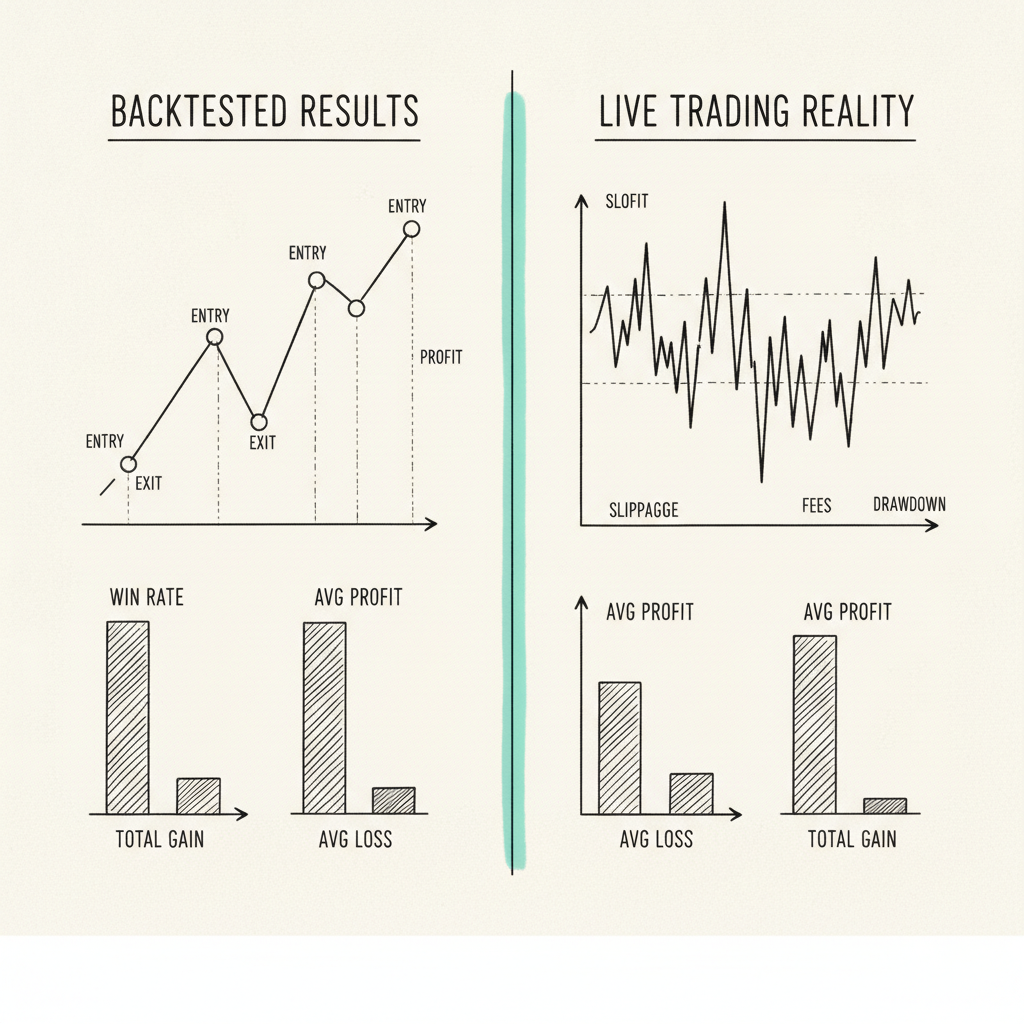
Every strategy above can look excellent in a backtest and perform poorly in live markets. The specific risk in algo trading is curve-fitting: optimising parameters so heavily to past data that the strategy has essentially memorised history rather than identified a genuine pattern. If your backtest shows 94% win rate across 2021-2024 data, be suspicious. Test across multiple market regimes including bear markets, use out-of-sample data you haven’t touched during development, and start with small capital or paper trading before going live.
[INTERNAL LINK PLACEHOLDER: “backtesting crypto strategies Australia” → backtesting guide]
FAQ
Is algorithmic crypto trading legal in Australia for retail traders?
Yes. Trading your own account using automated systems requires no AFSL or special licence in Australia. The legal obligations begin when you trade others’ capital or provide financial services to third parties.
Do I need to know how to code to use algorithmic trading in Australia?
No. Platforms like Cryptohopper and the built-in bot tools on some exchanges require no coding. That said, coding ability in Python or Pine Script significantly expands what you can build and test, particularly for anything beyond grid or DCA strategies.
How much capital do I need to start algorithmic crypto trading in Australia?
There is no regulatory minimum. Practically, grid bots and DCA bots can run on a few hundred AUD, though fees will eat a larger percentage of small accounts. More sophisticated strategies benefit from larger capital buffers.
How are crypto trading bots taxed in Australia?
Each trade executed by a bot that disposes of a crypto asset is a CGT event under current ATO guidance. Short-term trades (held less than 12 months) are taxed at your marginal rate. High-frequency traders may be classified as carrying on a business, with profits treated as ordinary income. Use specialised crypto tax software and speak to a registered tax agent.
What are the best exchanges in Australia for algorithmic trading?
Exchanges with API access and good AUD on-ramps are the core requirement. Swyftx, Kraken, and Binance are the most commonly used by Australian algo traders. Check AUSTRAC registration before connecting any API.
How do I track tax on hundreds of algo-generated trades?
Use software like Koinly or CryptoTaxCalculator. Both connect to Australian exchanges via API and generate ATO-compatible CGT reports. Manual tracking at volume is not realistic.
What is the Travel Rule and how does it affect me as a retail trader?
From 1 July 2026, AUSTRAC-registered exchanges must collect and share identifying information on every crypto transfer, with no minimum threshold. For retail traders this means more verification steps when withdrawing to external wallets.
What happened with the AUSTRAC “Use It or Lose It” blitz?
In late 2025 and early 2026, AUSTRAC removed 62 inactive registered businesses from the crypto register to prevent dormant registrations being misused. It’s a reminder to verify exchange registration status is current, not just that a registration existed at some point.