Crypto Algo Trading in Australia 2026: Strategies, Risks & Legitimate Platforms
Crypto algo trading in Australia has moved well past the hobbyist phase. Retail traders are now running Cryptohopper bots against Kraken APIs, backtesting mean-reversion strategies on historical BTC/AUD data, and arguing about RSI parameters in Discord servers at 11pm on a Tuesday. This is not theoretical anymore.
> TL;DR: Crypto algo trading in Australia uses pre-programmed rules to execute trades automatically, without you sitting at a screen. It offers speed and emotion-free execution but carries serious risks if poorly managed or conducted via unregulated platforms. Legitimate platforms must be AUSTRAC-registered and potentially ASIC-licensed by June 2026. This guide covers how it works, common strategies, scam red flags, tax obligations, and where to trade safely.
What Is Crypto Algo Trading in Australia?
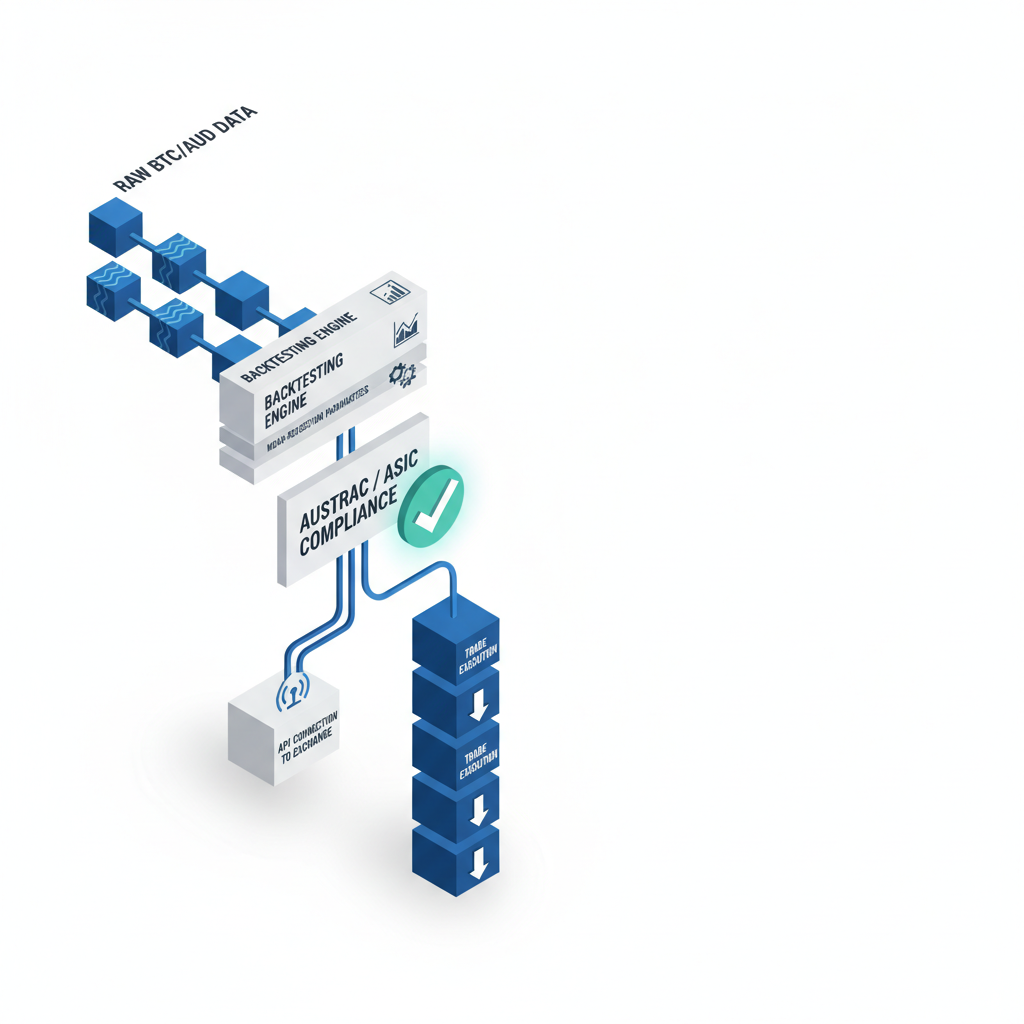
Crypto algo trading in Australia refers to using pre-programmed instructions, based on price, volume, technical signals, or timing conditions, to automatically execute buy and sell orders on cryptocurrency markets. The algorithm does the watching. You define the rules.
The appeal is straightforward. Crypto markets run 24 hours a day, seven days a week, including Christmas and the long weekend. No human trader can monitor price action continuously without making costly, emotional mistakes. A well-configured algorithm does not panic-sell at 3am. It executes exactly what you told it to execute.
Australian traders are increasingly running bots via platforms like Cryptohopper, or using built-in automated features on exchanges such as Kraken and KuCoin. Even simpler tools, like recurring buy orders or price alerts on Swyftx, qualify as semi-automated trading. There is a meaningful difference between a fully autonomous algo system that monitors RSI divergences and executes trades in milliseconds, and a scheduled weekly BTC purchase. Both are “automated” in a loose sense, but they carry very different risk profiles and require very different setup skills.
One clarification worth making early: CryptoAlgo.com.au is this site, a review and education platform for Australian crypto traders. A separate entity called “Crypto Algorithm” operating at cryptoalgorithm.net has been flagged as a scam with no ASIC authorisation. They are not the same. More on that below.
How Crypto Algorithmic Trading Works: The Basics
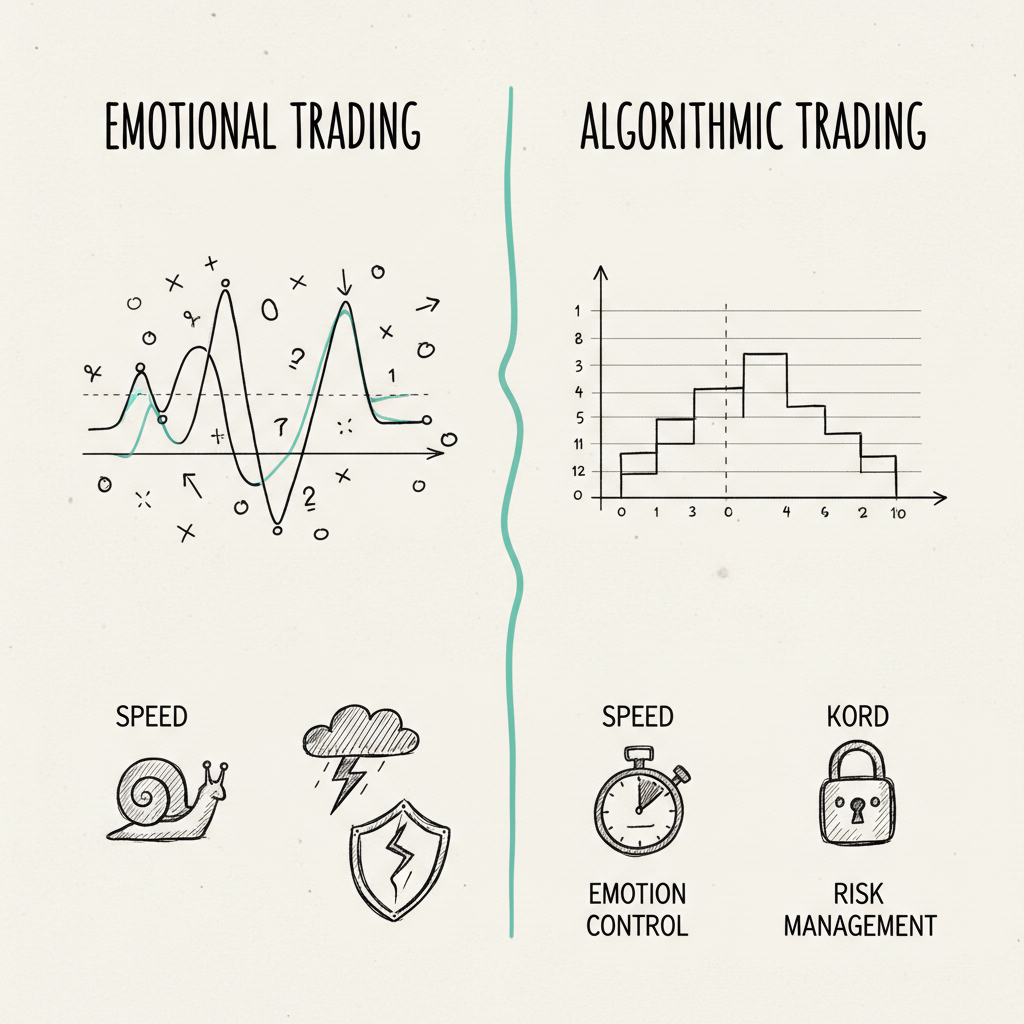
At its core, an algorithm monitors live market data and triggers orders when predefined conditions are met. Think of it as an “if/then” ruleset: if BTC/AUD drops 3% in an hour and RSI falls below 30, buy $500 worth. The bot reads the data feed, detects the condition, and fires the order, all faster than any human could click.
To do this, the bot connects to an exchange via an API (Application Programming Interface). Most major exchanges accessible to Australians, including Kraken, KuCoin, Coinbase, and BTC Markets, offer API access. You generate an API key in your exchange account, paste it into your bot platform, and the bot can place, modify, or cancel orders on your behalf. You should only grant the minimum permissions needed, typically trade-only access, never withdrawal permissions.
The inputs that drive most crypto algo strategies are technical indicators: RSI (Relative Strength Index), MACD (Moving Average Convergence Divergence), Bollinger Bands, volume thresholds, and time-based conditions. Platforms like Cryptohopper let you combine these into trigger conditions without writing a single line of code.
Before running anything live, backtesting is essential. You feed the algorithm historical OHLCV (open, high, low, close, volume) data and simulate how the strategy would have performed. It will not guarantee future results, but it will expose obvious flaws. Swyftx offers a demo trading mode, which is worth using before committing real AUD. Paper trading in a simulated environment costs nothing and can save you from discovering basic errors with real capital on the line.
One practical reality: latency matters. If your bot is hosted on a server in Sydney and your exchange’s matching engine is in New York, there is inherent delay. For long-term trend strategies, this is irrelevant. For high-frequency approaches, it can eat into every trade.
6 Common Crypto Algo Trading Strategies Used in Australia
Most retail algo traders in Australia are running one of a small set of well-established strategies. Here is how they actually work.
Trend-Following
This is the most common starting point. The algorithm identifies upward price momentum, typically confirmed by a moving average crossover or ADX reading, and enters a long position. When the momentum reverses, it exits. It sounds simple because it is, which is also why it gets oversimplified. A trend-following bot needs well-calibrated stop-losses or it will ride a reversal straight into the ground. Suitable for beginners who understand position sizing.
Arbitrage
Arbitrage exploits price differences for the same asset across different exchanges. BTC/AUD might be priced at $145,200 on CoinSpot and $145,450 on Kraken at the same moment. Buy low, sell high, pocket the difference. In practice, the gap is often smaller than it looks once you account for trading fees, withdrawal fees, and transfer time. True cross-exchange arbitrage at retail scale is difficult. Statistical arbitrage between correlated pairs (ETH and BTC, for example) is more accessible.
Mean Reversion
Mean reversion strategies assume that prices oscillate around a long-run average. When price moves significantly above or below that average, the algo takes a position expecting a return to the mean. Bollinger Bands are a common input here. This works reasonably well in ranging markets and falls apart in strong trends. Not beginner-friendly; you need to understand when markets are ranging versus trending, or the strategy trades against itself.
Momentum Trading
Similar to trend-following but focused on the rate of change rather than direction per se. If ETH has moved up 8% in the last four hours and acceleration is increasing, a momentum bot enters long. These strategies can be profitable in volatile markets but are vulnerable to sharp reversals and false breakouts, both of which are common in crypto.
Market Making
The algorithm places simultaneous buy orders below the current price and sell orders above it, profiting from the spread between them. It requires deep order book liquidity and very low fees. At 0.6% on Swyftx’s BTC/AUD spread, market making at retail level is not viable. This is primarily an institutional or high-volume strategy on exchanges with maker rebates.
High-Frequency Trading (HFT)
Thousands of trades per second, co-located servers, direct exchange connections. HFT is not a retail strategy. It requires infrastructure costs that make it uneconomical for individual Australian traders. If someone is selling you an “HFT bot” for $299 a month, they are selling you the idea of HFT, not the reality of it.
For beginners, trend-following and basic DCA (dollar-cost averaging) automation are the most appropriate starting points. Arbitrage, mean reversion, and momentum strategies suit traders who understand technical analysis and have completed rigorous backtesting. Market making and HFT are institutional territory.
Risks of Crypto Algo Trading Every Australian Should Know
Automation does not make trading safe. It makes trading faster, which means it can also make losses faster.
Poor risk management is the central issue. An algo with no stop-loss, or one configured with a stop-loss that is too wide, can blow through significant capital in a short volatile session. The bot will execute exactly what you programmed, including the mistakes.
Overfitting during backtesting is a trap that catches a lot of first-time algo traders. You tweak parameters until the historical results look extraordinary, then deploy the strategy live and watch it underperform. Historical data is finite and known; live markets are not. If a strategy only works when optimised to a specific historical period, it is not a strategy, it is curve-fitting.
API key security is a real concern. Your API key, if compromised, gives a third party the ability to trade your account. Use keys with trade-only permissions, rotate them regularly, and never paste them into browser extensions or unverified platforms. [INTERNAL LINK PLACEHOLDER: “API security for crypto traders” → exchange security pillar]
Exchange downtime and API errors happen. During periods of extreme volatility, exchanges sometimes throttle or drop API connections. If your bot is mid-position when the connection drops, it may not be able to close the trade. Know what your bot does when it loses its feed.
Flash crashes deserve specific mention. In May 2021, LUNA lost 99% of its value in 72 hours. Bots running mean-reversion strategies on LUNA would have kept buying the dip, all the way down. Crypto flash crashes can trigger cascading stop-losses and runaway bot activity that amplifies the drawdown.
Finally, automation does not protect you from running your bot on a fraudulent platform. Verifying the legitimacy of any platform before connecting your exchange API is not optional.
Scam Warning: ‘Crypto Algorithm’ and Unregulated Platforms
There is a platform operating under the name “Crypto Algorithm” at cryptoalgorithm.net. It has been identified as an unregulated forex and crypto broker with no record of authorisation from ASIC or any other recognised financial regulator. This platform is completely separate from CryptoAlgo.com.au. The similar naming appears to be deliberate.
The tactics used by unregulated platforms like this are consistent: promises of guaranteed or abnormally high returns, pressure to deposit quickly before an “opportunity closes,” and then significant delays or outright refusal when you attempt to withdraw. ASIC removed 615 crypto scam websites in the 12 months leading up to August 2024, which gives you a sense of the volume of this activity.
Identifying a scam platform before you connect your wallet or transfer AUD is straightforward if you know what to check. First, look up the platform on ASIC’s professional register at moneysmart.gov.au. Second, check AUSTRAC’s public VASP register, which as of April 2026 is searchable and publicly accessible. Third, check ASIC’s MoneySmart warning list directly.
Red flags to take seriously: the platform is not on either register, it has no verifiable physical Australian address, it uses celebrity endorsements (often fabricated), it contacted you unsolicited, or it is promising returns that sound better than any legitimate investment vehicle. No legitimate crypto algo platform guarantees returns. Markets do not work that way, and any platform claiming otherwise is lying.
If you believe you have already sent money to a scam, report it immediately to ASIC via asic.gov.au, to the ACCC’s Scamwatch at scamwatch.gov.au, and to your bank. Contact your bank first if you made a fiat transfer; they sometimes have fraud recovery processes that are time-sensitive.
ASIC and AUSTRAC: The Australian Regulatory Framework for Algo Trading
Two regulators matter here, and they cover different things.
AUSTRAC handles anti-money laundering and counter-terrorism financing compliance. Any business that provides digital currency exchange services in Australia must be registered with AUSTRAC under the AML/CTF Act. In April 2026, AUSTRAC renamed digital currency exchange (DCE) providers to Virtual Asset Service Providers (VASPs), updated its registration framework, and published a searchable public register. Operating without registration is a criminal offence, full stop. The register is public, and checking it takes about 90 seconds.
ASIC regulates crypto when it involves financial products or financial services. This is where it gets more complex. Many crypto platforms have been operating in a regulatory grey area, but ASIC’s Information Sheet 225 (INFO 225) makes clear that a significant number of digital asset services do fall under Australian financial services law. The practical upshot: many exchanges and algo platforms will need an Australian Financial Services Licence (AFSL) by 30 June 2026 or face enforcement action. In its Key Issues Outlook 2026, ASIC specifically flagged unlicensed activity and misleading conduct in digital assets as priority risks.
For Australian traders using offshore algo platforms, including international bot services or exchanges not registered locally, be aware that these platforms may not meet Australian regulatory standards. If something goes wrong, your recourse is limited. Australian-registered platforms with AUSTRAC registration at minimum offer a layer of accountability.
The broader regulatory environment is also being shaped by industry pressure. Coinbase formally complained to the Australian parliament in early 2026 about major banks systematically “debanking” legitimate crypto companies. Commonwealth Bank has a $10,000 monthly cap on transfers to crypto exchanges. Westpac and Macquarie officially restrict or do not support crypto exchange deposits. These banking limitations are a practical constraint for Australian algo traders managing capital flows.
[INTERNAL LINK PLACEHOLDER: “AUSTRAC VASP register guide” → regulatory compliance pillar]
Tax Obligations for Australian Crypto Algo Traders
The ATO’s position on crypto has been consistent for several years: cryptocurrency is property and a Capital Gains Tax asset. Every trade is a taxable event. That means every time your bot executes a sell order, whether it is converting BTC to AUD or swapping ETH for USDT, a CGT event occurs.
For algo traders specifically, the volume of transactions creates a genuine tax record-keeping burden. A bot running 50 trades a day generates 18,000+ taxable events a year. You will need automated crypto tax software, CoinLedger, Koinly, and CryptoTaxCalculator all support Australian tax rules and ATO report formats.
The 50% CGT discount for assets held longer than 12 months does not apply to assets sold by a high-frequency bot. If the ATO classifies you as a “crypto trader” rather than an investor, because your activity is frequent, systematic, and profit-focused, your gains are taxed as ordinary income rather than capital gains. This can significantly increase your tax liability. The distinction between investor and trader is based on the nature and volume of your activity, not a box you tick.
Bot traders should also be aware that wash trading (selling an asset at a loss and immediately rebuying it to crystallise a tax loss) is not a recognised tax strategy under Australian law. The ATO’s data matching program receives information directly from Australian exchanges, so there is no grey area here.
[INTERNAL LINK PLACEHOLDER: “Crypto tax Australia guide” → tax pillar]
Platforms for Crypto Algo Trading Available to Australians
Here is a practical comparison of platforms and tools relevant to Australian algo traders as of mid-2026.
| Platform | Type | AUSTRAC Registered | API Access | Algo/Bot Support | AUD Deposits | Notes |
|---|---|---|---|---|---|---|
| Swyftx | Australian exchange | Yes | Yes | Via third-party bots | Yes (PayID, bank transfer) | Demo mode available; 0.1–0.6% fees |
| Kraken | Global exchange | Yes | Yes | Yes, robust API | Yes | Good for advanced traders; low maker fees |
| CoinSpot | Australian exchange | Yes | Yes | Limited | Yes | Beginner-friendly; 0.1% market orders |
| KuCoin | Global exchange | Yes | Yes | Yes, native bot tools | Yes | Wide altcoin selection; 0.1% base fees |
| BTC Markets | Australian exchange | Yes | Yes | Yes | Yes | SMSF-suitable; established platform |
| Independent Reserve | Australian exchange | Yes | Yes | Yes | Yes | SMSF accounts; recurring buys |
| Cryptohopper | Bot platform | N/A | Connects via API | Yes, full suite | N/A | Not an exchange; connects to exchanges |
| Crypto.com | Global exchange | Yes | Yes | Limited native | Yes | Better for active traders on desktop |
Cryptohopper deserves a specific mention for Australian algo traders. It connects to most major exchanges via API and supports strategy building, backtesting, paper trading, DCA bots, market-making bots, and social trading (copying another trader’s strategy). It is not free: plans range from a basic free tier to paid tiers for more advanced features. It is the most accessible dedicated algo platform for retail traders in Australia without requiring coding knowledge.
For Australian traders who want exchange-native tools, KuCoin’s built-in trading bot interface supports grid bots and DCA bots directly without a third-party platform. Kraken’s advanced order types and deep liquidity make it well-suited for more sophisticated strategies.