Crypto Algo Trading Australia 2026: The Complete Guide
Crypto algo trading in Australia has shifted from a niche pursuit for developers and quant traders into something retail investors are actively asking about, especially now that the regulatory ground has changed substantially under their feet. If you want to run automated strategies in this market without getting caught out by new AFSL requirements, ATO record-keeping rules, or a bank block at the worst possible moment, you need to understand how all the pieces fit together.
> TL;DR
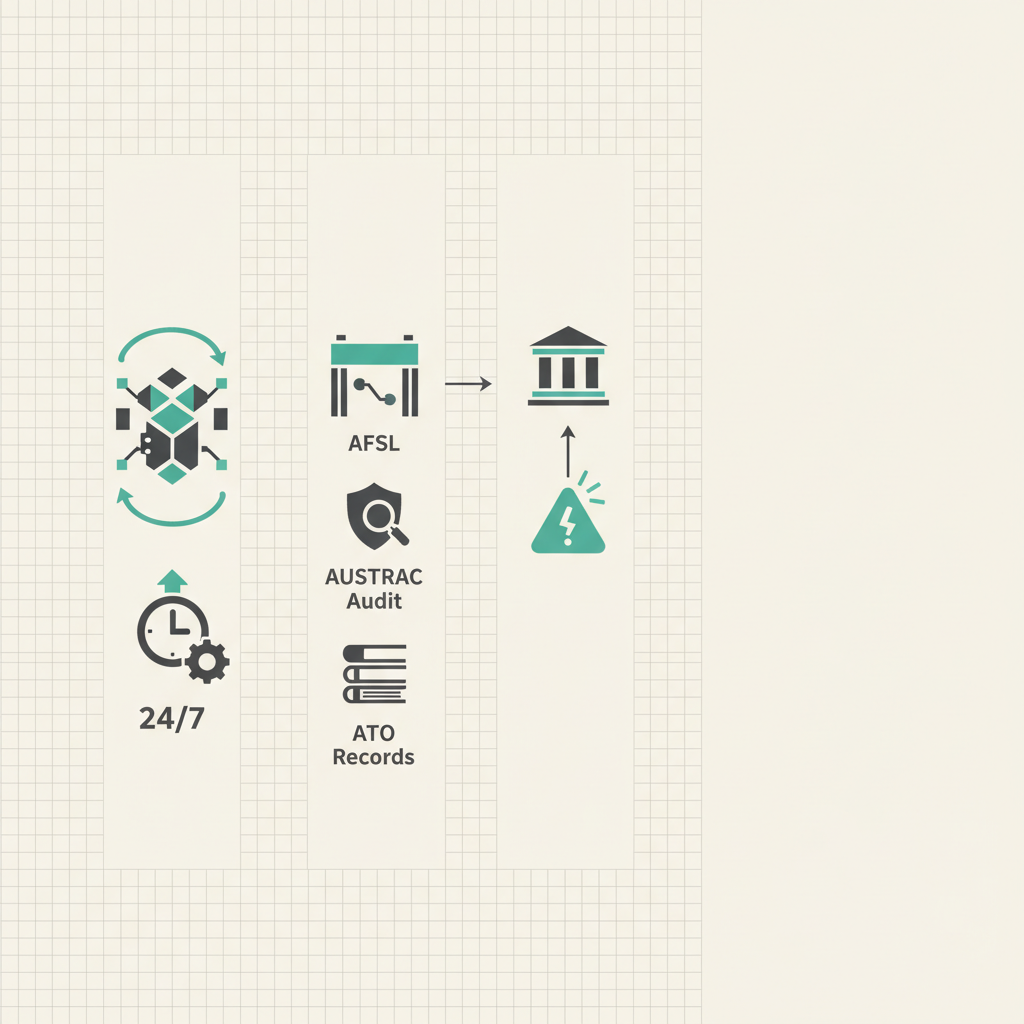
> Crypto algo trading Australia relies on automated strategies that execute trades 24/7 without emotional interference. In 2026, new AFSL licensing laws and expanded AUSTRAC obligations mean choosing a compliant platform matters more than ever. The ATO taxes crypto as property, CGT applies to most trades, and trading fees typically run between 0.1% and 1% per trade.
What Is Crypto Algo Trading in Australia?
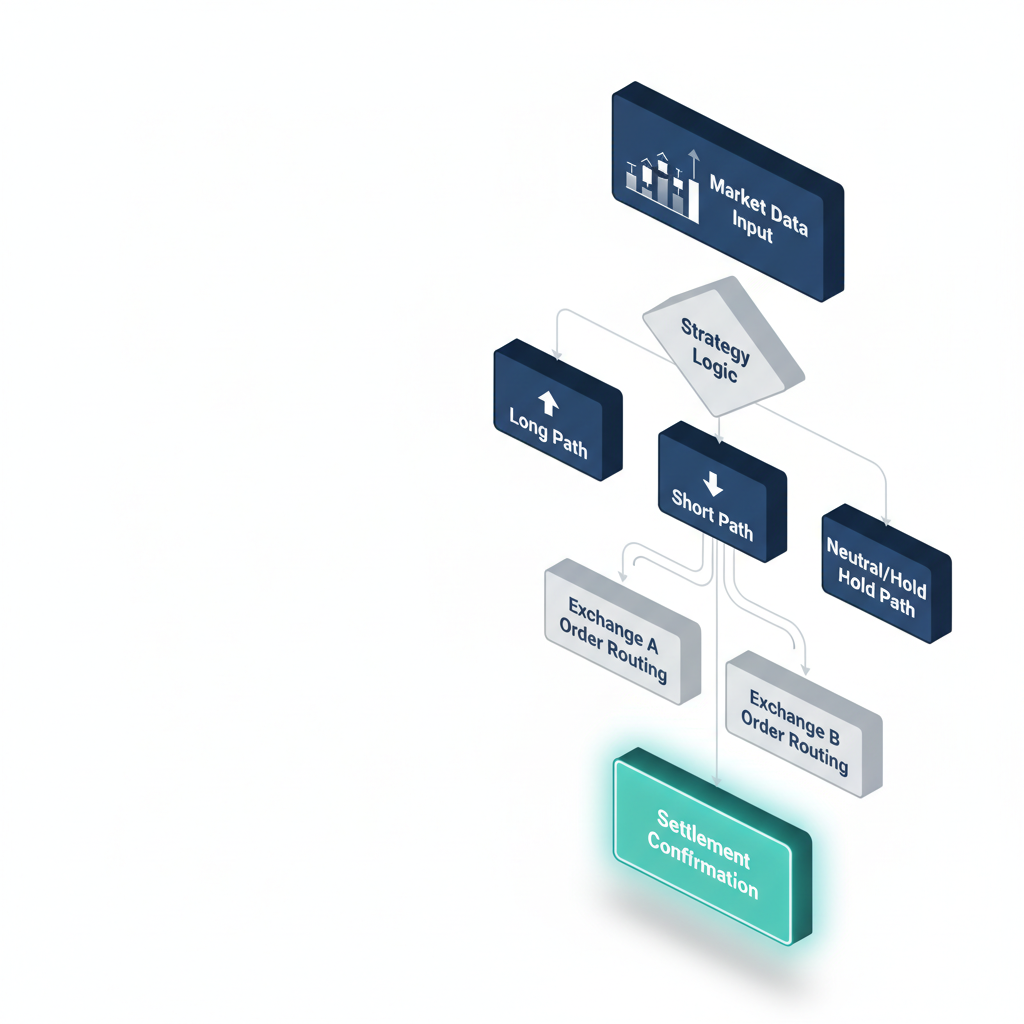
Crypto algo trading in Australia means using software to execute buy and sell orders automatically, based on pre-programmed rules rather than a human clicking a button. The algorithm watches the market, checks conditions, and places trades in milliseconds. You define the logic; the bot does the work.
Where this differs fundamentally from manual trading is in three areas: speed, consistency, and emotional distance. A human trader watching BTC drop 8% in twenty minutes will hesitate, second-guess, or panic. An algorithm doesn’t. It executes exactly what it was told to do, every time, at whatever hour the price move happens.
That last point matters a lot in crypto. Markets run around the clock, seven days a week, which is genuinely inconvenient if you’re in Sydney and the major price action happens at 3am when New York opens. Algorithms handle that problem by default.
The main strategy types you’ll encounter in the Australian market are trend-following, arbitrage, mean reversion, momentum, market making, and high-frequency trading (HFT). Each suits different risk profiles and capital levels, and I’ll cover them in detail below.
Australian platforms used for algorithmic trading still sit under ASIC and AUSTRAC oversight. The regulatory picture changed significantly on 1 April 2026, which affects which platforms you can legally and safely use.
Key Benefits of Algorithmic Crypto Trading for Australians
The most immediate benefit is execution speed. In a volatile crypto market, the price you see and the price you get can differ substantially if you’re placing orders manually. Algorithms execute in milliseconds, which matters especially for arbitrage and momentum strategies where the edge evaporates quickly.
Beyond speed, the emotional argument is real. Greed and fear cause more losses in retail trading than most people are willing to admit. An algorithm doesn’t hold a losing position because it “feels like it’ll come back.” It executes the rules you set when your head was clear.
For Australians specifically, the 24/7 angle is significant. A large share of meaningful crypto price action occurs during US trading hours, which runs overnight from an east coast perspective. Running automated crypto trading means your strategy participates in those moves without you setting an alarm.
Consistency is underrated. Most retail traders can’t replicate the same decision logic across a hundred trades, because mood, fatigue, and recency bias all intrude. A well-designed bot executes identically on trade 347 as it did on trade one.
Backtesting is another genuine advantage. Before committing real capital, you can run your strategy against historical data to see how it would have performed. It’s not a guarantee of future results, but it’s far better than guessing. Most platforms supporting API trading or grid bots include some version of this.
The combination of these factors means algorithmic approaches can give retail traders a real edge over purely manual methods, particularly in the data-rich, high-volatility environment of crypto markets.
How Crypto Algo Trading Strategies Work
Trend-Following
The simplest approach and the most widely used. The algorithm identifies that price is moving in a sustained direction and enters a trade aligned with that movement. Buys when the trend is up, sells short or exits when it reverses. Common indicators used include moving averages, MACD, and RSI crossovers. It works well in strong trending markets and poorly in sideways, choppy conditions.
Arbitrage
Arbitrage exploits price differences for the same asset across different exchanges. If BTC is trading at $97,200 on one platform and $97,450 on another simultaneously, the algorithm buys on the cheaper side and sells on the more expensive one. In practice, fees, transfer times, and slippage eat into these gaps quickly, so true arbitrage in 2026 requires fast infrastructure and low-fee execution. It’s less accessible for retail algo traders than it was in 2017 when exchange price gaps were wider.
Mean Reversion
The strategy assumes that when an asset moves sharply away from its historical average, it will eventually return to that average. The algorithm enters trades against the recent move. It works in range-bound markets but can be devastating in strong trends, where the price just keeps moving further from the mean.
Momentum and Grid Bots
Momentum strategies enter when price movement is accelerating, betting the move continues. Grid bots are the most retail-accessible version of automated trading, setting buy orders below current price and sell orders above it in a structured grid. As price oscillates within the range, the bot repeatedly buys low and sells high in small increments. They’re popular on platforms like Binance and work well in sideways-to-volatile markets, less well when price breaks sharply out of range.
Market Making and HFT
Market making involves simultaneously placing buy and sell orders, profiting from the spread between them. High-frequency trading takes this to extremes, executing thousands of trades per second. Both require infrastructure most retail traders can’t access, including co-location near exchange servers and very low per-trade fees. For Australian retail traders, these categories are effectively off the table without institutional-grade setup.
The practical takeaway: most Australian retail traders are best served by trend-following algorithms or grid bots as an entry point. Arbitrage and momentum strategies become more viable once you understand fee structures and exchange latency.
Australian Crypto Regulations in 2026: ASIC, AUSTRAC and the New AFSL Law
The April 2026 Digital Asset Law
Australia’s first complete digital asset legislation came into effect on 1 April 2026. The headline requirement is straightforward: all crypto exchanges and custody providers operating in Australia must obtain an Australian Financial Services Licence (AFSL) within six months of the law’s passage. This brings crypto exchanges under the same licensing regime as stockbrokers and fund managers.
For algo traders, this matters because platforms you connect to via API, run bots on, or deposit funds into need to be AFSL-compliant. Using an unlicensed platform isn’t just a regulatory risk for the operator; it creates practical risk for you if that platform gets shut down mid-strategy.
ASIC’s Role
ASIC oversees crypto assets classified as financial products. Its enforcement record through 2025 and into 2026 illustrates that it’s prepared to act. The liquidation of NGS Crypto is the clearest recent example. In December 2025, a Federal Court ordered the liquidation of NGS Crypto and associated companies for operating without a licence. Investors had placed $40.2 million into the scheme; only a fraction was recovered. This wasn’t an edge case. It was a foreseeable outcome of using an unlicensed platform.
ASIC’s posture heading into the AFSL transition period is active, not passive. If a platform can’t show you its AFSL number or AFSL application status, that’s a serious flag.
AUSTRAC and AML/CTF Requirements
AUSTRAC regulates Digital Currency Exchanges under the AML/CTF Act 2006. The March 2026 expansion of obligations means any business providing virtual asset services in Australia must be fully registered with AUSTRAC and compliant with its reporting requirements.
The Binance fine in March 2026 is the most instructive recent enforcement action. Australia fined Binance $6.9 million over client misclassification issues. The fine was for compliance failures, not fraud, which illustrates that even large, globally known exchanges aren’t immune from local enforcement.
The DAEX collapse in January 2026, which took AUDX Australia and GlobalOne Exchange into voluntary liquidation, is the more cautionary tale for retail traders. Users lost access to funds on an unregulated platform. Automated strategies don’t protect you from that kind of counterparty risk.
What to Look For
When evaluating any platform for algorithmic crypto trading, check the AUSTRAC public register for DCE registration and, from October 2026 onward, check ASIC’s AFSL register for licensing status. Platforms like Swyftx and CoinSpot have maintained AUSTRAC registration and are navigating the AFSL transition. I have been using Swyftx since 2022 and they’ve been transparent about their regulatory compliance status.
For algo traders specifically, automated systems can trigger AML flags, particularly if they involve frequent transfers between exchanges or high-volume activity patterns. Using a compliant, registered platform that has proper KYC on file is your best protection against having accounts suspended mid-strategy.
Crypto Tax in Australia 2026: CGT, Income Tax and Algo Trading
How the ATO Sees Crypto
The ATO treats cryptocurrency as property, not currency. That classification has been consistent since 2014 and hasn’t changed with the 2026 legislation. The practical effect is that most crypto disposals trigger CGT, and crypto received as income is taxed as income.
A CGT event occurs when you sell crypto for AUD, swap one crypto for another (yes, even trading ETH for SOL is a taxable disposal), or use crypto to pay for goods or services. Moving crypto between wallets you own is generally not taxable, provided you remain the beneficial owner and aren’t converting to another asset in the process.
The 50% Discount and Why Algo Traders Usually Miss It
Individuals who hold a crypto asset for more than 12 months are entitled to a 50% CGT discount on gains made when they dispose of it. This is one of the most valuable tax concessions available to Australian crypto investors.
The problem for automated crypto trading strategies is that they generate short-term trades by design. A grid bot cycling through hundreds of BTC/AUD trades in a week creates hundreds of disposal events, none of which qualify for the discount. High-frequency strategies can create thousands of taxable events in a single year, all taxed at the full marginal rate.
If you’re using algo trading but also holding a longer-term position, keep the two buckets clearly separated. Your long-term holdings should be in a different wallet or account from whatever the bot is trading.
Income Tax on Staking and Airdrops
Staking rewards are taxed as ordinary income at the time you receive them, based on the AUD value at that moment. You then have a cost base for those coins, so if you later sell them, CGT applies to the gain from the value when you received them. Certain airdrops follow the same logic, depending on whether they meet the criteria for ordinary income treatment.
Crypto received as payment for services or employment is also taxed as income. If you’re getting paid in crypto, the AUD equivalent on the date of receipt is what the ATO wants to see on your return.
Deductions and Record-Keeping
Trading expenses can be deductible if you’re operating as a business rather than an investor. Platform fees, trading bot subscription costs, data feed costs, and relevant software subscriptions may all be deductible. The distinction between investor and trader matters here and isn’t always straightforward; it depends on the scale, frequency, and commercial nature of your activity.
Every transaction needs to be recorded with: date, AUD value at the time of the transaction, quantity of crypto, exchange used, and the nature of the transaction (buy, sell, swap, reward). For algo traders running hundreds of transactions per month, doing this manually is not realistic. Tools like Koinly, CoinTracking, and CryptoTaxCalculator all integrate with Australian exchanges via API and can pull transaction histories automatically.
The ATO’s data-matching program pulls data directly from exchanges operating in Australia. The ATO knows what you bought and sold. The question is whether your records match theirs accurately enough to support your CGT calculations.
One note here: crypto tax in Australia is genuinely complex at the intersection of business vs. investor status, staking, and high-frequency trading. Always consult a registered tax agent with actual crypto experience before lodging, not just a general accountant who’s seen a few Bitcoin transactions.
Banking Restrictions on Crypto in Australia: What Algo Traders Need to Know
The Debanking Problem
Australia’s Big Four banks have been tightening their grip on crypto-related transfers for several years, and as of early 2026, the situation is still frustrating for retail traders. CBA and ANZ cap transfers to crypto exchanges at roughly $10,000 per month. Westpac and NAB have applied similar restrictions, and in some cases outright rejections on transfers to specific platforms.
In February 2026, Coinbase publicly accused Australia’s Big Four banks of what it described as an “unlawful regulatory ban” on crypto. The company characterised debanking as a “systemic feature” of the Australian financial system, not an isolated issue. The banks’ stated reasoning centres on AML compliance and scam prevention obligations, though the practical effect falls heavily on legitimate users.
Impact on Automated Trading
For automated crypto trading, this creates a specific operational problem. Many algorithmic strategies work best when you can fund your exchange account regularly, withdraw profits on a schedule, or move capital between exchanges as opportunities arise. A $10,000 monthly cap makes that difficult if your strategy is running at any meaningful scale.
A bot that executes flawlessly but can’t receive new AUD deposits because your bank flagged the transfer is a bot that can’t compound. And if your bank blocks a transfer during a market opportunity, you won’t find out until after the fact.
Practical Workarounds
The most reliable approach is to use PayID, OSKO, or POLi where exchanges support them, since these are routed differently to standard bank transfers and face fewer restrictions in practice. Choosing exchanges that support multiple AUD deposit methods reduces the risk of being blocked at the only entry point.
Some traders maintain accounts with smaller neobanks or fintech-friendly institutions alongside their main bank account, specifically for crypto-related transfers. Pre-funding exchange accounts in advance of running strategies, rather than making frequent small deposits, also reduces the number of transfer events that can trigger bank flags.
The good news is that as Australia’s AFSL licensing regime matures, the legal standing of compliant crypto exchanges improves. Whether banks voluntarily ease restrictions in response to clearer regulation remains to be seen. The political pressure is building, but don’t plan your 2026 trading strategy around banks suddenly becoming crypto-friendly.
Choosing a Platform for Crypto Algo Trading in Australia
Not every Australian exchange supports algorithmic trading at the same level. A few things to check before connecting a bot.
First, API access. Does the exchange offer a full REST and WebSocket API, and is that API documented clearly enough to build or configure a strategy around? Binance has the most extensive API support available to Australian users, though the 2026 fine and ongoing AUSTRAC compliance issues mean you should watch the regulatory situation closely. Swyftx offers API access and has been adding features steadily. CoinSpot is strong for Australian retail trading but its API functionality is more limited for algo purposes.
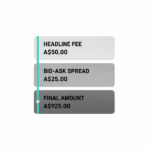
Second, fee structure. At 0.1% maker fees on the low end and 1% spreads on the higher end, fees compound fast when an algorithm is generating hundreds of trades. For context, a grid bot running 200 trades per month at a 0.5% fee per side means you’re paying 1% per round trip on every trade. Know your numbers before you run.
Third, AUSTRAC and AFSL status. As covered above, use the public registers. A platform without verifiable compliance status isn’t worth the operational risk, regardless of how good its API is.
[INTERNAL LINK PLACEHOLDER: “best Australian crypto exchanges” → crypto-exchanges-australia-pillar]
Comparison: Algo Trading Platforms Available to Australians
| Platform | AUSTRAC Registered | API Access | Maker Fee | AUD Deposit Methods | Notes |
|---|---|---|---|---|---|
| Swyftx | Yes | Yes | 0.6% spread | PayID, bank transfer | Strong AUD focus, AFSL transition underway |
| CoinSpot | Yes | Limited | 0.1% (market orders) | PayID, BPAY, cash | Limited algo/API capability |
| Binance | Yes | Full | 0.1% maker | PayID, bank transfer | Best API, watch compliance status closely |
| Coinbase | Yes | Yes | 0.4–0.6% | Bank transfer | Less competitive for AUD pairs |
| Independent Reserve | Yes | Yes |
0.1–