Cryptocurrency Australia: How Crypto Is Regulated, Taxed, and Traded — A Complete Guide
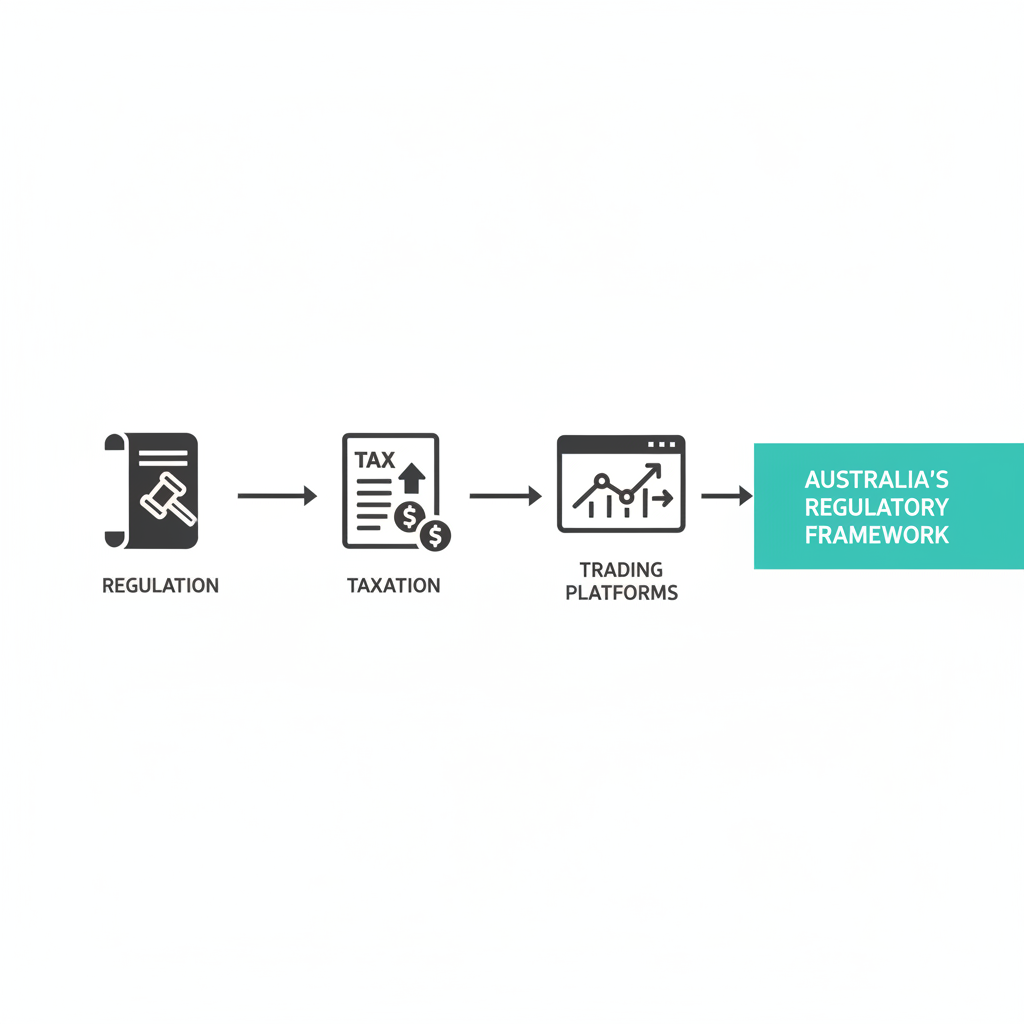
Cryptocurrency Australia is a topic that gets murkier by the month, yet the core rules are actually clearer now than they have ever been. As of April 2026, Australia has passed its first comprehensive crypto regulation framework, the ATO has been data-matching exchange records for years, and the banks are doing whatever they like. Here is what you actually need to know.
> TL;DR
> Cryptocurrency Australia is fully legal and treated as property by the ATO, meaning gains are taxed as either capital gains or income depending on your activity. All exchanges must be AUSTRAC-registered as Virtual Asset Service Providers, and from April 2026, platforms must also obtain an Australian Financial Services Licence within six months. Australians can trade via local exchanges like CoinSpot and Swyftx or algorithmic platforms like Interactive Brokers, with banking restrictions varying significantly by institution.
Is Cryptocurrency Legal in Australia?
Yes, crypto is fully legal in Australia. You can buy it, sell it, trade it, stake it, and hold it in a self-managed super fund. The ATO classifies cryptocurrency as property, not currency, which matters enormously when it comes to tax — more on that shortly.
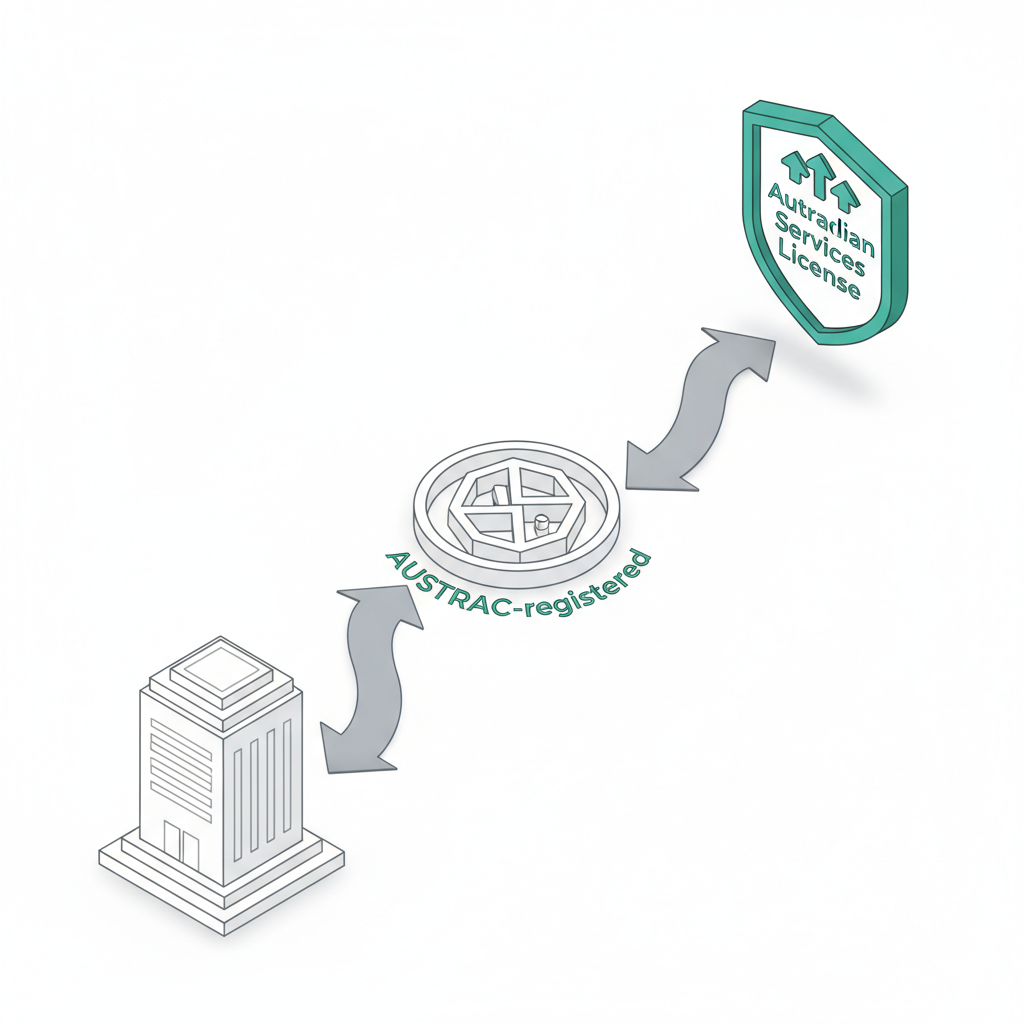
The two agencies you need to understand are AUSTRAC and ASIC. AUSTRAC handles Anti-Money Laundering and Counter-Terrorism Financing obligations. Every exchange operating in Australia must be registered with AUSTRAC as a Virtual Asset Service Provider (VASP). ASIC, on the other hand, governs financial services licensing and investor protections.
For a long time, crypto existed in a grey zone where AUSTRAC registration was the only formal hurdle. That changed on 1 April 2026, when Australia passed its first comprehensive crypto legislation, requiring exchanges and custody providers to obtain an Australian Financial Services Licence (AFSL) within six months. This is the most significant regulatory shift the local industry has seen and it brings Australian crypto regulation into alignment with how other financial services are treated.
[INTERNAL LINK PLACEHOLDER: crypto regulation Australia → regulatory-overview-pillar]
The April 2026 Crypto Regulation Framework Explained
On 1 April 2026, Australia’s first full crypto regulation framework came into force. It is not a minor tweak. Every exchange and custody provider operating in Australia must now obtain an AFSL within six months of that date, or cease operating.
ASIC’s licensing thresholds are specific: platforms that hold assets for a single client worth $5,000 or more, or that process more than $10 million in total transaction value over a 12-month period, fall squarely within the licensing requirement. For most exchanges Australians actually use, that threshold is cleared in weeks.
The groundwork for this was laid in February 2024 when the Federal Court handed down its decision in ASIC v Web3 Ventures Pty Ltd (Block Earner). The court found that existing Australian financial services laws could apply to certain crypto-related yield products, which was a clear signal that ASIC had both the intent and the legal basis to regulate the space more aggressively.
For consumers, AFSL compliance means meaningful protections: dispute resolution obligations, client money handling rules, and financial services guide requirements. If a platform holds your assets and carries an AFSL, you have actual recourse when things go wrong, rather than relying on goodwill and terms of service.
The industry got a sharp illustration of what non-compliance looks like in March 2026, when Binance was fined $6.9 million by Australian regulators over client misclassification. That fine predates the April framework, which tells you ASIC was already moving before the legislation landed.
AUSTRAC Registration and AML/CTF Obligations
AUSTRAC has been the primary regulatory gatekeeper for Australian crypto exchanges since digital currency exchange registration became mandatory. As of March 2026, the terminology shifted: what were previously called Digital Currency Exchanges (DCEs) are now formally called Virtual Asset Service Providers (VASPs), reflecting an expanded scope that now covers virtual asset transfers, custody services, and related activities, not just straightforward crypto-for-AUD trading.
Every business in this space must be registered with AUSTRAC before operating. AUSTRAC can refuse a registration outright, suspend it, or cancel it entirely if the business is deemed to pose an unacceptable money-laundering or terrorism-financing risk. This is not theoretical. On 23 March 2026, AUSTRAC cancelled the registrations of Self Custody Pty Ltd and Jam Xchange Pty Ltd, among others, as part of an active clean-up of the VASP register.
The virtual asset sector is formally classified by AUSTRAC as a high money-laundering risk. That classification drives the KYC and AML obligations you encounter when you sign up to any Australian exchange: identity verification, source-of-funds checks, and transaction monitoring are all legal requirements, not optional friction.
For end-users choosing an exchange, AUSTRAC registration is the minimum bar. You can check the AUSTRAC VASP register directly before depositing funds. If a platform cannot point you to its registration, walk away.
[INTERNAL LINK PLACEHOLDER: AUSTRAC registration check → austrac-vasp-register-guide]
How Crypto Is Taxed in Australia
The ATO’s position has been consistent for years: cryptocurrency is property, and CGT rules apply to most transactions. What catches people out is the breadth of what counts as a taxable event.
Selling crypto for AUD is an obvious one. Less obvious: swapping one cryptocurrency for another (BTC to ETH, for example) is a disposal and triggers CGT. Staking rewards are treated as ordinary income at the time of receipt, valued in AUD at that point. Mining rewards work similarly. Gifting crypto to another person is a disposal at market value. Spending crypto on goods or services is a disposal. The ATO’s position leaves very little wiggle room.
The 50% CGT discount is the rule that makes buy-and-hold investors genuinely smile. If you acquire a crypto asset and hold it for more than 12 months before disposing of it, only 50% of the capital gain is included in your assessable income. On a meaningful gain, that discount is worth more than any exchange fee optimisation you could do.
The ATO is not passive about enforcement. They run a sophisticated data-matching program that pulls transaction data from Australian exchanges. They have your exchange records. If you have not reported gains, they likely already know. Warning letters have been issued to non-compliant investors in recent years, and the program has continued to expand.
One area worth a brief mention: Self-Managed Super Funds (SMSFs) can hold crypto assets, provided the investment strategy is documented and the trustee obligations are met. CGT within an SMSF is taxed at 15%, or 10% on assets held more than 12 months, which makes the structure attractive for long-term holders. This is genuinely complex territory. Talk to an SMSF specialist before going down that path.
[INTERNAL LINK PLACEHOLDER: crypto tax Australia → crypto-tax-guide-pillar]
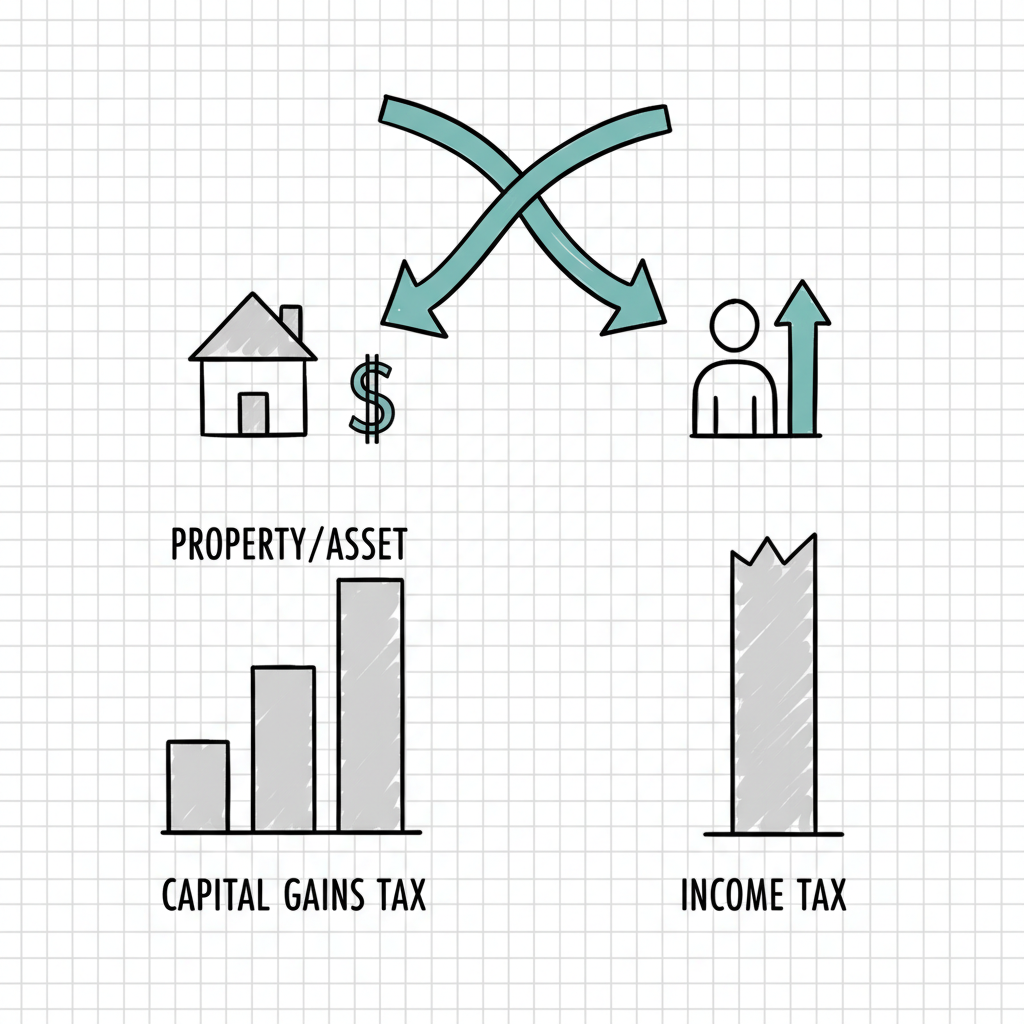
Capital Gains vs Income Tax: Which Applies to You?
The distinction matters because it changes your effective tax rate significantly.
Investor profile: You buy crypto, hold it, and sell it at some point. Your intent is wealth accumulation rather than running a trading business. The ATO treats your gains as capital gains, CGT rules apply, and if you have held for more than 12 months, you get the 50% discount. Most Australians buying crypto through an exchange fall into this category.
Trader profile: You trade frequently, your activity is systematic, and your intent is to profit from short-term price movements as a business activity. The ATO treats your gains as ordinary income. No 50% discount. You do get to deduct trading-related expenses, but the tax treatment is materially different. Day traders and high-frequency algo traders are the most likely candidates here.
The grey area is where it gets uncomfortable. The ATO looks at factors including the volume and frequency of transactions, whether the activity is conducted in a business-like manner, whether you keep books and records, and your stated intent. None of these factors is individually decisive. Someone trading three times a week might still be classified as an investor. Someone who places one large trade per month with a documented commercial strategy might be classified as a trader.
If you are anywhere near the line, get advice from a registered tax agent who actually understands crypto. The ATO does not have a bright-line rule here, and getting the classification wrong in either direction creates problems.
Top Australian Crypto Exchanges Compared
Most exchanges operating in Australia are AUSTRAC-registered and accept AUD deposits via PayID, Osko, or direct bank transfer. PayID is generally the fastest, often settling in under a minute. Credit card deposits are available on some platforms but carry fees that eat into your position immediately.
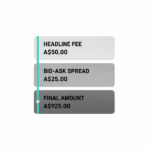
Trading fees across the local market run from about 0.1% on the low end (Binance, Digital Surge) to 0.9% on the higher end (Cointree). The fee structure matters more than people think if you are trading regularly, but for occasional buyers, ease of use and banking compatibility often matter more.
A note on Binance Australia specifically: the local entity currently cannot accept AUD bank deposits or withdrawals. If you want to use Binance, you will need to transfer crypto from another platform first. This is a significant friction point that does not affect any of the other local exchanges listed below.
| Exchange | Trading Fee | AUD Deposit Methods | AFSL Status (as of mid-2026) | Asset Range | Beginner-Friendly |
|---|---|---|---|---|---|
| CoinSpot | ~1% (instant), 0.1% (market) | PayID, bank transfer, BPAY, card | In progress | 400+ | Very high |
| Swyftx | ~0.6% spread | PayID, bank transfer, card | In progress | 320+ | High |
| CoinJar | 0.1%–1% | PayID, bank transfer | In progress | 50+ | Medium |
| Cointree | 0.9% | PayID, bank transfer | In progress | 140+ | High |
| Digital Surge | From 0.1% | PayID, bank transfer ($0 fee) | In progress | 300+ | Medium |
| Independent Reserve | 0.05%–0.5% | PayID, bank transfer | In progress | 25+ | Medium |
| Binance Australia | 0.1% | Crypto transfer only (no AUD banking) | In progress | 350+ | Low–Medium |
I have been using Swyftx since 2022 and find the spread-based fee model transparent enough for regular trading. CoinSpot is the go-to recommendation for people who want the most established local platform with the widest asset selection.
[INTERNAL LINK PLACEHOLDER: exchange comparison → best-australian-crypto-exchanges-pillar]
Banking Restrictions on Crypto Payments in Australia
Australian banks are not legally required to block crypto transfers, but several have chosen to impose restrictions as part of their scam prevention frameworks. The experience varies considerably depending on who you bank with.
The most restrictive end of the spectrum: Commonwealth Bank caps crypto transfers at $10,000 per month and imposes a 24-hour delay on your first transfer to a new crypto exchange. Bankwest, Macquarie, Bank of Queensland, and HSBC have all applied stricter controls at various points, ranging from lower limits to outright blocks on payments to certain platforms.
The more accommodating institutions are ANZ, NAB, Westpac, ING, St George, UBank, and Great Southern Bank. None of these guarantee frictionless transfers — you may still hit a fraud check on a large or unusual transfer — but day-to-day deposits to reputable exchanges generally go through without drama.
Bank Australia sits somewhere in the middle: they allow crypto transfers but introduced a $10,000 per calendar month limit from 27 May 2024.
PayID is your best tool here. Transfers via PayID clear faster, are less likely to trigger automated holds, and make it easier to confirm you are sending to the correct recipient. Direct bank transfers using BSB and account numbers work fine too, but PayID is cleaner. Avoid credit cards for deposits where you can: the fees are rarely worth it, and some banks treat crypto exchange payments on credit cards as cash advances.
If your bank blocks a transfer, the straightforward fix is to use a more accommodating bank for your crypto activity and keep your primary banking separate.
Algorithmic and Automated Crypto Trading in Australia
Algorithmic trading in crypto means using software to execute trades automatically based on pre-defined rules, whether that is a simple moving-average crossover or a complex multi-factor model running across a dozen exchanges simultaneously. It is not magic, and it is not passive income. The strategy still needs to work.
For Australian traders who want proper institutional infrastructure, Interactive Brokers Australia is the serious option. It offers advanced backtesting, API access, and genuinely low fees. The crypto exposure available through IBKR is primarily CFD-based rather than spot ownership, which matters for tax and for whether you actually hold the underlying asset.
Oanda and IG Australia both cater to algo traders with API access and competitive spreads. Both support MetaTrader 4 and MetaTrader 5, the industry standard platforms for running Expert Advisors (automated trading bots). Vantage, Eightcap, IC Markets, and Pepperstone are the brokers most commonly paired with MT4/MT5 and cTrader (which uses cBots rather than EAs) for automated strategies in Australia.
For pure crypto automation without the CFD wrapper, Cryptohopper and Tradetron operate as strategy marketplaces and bot platforms. Altrady is a multi-exchange management platform that includes bot functionality. These tools connect to spot exchanges via API rather than operating through a broker, so you are trading actual crypto rather than a derivative.
eToro offers copy trading, which is the lowest-friction version of automated strategy: you follow a trader, their positions are mirrored in your account proportionally. Capital.com offers over 100 crypto CFDs with no commissions and an AI-powered assistant that is genuinely useful for screening setups. Alpaca provides API access for building custom trading programs if you want to go further down the technical path.
The regulatory distinction worth understanding: CFD crypto products do not give you ownership of the underlying asset. You cannot move CFD crypto to a hardware wallet. For the purposes of CGT calculation, the holding period and cost base are different from spot ownership. Know which product you are actually trading.
Crypto ATMs in Australia: Convenience vs Risk
Australia’s crypto ATM network has grown at a pace that outstripped any reasonable expectation. From 23 machines to over 1,600 by 2025, the rollout was rapid. That growth brought genuine convenience for people who prefer cash-based transactions, and it brought a predictable wave of scams.
Between January 2024 and January 2025, Australians lost over $3 million to crypto ATM scams. The typical pattern: a scammer contacts the victim by phone or online, convinces them they owe money (a fake fine, a fake ATO debt, a fake tech support issue), and directs them to a nearby crypto ATM to pay. The funds are unrecoverable once sent.
Safe ATM use means treating it like any other financial transaction. Never use a crypto ATM at the direction of someone who contacted you unsolicited. Check the machine’s operator is listed on the AUSTRAC VASP register. Compare the exchange rate on the machine against the spot rate — ATM spreads are wide, often 5–10%. Keep your receipt.
ATM operators are subject to the same AUSTRAC VASP obligations as online exchanges: registration, KYC, and AML reporting requirements all apply.
How to Buy Your First Crypto in Australia: Step-by-Step
Step 1: Choose an AUSTRAC-registered exchange. For most beginners, CoinSpot or Swyftx are the straightforward starting points. Both are AUSTRAC-registered, accept AUD, and have reasonable interfaces.
Step 2: Complete KYC verification. You will need a government-issued ID and a selfie. Most exchanges complete verification within a few minutes to a few hours. You cannot deposit or trade without it.
Step 3: Set up PayID on your exchange account. Most local exchanges will give you a PayID reference. This is the fastest deposit method and avoids most banking friction.
**