Algo Crypto Trading Australia 2026: Platforms, Rules & Scam Warnings
Algo crypto trading in Australia has never been more accessible, and the regulatory environment has never been more serious. In the same week SaintQuant launched its AI-powered platform out of Cairns, AUSTRAC was cancelling registrations for exchanges it deemed unacceptable risk. That tension, between opportunity and genuine danger, is what this article is about.
> TL;DR: Algo crypto trading Australia is legal and growing, but the 2026 regulatory overhaul means any platform you use must be AUSTRAC-registered and, from mid-2026, hold an AFSL from ASIC. No platform specifically named CryptoAlgo.com.au appears on AUSTRAC’s public register, which is a serious red flag. Reputable options for automated and algorithmic trading include CoinSpot, Swyftx, Kraken, Crypto.com, and Pepperstone. All crypto disposals are subject to CGT, and algo traders generating hundreds of transactions a year face significant tax complexity.
What Is Algo Crypto Trading in Australia and Is It Legal?
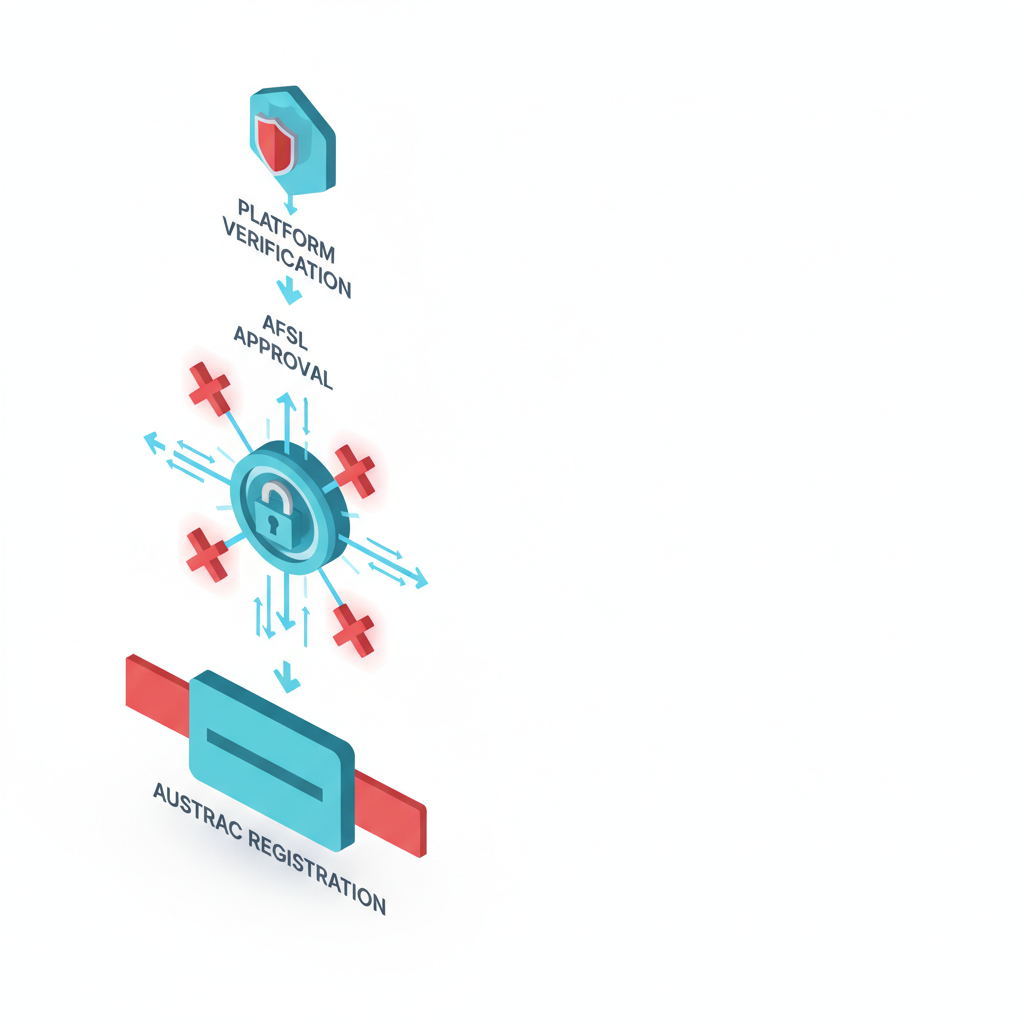
Algo crypto trading Australia refers to any strategy that uses automated systems, bots, APIs, or quantitative rules to execute cryptocurrency trades, partially or fully, without manual intervention on each order. That covers a wide range of activity: a simple DCA bot buying $50 of BTC every Monday morning, a custom Python script running arbitrage across two exchanges via API, Cryptohopper executing a moving-average crossover strategy, or eToro copy trading that mirrors another trader’s portfolio in near real-time.
For Australian retail traders, all of this is legal. There is no law prohibiting an individual from using a bot or algorithm to trade their own crypto holdings. The legal line is different for operating a platform that provides these services to others. If you are running an exchange or a managed algo trading service for clients, you are subject to AUSTRAC registration, and from mid-2026, ASIC licensing as well.
The regulatory picture here involves two agencies. AUSTRAC handles anti-money laundering and counter-terrorism financing. Any business offering digital asset exchange services in Australia must register with AUSTRAC, implement KYC procedures, monitor transactions, and report suspicious activity. ASIC, on the other hand, governs financial services. From April 1, 2026, the Corporations Amendment (Digital Assets Framework) Bill 2025 passed into law, creating Australia’s first comprehensive digital assets framework. It requires crypto exchanges and custody providers to hold an Australian Financial Services Licence.
From March 31, 2026, AUSTRAC’s scope also expanded to cover all Digital Asset Service Providers, renaming the old Digital Currency Exchange category to Virtual Asset Service Providers (VASPs). More businesses fall under the net now, and AUSTRAC’s enforcement activity has followed.
Before you deposit a dollar anywhere, verify the platform on AUSTRAC’s register. More on how to do that, and why it matters, in the next section. The tax and scam implications come later.
Australia’s 2026 Crypto Regulatory Framework: AUSTRAC, ASIC and the New AFSL Requirement
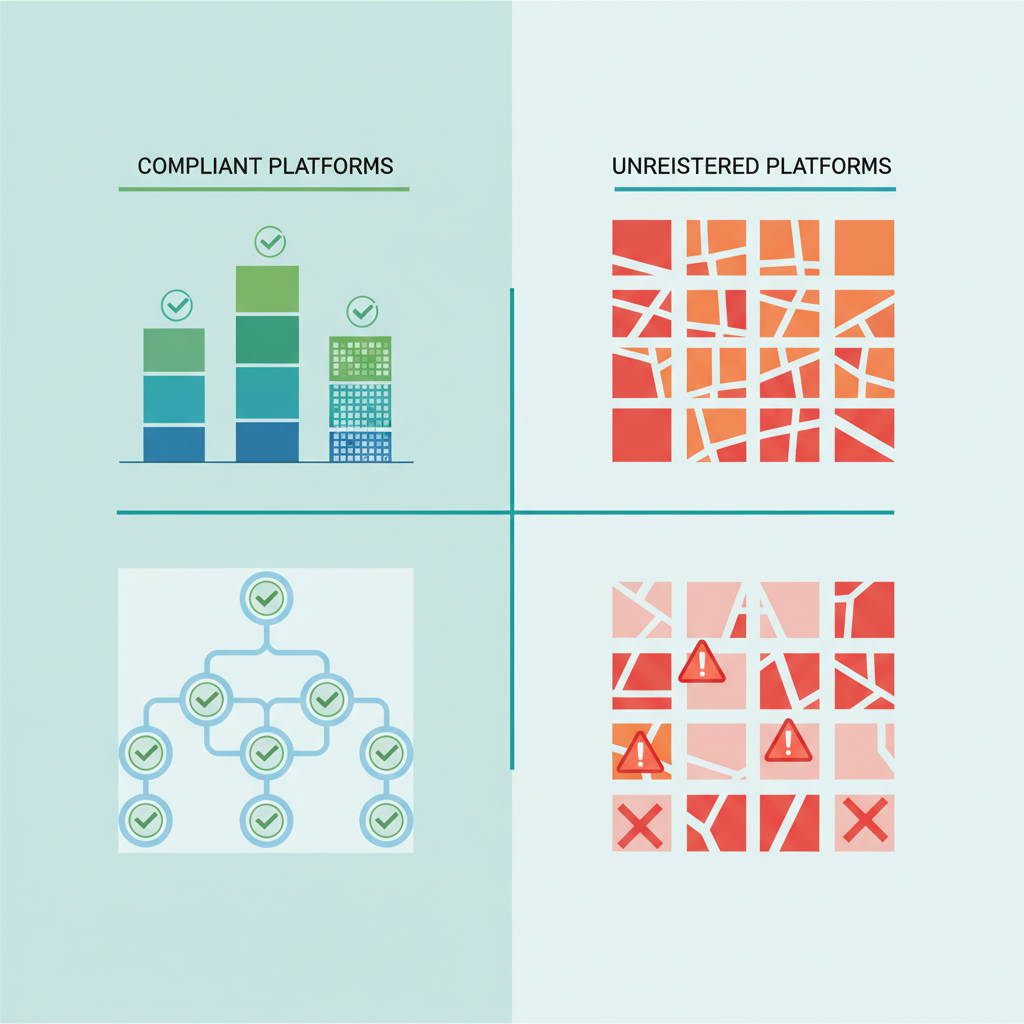
The first thing any serious Australian crypto trader should know is that AUSTRAC maintains a searchable public register of registered VASPs at austrac.gov.au. It is free to use, takes about thirty seconds, and will immediately tell you whether the platform you are considering has legal standing to operate in this country. If the platform is not on the list, that is not a minor administrative oversight. It means they are operating outside Australian law.
AUSTRAC registration requires platforms to complete full KYC on customers, run ongoing transaction monitoring, and file suspicious matter reports with AUSTRAC when something looks off. These obligations exist to protect users as much as they protect the financial system. A registered exchange has accountability. An unregistered one has none.
The Corporations Amendment (Digital Assets Framework) Bill 2025, passed on April 1, 2026, adds a second layer. Under this legislation, crypto exchanges and custody providers must obtain an AFSL from ASIC. This brings them under the same obligations as other financial service providers: conduct obligations, dispute resolution requirements, and product disclosure standards. ASIC’s INFO 225 guidance spells out when crypto products and services fall under existing financial services laws, including when a crypto token might constitute a financial product.
ASIC granted transitional no-action relief until June 30, 2026, meaning platforms that applied for their AFSL before that date will not face enforcement action during the application process. After that, operating without one becomes a serious legal risk for the platform and, arguably, for users who cannot access dispute resolution protections.
The enforcement tone is not hypothetical. AUSTRAC cancelled multiple VASP registrations in February and March 2026, specifically on grounds of unacceptable money laundering and terrorism financing risk. Those businesses cannot legally operate in Australia.
How to verify a platform before depositing:
1. Go to austrac.gov.au and search the VASP register by business name or ABN.
2. Cross-reference on ASIC’s financial services register at search.asic.gov.au for AFSL status.
3. Check ASIC’s MoneySmart investor alert list for flagged platforms.
4. If the platform is not on AUSTRAC’s register, stop. Do not deposit.
[INTERNAL LINK PLACEHOLDER: “how to verify AUSTRAC registration” → /guides/austrac-crypto-registration]
CryptoAlgo.com.au: What We Found (And Why You Should Be Careful)
This section is not comfortable to write, but it is the most important one in the article.
As of our research date, no platform named CryptoAlgo or CryptoAlgo.com.au appears on AUSTRAC’s public VASP register. We searched by multiple name variations. Nothing came back. Under Australian law, any business providing digital asset exchange or custody services without AUSTRAC registration is operating illegally. That alone should be enough to give any potential user serious pause.
The situation is complicated further by the existence of adjacent entities. A platform called Crypto Algorithm, operating at cryptoalgorithm.net, has been specifically identified as an unregulated forex broker and flagged as a likely scam, with no ASIC authorisation on record. A separate platform, CrypAlgo, is explicitly India-based and has no Australian regulatory standing whatsoever. Neither of these is the same as CryptoAlgo.com.au, but the similarity in naming is worth noting, particularly because scam platforms routinely use names that sound credible or mimic legitimate services.
To be clear: we are not stating that CryptoAlgo.com.au is definitively fraudulent. What we are stating, and what the evidence supports, is that we cannot verify its AUSTRAC registration, we cannot verify an Australian ABN or physical address, and we cannot verify any ASIC licensing. In that context, depositing funds would be an unacceptable risk.
The real-world stakes here are not abstract. In February 2026, Australian Federal Police charged a 42-year-old man over a $3.5 million crypto investment scam that targeted more than 190 elderly and vulnerable Australians through a platform called NEXOpayment. The victims thought they were using a legitimate digital currency exchange. They were not. Recovery of funds in crypto fraud cases is extremely difficult.
This section reflects research findings as of publication and is not legal advice. If you have already deposited funds with an unverified platform, contact AUSTRAC and the ACCC’s Scamwatch immediately.
[INTERNAL LINK PLACEHOLDER: “crypto scam reporting Australia” → /guides/crypto-scam-reporting-australia]
How to Spot a Crypto Scam Platform in Australia: Red Flags and Protections
The NEXOpayment case is a useful lens here because the warning signs were present before anyone lost money. They usually are.
Red flag one: Not on AUSTRAC’s VASP register. This is non-negotiable. Check the register at austrac.gov.au before anything else. Legitimate platforms will be listed. SaintQuant, Kraken, CoinSpot, Crypto.com, Swyftx, Pepperstone, all of them have verifiable regulatory standing. An unregistered platform has no legal accountability to you under Australian law.
Red flag two: Guaranteed returns or “AI that never loses.” No algorithmic trading system generates guaranteed returns. Markets have uncertainty built in. Any platform promising consistent profits, particularly with specific percentages like “12% monthly guaranteed,” is either lying or operating a Ponzi scheme. Legitimate algo platforms will explicitly state that past performance does not guarantee future results.
Red flag three: No verifiable Australian business address or ABN. A legitimate Australian business has an ABN you can look up on the ABN lookup tool (abn.business.gov.au). It has a physical address, even if the operation is primarily online. Scam platforms frequently list generic offshore addresses or no address at all.
Red flag four: Pressure tactics, urgency, or unsolicited contact. If someone cold-contacted you about a trading platform via social media, WhatsApp, or a dating app, you are almost certainly looking at a pig-butchering scam. Legitimate exchanges do not recruit through unsolicited personal outreach.
Red flag five: Withdrawal restrictions or additional fees to access your own funds. This is the moment scam platforms reveal themselves. Once they ask for a “tax payment” or “release fee” before you can withdraw your funds, the money is gone. Legitimate platforms charge trading fees upfront, not surprise withdrawal unlocking fees.
If you encounter a suspicious platform, report it to ACCC Scamwatch at scamwatch.gov.au, the Australian Federal Police at cyber.gov.au, and ASIC at asic.gov.au. ASIC’s MoneySmart investor alert list is also updated regularly and worth bookmarking.
Coinbase’s February 2026 complaint to the Australian parliament about bank debanking of crypto businesses is a useful counterpoint here. Some friction when funding a legitimate exchange, like a bank asking why you are transferring $5,000 to Kraken, is not a scam. It is your bank applying its own AML obligations. Real scam friction looks very different: it is designed to extract more money from you, not to delay a deposit.
Top Regulated Platforms for Algo Crypto Trading in Australia 2026: Comparison Table
This is the section that matters if you have decided to proceed with algo crypto trading Australia and want to use a platform that will not disappear with your money. Every platform below is either AUSTRAC-registered or regulated by ASIC, or both. I have been using Swyftx since 2022 and Kraken since 2023, so some of these notes come from direct experience rather than press releases.
| Platform | AUSTRAC Registered | ASIC Status | Algo/Bot Features | AUD Support | Typical Fees | Best For |
|---|---|---|---|---|---|---|
| CoinSpot | Yes | Applying for AFSL | API access, basic bots | Yes | From 0.1% spot | Australian beginners wanting local support |
| Swyftx | Yes | Applying for AFSL | API access, third-party bot integration | Yes | From 0.1% | All-rounder for AUD traders |
| Kraken | Yes | Applying for AFSL | Kraken Pro API, advanced order types | Yes | From 0.16% maker | Experienced traders wanting deep liquidity |
| Crypto.com | Yes | Applying for AFSL | API access, advanced order types | Yes (zero-fee AUD deposit) | Varies by tier | High-volume traders, DeFi users |
| Digital Surge | Yes | Applying for AFSL | API access | Yes (instant PayID) | From 0.1% | Cost-conscious Aussie traders |
| Coinbase Australia | Yes | Applying for AFSL | Coinbase Advanced API, institutional tools | Yes | Varies | Traders wanting US-grade infrastructure |
| Pepperstone | Yes | AFSL 414530 | cTrader algo features, EAs, custom scripts | Yes | 0.1% crypto commission | Algo traders wanting broker-grade execution |
| eToro | Yes | AFSL 491139 | Copy trading, portfolio automation | Yes | Spread-based | Beginners wanting algo-adjacent simplicity |
| IC Markets | Yes | AFSL 335692 | MT4/MT5 EAs, API, high-frequency capable | Yes | Spread + commission | High-frequency and automated strategy traders |
| Altrady | N/A (multi-exchange) | N/A | Multi-exchange bots, grid trading, DCA | Via connected exchanges | Subscription from ~$18/month | Traders managing multiple exchange accounts |
| Cryptohopper | N/A (multi-exchange) | N/A | AI bots, DCA, trailing, copy trading | Via connected exchanges | Subscription from ~$19/month | Automated strategy traders at any level |
| SaintQuant | Verify directly | In process | AI-powered execution, quantitative models | Yes | Not yet published | Early adopters wanting Australian-built AI trading |
Fees and availability change. Always verify current conditions directly on the platform before trading.
A few notes on specific entries. Pepperstone launched PepperstoneCrypto with a straightforward 0.1% commission structure and its cTrader platform supports Expert Advisors and algorithmic scripts, which makes it genuinely useful for traders coming from a forex automation background. eToro’s copy trading is not “algo trading” in the strict sense, but it achieves a similar outcome: your portfolio moves automatically based on another trader’s decisions. SaintQuant is the newest Australian entrant, having launched from Cairns on April 29, 2026, with AI-powered execution and real-time quantitative models. It is too early to have a strong verdict on them, but the fact that they are building from an Australian base under the new regulatory framework is worth watching.
[INTERNAL LINK PLACEHOLDER: “Swyftx review Australia 2026” → /reviews/swyftx-review]
[INTERNAL LINK PLACEHOLDER: “Pepperstone crypto review” → /reviews/pepperstone-crypto-review]
Fees, Spreads and Costs: What Algo Traders Should Budget For
The cost structure of automated crypto trading Australia hits differently than manual trading because frequency is the multiplier. A strategy executing twenty trades a day at 0.2% per trade compounds costs very quickly.
The first distinction to understand is commission-based versus spread-based pricing. Commission-based platforms, like Digital Surge at 0.1%, CoinSpot at 0.1%, and Pepperstone at 0.1% commission, charge a transparent percentage of the trade value. You know exactly what you are paying. Spread-based platforms build their margin into the bid-ask spread. The number looks smaller upfront, but for high-frequency strategies it can be more expensive in aggregate.
API access itself is generally free on the platforms listed above, but most impose rate limits. Kraken Pro, for example, limits API calls per second depending on your account tier. If your strategy is genuinely high-frequency, you need to check the specific rate limits in the platform’s API documentation before building anything on top of it.
For third-party bot platforms, Cryptohopper’s subscription tiers start around $19 per month for the entry level and scale to around $99 per month for the most advanced plan, which includes backtesting and AI-powered signal features. Altrady is similar in structure. These subscription costs need to be factored into your strategy’s required return threshold.
Hidden costs that catch traders off guard include withdrawal fees (which vary by network and asset), network gas fees for on-chain transactions, and AUD conversion costs if your platform settles in USDT rather than direct AUD. Always check the withdrawal fee schedule before you need to withdraw.
No verified fee data exists for CryptoAlgo.com.au, for the reasons already explained. Any fee information circulating about that platform is unverifiable.
Crypto Tax in Australia 2026: What Algo Traders Must Know
The ATO’s position on crypto has been consistent since at least 2014: cryptocurrency is property, not currency, and it is subject to Capital Gains Tax on disposal. Disposal means selling, trading one crypto for another, spending crypto on goods or services, or moving assets in ways the ATO considers a change of ownership. For algo traders, almost every automated trade is a disposal event.
Income from staking rewards, airdrops, and interest earned from lending platforms is treated as ordinary income at the time of receipt, not on eventual sale. This is a common misunderstanding. If your bot is earning yield while it trades, that yield is taxable as income, at your marginal rate.
The 50% CGT discount for assets held more than twelve months is largely i