Crypto Algo Trading in Australia 2026: Complete Guide
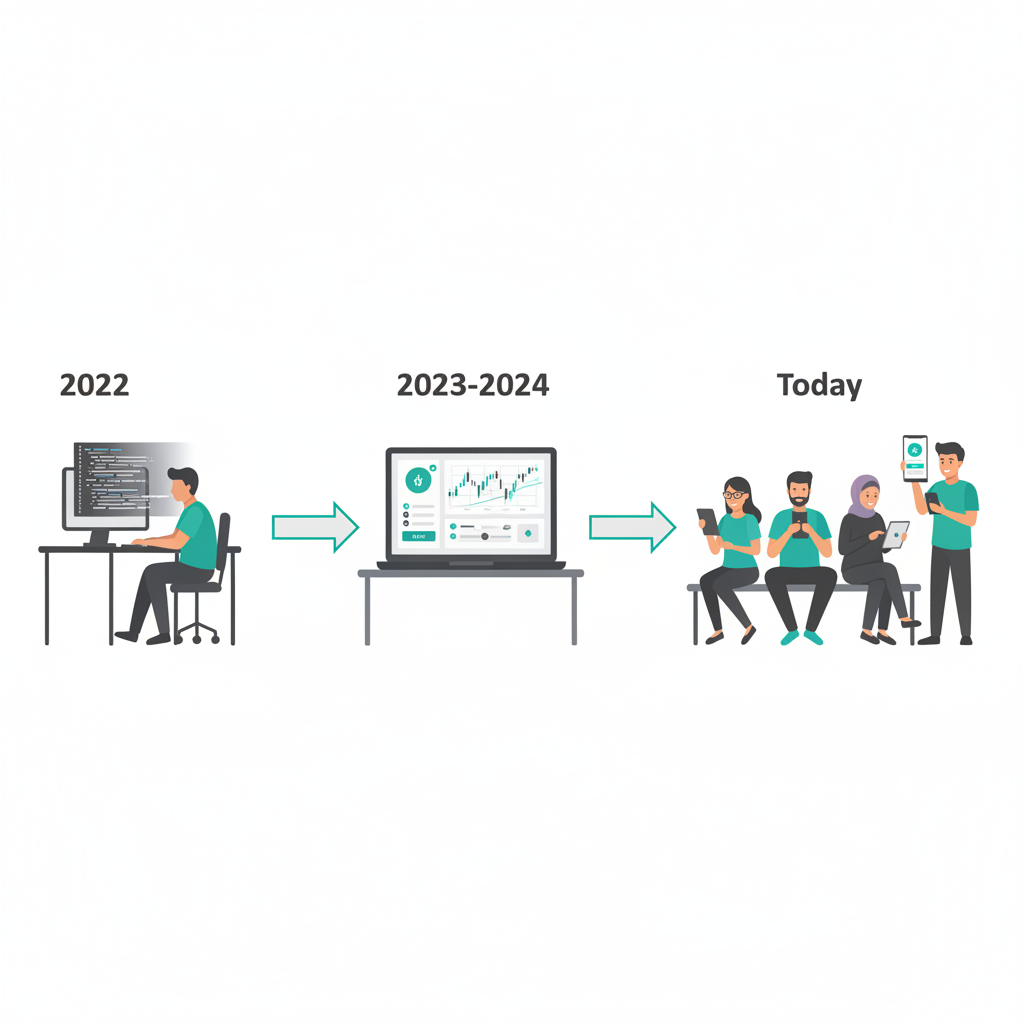
Crypto algo trading in Australia has moved well past the hobbyist phase. What started as something only quant developers and prop desks bothered with is now accessible to anyone with a Binance or Kraken account and an afternoon to set up a bot. I have been running automated strategies since 2022, and the tooling has genuinely improved to the point where you do not need to write a single line of code to get something working.
> TL;DR: Crypto algo trading in Australia lets you automate trades 24/7 using rule-based software, removing the need to watch charts around the clock. Top platforms accessible to Australians include Pionex, 3Commas, Cryptohopper, and Coinrule, each with different pricing models and complexity levels. Profits are subject to ATO capital gains tax or ordinary income tax depending on your trading frequency, so keep records from day one.
What Is Crypto Algo Trading in Australia?
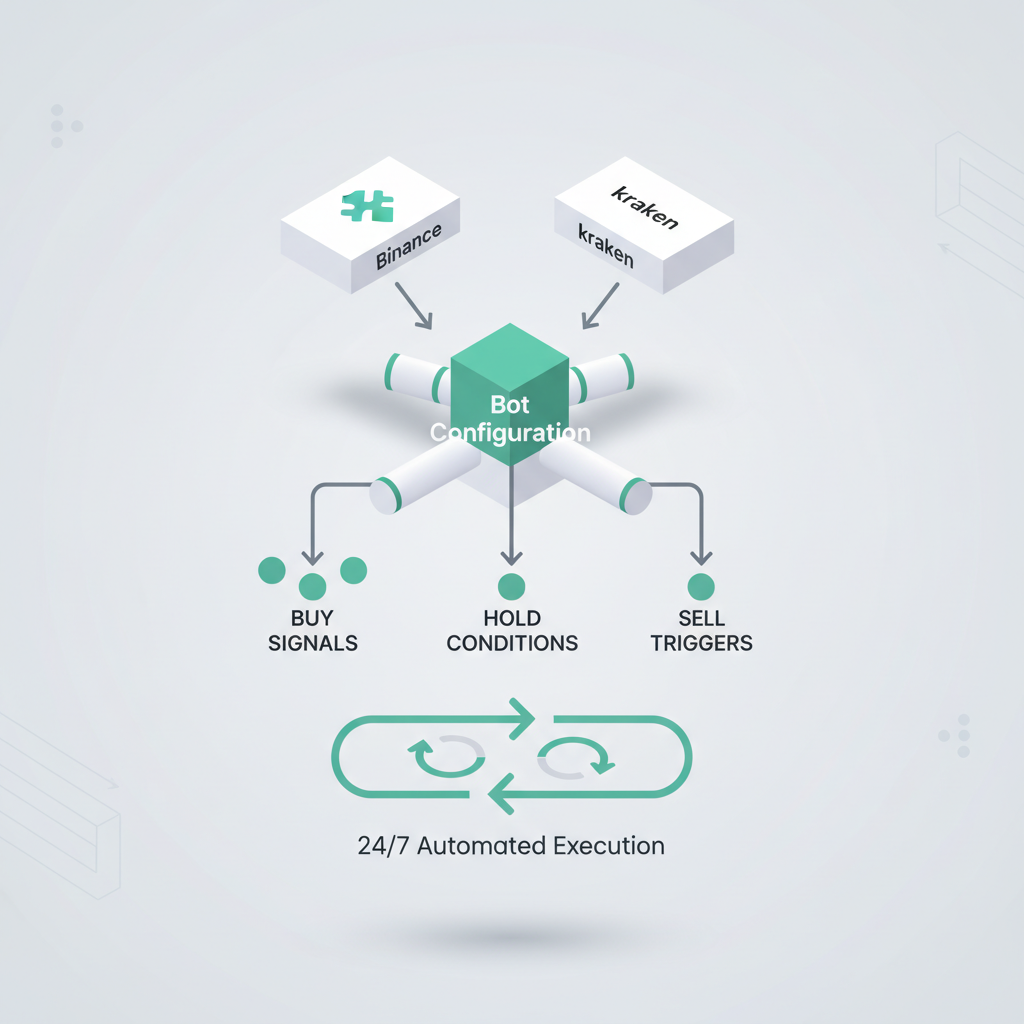
Crypto algo trading in Australia means using software to execute buy and sell orders automatically, based on rules you define in advance. Those rules might be as simple as “buy BTC when the 50-day moving average crosses above the 200-day” or as complex as a multi-leg arbitrage strategy running across three exchanges simultaneously. The bot does not care what time it is or how anxious you feel about a red candle at 2am.
This matters in crypto more than in equities because the market never closes. The ASX shuts at 4pm Sydney time. Bitcoin does not. Running manual positions across a 24/7 market is exhausting and, frankly, unsustainable for anyone with a job or a life. Automation solves that problem directly.
The other underrated benefit is that bots do not panic. They execute the rule. If your strategy says exit at a 3% loss, the bot exits at 3%, not at 7% after you spent four hours convincing yourself it would bounce.
Mechanically, most algo trading platforms connect to exchanges via API. You generate an API key on your exchange (say, Kraken or Binance), paste it into the bot platform, and the platform can place orders on your behalf without ever touching the underlying funds. Your crypto stays on the exchange. The bot just has permission to trade it.
Algorithmic trading is legal in Australia when conducted on AUSTRAC-registered exchanges and in compliance with local financial regulations. There is no specific licence required for individual traders using third-party bot software. The main strategies you will encounter are arbitrage, market making, trend following, scalping, dollar-cost averaging (DCA), and grid trading. Each suits different market conditions and risk tolerances, which I will cover in the next section.
[INTERNAL LINK PLACEHOLDER: crypto algo trading australia → what-is-crypto-trading]
How Crypto Algo Trading Works: Strategies Explained
Understanding what the software is actually doing matters before you hand it your API keys. Here are the main approaches used in algorithmic trading crypto Australia, and what each one demands from you.
Arbitrage
Arbitrage exploits price differences for the same asset across different exchanges. If BTC is trading at $138,000 AUD on CoinSpot and $138,450 AUD on Kraken at the same moment, an arbitrage bot can buy on one and sell on the other, capturing the spread. In practice, the windows are tiny and close fast. You need fast execution, low fees, and ideally accounts pre-funded on both exchanges. AUD pairs can add friction here because not every exchange offers deep AUD liquidity.
Market Making
Market making bots place simultaneous buy and sell orders on either side of the current price, capturing the bid-ask spread repeatedly. You are essentially acting like a mini exchange. This works well in sideways, liquid markets but can get painful during strong directional moves where your inventory goes offside quickly.
Trend Following
This is probably the most approachable strategy for traders new to automation. You define conditions based on indicators like moving averages, RSI, or MACD, and the bot enters and exits positions accordingly. A simple example: go long ETH when the 20-period EMA crosses above the 50-period EMA on the 4-hour chart, exit when it crosses back. No-code platforms like Coinrule handle this without any scripting.
Scalping and High-Frequency Trading
Scalping targets small, frequent profits across dozens or hundreds of trades per day. It works best with low-fee platforms and high-liquidity pairs. One important ATO consideration: if your trading volume hits very high frequencies (think 10,000+ trades in a financial year), the ATO may assess your gains as ordinary income rather than capital gains, which removes access to the 50% CGT discount. Worth discussing with a tax accountant if you are running aggressive scalping bots.
DCA and Grid Bots
DCA (dollar-cost averaging) bots buy a fixed dollar amount of an asset at regular intervals regardless of price. Simple, mechanical, effective for accumulation strategies. Grid bots place a ladder of buy and sell orders at set price intervals above and below a target price, profiting from volatility within a defined range. Both are available on platforms like Pionex and Bitsgap without needing to write any code.
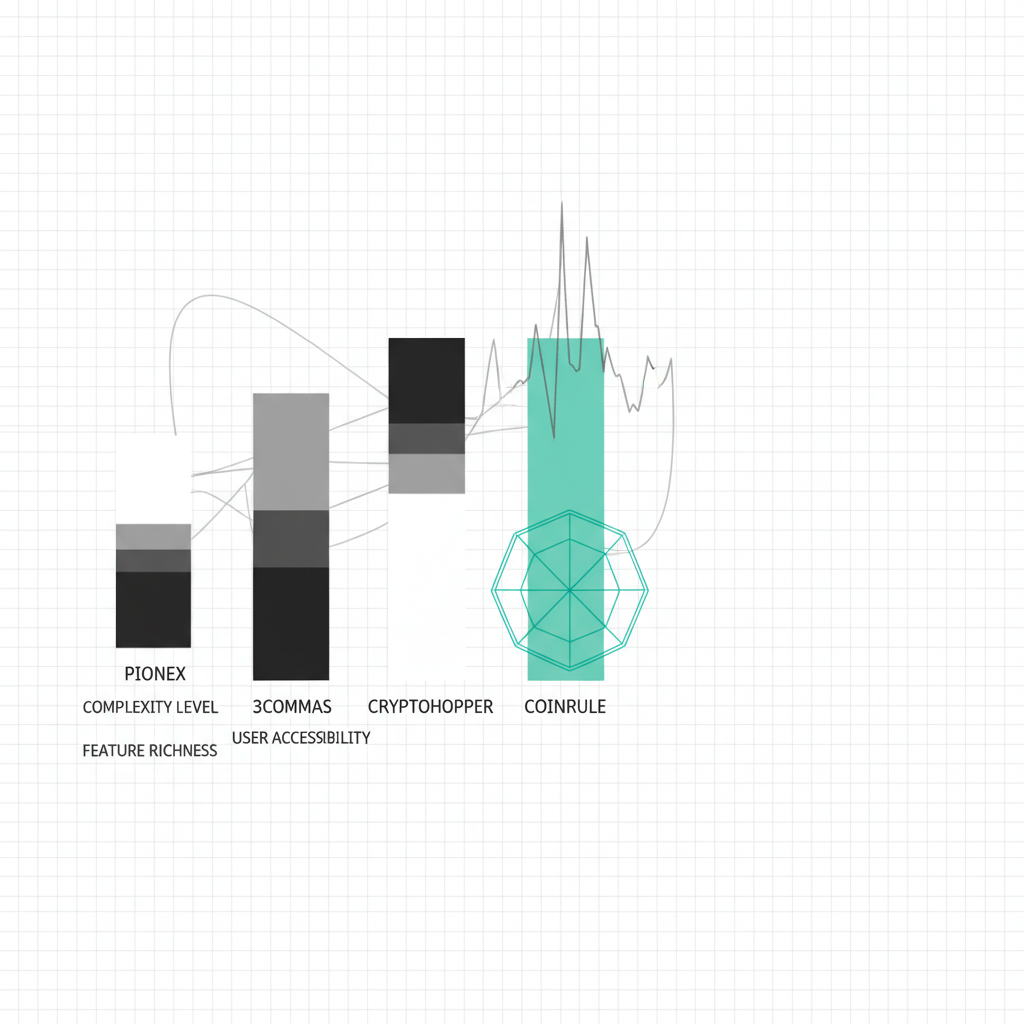
For no-code traders, platforms like Coinrule and Cryptohopper handle trend following, DCA, and grid strategies through visual builders. If you want arbitrage or custom strategies, you will need either a platform with Python support (Interactive Brokers, Altrady) or a willingness to build via exchange APIs directly.
Top Crypto Algo Trading Platforms Available to Australians
These are the platforms I have either used directly or examined closely enough to form a real opinion on. Not every platform on this list operates as an exchange, so check the connection model before assuming your funds move anywhere.
Pionex
Pionex is arguably the lowest-friction entry point for automated crypto trading. It operates as its own exchange rather than connecting to a third-party one, which simplifies the setup considerably. There are 16 built-in bots including Grid, DCA, and Infinity Grid, and the subscription fee is zero. Pionex makes money from a 0.05% trading fee per trade, which is competitive. The trade-off is that you are locked into Pionex’s own order book, so liquidity on smaller altcoins can be thin. For BTC, ETH, and major pairs, it works well.
3Commas
3Commas suits traders who want serious configurability. It connects to 17+ exchanges including Binance and Kraken, supports paper trading so you can test strategies without real money, and has an active community sharing bot configurations. It runs on a subscription model, so you are paying monthly regardless of whether you trade. That cost is worth it once you have strategies that work, but painful during testing phases. I would not recommend it as a first platform.
Cryptohopper
Cryptohopper is cloud-based, which means your bots run even if your computer is off. It has expanded significantly into AI-driven features, including sentiment-based signals and automated risk management. The strategy marketplace lets you copy configurations from other traders, which is useful if you want a starting point rather than building from scratch. Copy trading is available, though I would treat any third-party strategy with appropriate scepticism until you have backtested it on your own data.
Coinrule
Coinrule is built for people who want automation without the complexity. The interface is a simple if-this-then-that rule builder. If BTC drops 5% in 24 hours, buy $200 worth. That kind of thing. It is not the platform for sophisticated multi-leg strategies, but for straightforward rule-based execution it works reliably. There is a free tier, though it limits the number of active rules and connected exchanges.
Bitsgap
Bitsgap runs DCA and GRID bots across major exchanges and does not impose trading volume limits on paid plans. The interface is clean and the setup is faster than 3Commas. It supports Binance, Kraken, and several other exchanges Australian traders commonly use. One thing I appreciate: the bot performance tracking is clear and does not bury the numbers.
OKX Trading Bots
OKX has built native bot functionality directly into its exchange interface, covering Spot Grid and DCA Martingale strategies. If you are already using OKX, this is worth exploring before paying for a separate bot platform. The execution is tight because there is no API layer between the bot and the order book.
Interactive Brokers Australia
Interactive Brokers sits in a different category. It is a proper brokerage with AFSL licensing, not a crypto-native bot platform. But it supports crypto alongside equities, options, and FX, and its algorithmic trading infrastructure is serious. If you want to run Python strategies across multiple asset classes, IBKR is worth considering. The learning curve is steep and it is not aimed at crypto-first traders.
Altrady
Altrady offers multi-exchange integration with solid automation features and a portfolio tracking layer built in. It suits traders managing positions across several exchanges who want a single dashboard. Backtesting is available, though not the deepest in the market.
Across all platforms, backtesting and paper trading are non-negotiable evaluation steps. Do not put real money into a strategy you have not at minimum run against historical data.
Platform Comparison Table: Crypto Algo Trading Tools for Australians
| Platform | Subscription Fee | Trading Fee | Exchange Support | Bots Available | Backtesting | Paper Trading | Coding Required | Best For |
|---|---|---|---|---|---|---|---|---|
| Pionex | Free | 0.05% | Own exchange | 16 built-in | Limited | No | No | Beginners, Grid/DCA |
| 3Commas | From ~$37/mo | Exchange fee | 17+ incl. Binance, Kraken | DCA, Grid, Options | Yes | Yes | No | Experienced traders |
| Cryptohopper | Free tier + paid | Exchange fee | Major exchanges | Multiple + copy | Yes | Yes | No | Mid-level, AI features |
| Coinrule | Free tier + paid | Exchange fee | Binance, Kraken, others | Rule-based | Limited | No | No | Beginners, simple rules |
| Bitsgap | From ~$29/mo | Exchange fee | Binance, Kraken, OKX | DCA, GRID | Yes | Yes | No | Mid-level, ease of use |
| OKX Bots | Free (native) | OKX trading fee | OKX only | Grid, DCA Martingale | Limited | No | No | OKX users |
| Altrady | From ~$29/mo | Exchange fee | Multi-exchange | Algo + automation | Yes | No | No | Multi-exchange traders |
Australian exchange compatibility notes: Kraken and Binance (via international) are supported by most platforms above. CoinSpot and Swyftx are AUSTRAC-registered and offer AUD on-ramps, but their API support for third-party bot platforms is limited compared to Kraken. Verify current API availability before committing to a platform. AUD deposits typically flow into exchanges directly, not through bot platforms.
Key Features to Look for in an Australian Crypto Algo Trading Platform
The feature lists on most bot platform websites look similar. Here is what actually matters when you are evaluating these tools in an Australian context.
Exchange Compatibility and AUD On-Ramps
Your bot platform is only as useful as the exchanges it connects to. Check whether it supports exchanges with AUSTRAC registration and AUD deposit options. Kraken supports AUD via bank transfer. Binance’s Australian entity has had regulatory complications, so verify current status before relying on it. Platforms that connect to Kraken, OKX, or other globally established exchanges give you the most flexibility. If your AUD needs to travel through multiple steps before reaching the exchange where your bot operates, your cost base goes up and your execution speed goes down.
Security Model
This one matters more than most traders realise. Some platforms store your API keys in ways that carry real security risk. The safest configuration is a read-and-trade API key without withdrawal permissions. That way, even if the bot platform is compromised, an attacker cannot move your funds off the exchange. Always disable withdrawal permissions when generating API keys for bot platforms. No legitimate algo trading tool needs withdrawal access to function.
Backtesting and Paper Trading
Backtesting runs your strategy against historical price data to see how it would have performed. Paper trading runs it against live market conditions with simulated funds. Both are essential. A strategy that looks good on backtested data from a trending 2023 market may perform poorly in the choppy sideways conditions of 2025. Use both tools before committing real capital, and be sceptical of backtests that do not account for slippage and fees.
Execution Speed and Pricing Transparency
For scalping and arbitrage, execution latency matters. Cloud-based platforms generally execute faster than locally-run bots because their servers sit closer to exchange infrastructure. For DCA and grid strategies, a few seconds either way rarely changes outcomes materially.
On pricing: understand what you are actually paying. A zero-subscription platform with a 0.2% trading fee can cost more than a $50/month subscription platform with 0.05% fees, depending on your trading volume. Model the full cost before deciding.
[INTERNAL LINK PLACEHOLDER: platform features → automated-crypto-trading-platforms-australia]
Australian Regulations: Is Crypto Algo Trading Legal?
Yes, crypto algo trading is legal in Australia. There is no law prohibiting individuals from using automated software to trade cryptocurrency on registered exchanges. What matters is that you are using legitimate platforms and complying with your tax obligations, which I will cover below.
AUSTRAC
All Australian crypto exchanges must be registered with AUSTRAC, the financial intelligence and regulatory body overseeing anti-money laundering and counter-terrorism financing compliance. Before connecting any bot to an exchange, check that the exchange appears on the AUSTRAC register. Kraken, CoinSpot, Swyftx, and Independent Reserve are all registered. If an exchange is not on that list, do not use it, bot or no bot.
ASIC
ASIC regulates financial products and services in Australia. It has approved a small number of cryptocurrency ETFs and has published guidance on digital assets, but crypto spot trading falls outside the financial product definition in most circumstances. Bot platforms that operate as financial services providers (accepting funds, managing portfolios on behalf of clients) would need an Australian Financial Services Licence (AFSL). As an individual using a bot tool to manage your own funds, you do not need an AFSL. If a platform explicitly restricts US investors or mentions jurisdiction-specific compliance, that is generally a sign they have engaged legal counsel and are aware of regulatory obligations. Not a red flag.
Tax: What the ATO Actually Cares About
The ATO treats cryptocurrency as property, not currency. Every disposal is a CGT event. That includes selling crypto for AUD, swapping one crypto for another, and using crypto to buy goods or services. Your capital gain is the difference between your cost base (what you paid, including fees) and your capital proceeds (what you received).
If you hold the asset for more than 12 months before disposal, you may be eligible for the 50% CGT discount, reducing the taxable gain by half. This is relevant to algo traders because many strategies cycle through positions in days or weeks, meaning that discount rarely applies. High-frequency strategies, particularly scalping bots executing thousands of trades, risk being assessed as a business activity, in which case gains are treated as ordinary income taxed at your marginal rate (up to 45%).
The Australian tax year runs 1 July to 30 June, with individual tax returns due 31 October. If you are running bots generating hundreds or thousands of transactions, invest in crypto tax software. Tools like Koinly or CoinLedger connect directly to exchanges via API and generate ATO-compatible reports. Handing your accountant a spreadsheet of 8,000 trades is not a good use of anyone’s time.
Banking Reality
The Big Four banks (CommBank, Westpac, ANZ, NAB) have implemented anti-scam policies that frequently catch legitimate crypto transfers. CommBank imposes a $10,000 monthly cap on transfers to crypto exchanges with 24-hour holds in some cases. If you are funding exchange accounts regularly, St. George, ING, and Up Bank have historically been more accommodating for transfers to AUSTRAC-registered exchanges.
[INTERNAL LINK PLACEHOLDER: ATO crypto trading tax australia → crypto-tax-australia-guide]
Frequently Asked Questions
Is crypto algo trading legal in Australia?
Yes. Using automated trading software on AUSTRAC