Crypto Algo Trading Australia 2026: Complete Guide to Automated Crypto Strategies
Crypto algo trading in Australia has moved well past the hobbyist phase. In 2026, retail traders are running grid bots on Kraken, backtesting momentum strategies on Alpaca, and letting AI platforms like SaintQuant execute trades across seven exchanges simultaneously, all while they sleep. If you have been wondering whether this is still the domain of quants with Bloomberg terminals, it is not.
> TL;DR: Crypto algo trading Australia covers everything from simple DCA automation to AI-driven multi-exchange strategies. Key platforms in 2026 include Alpaca, Kraken, Pepperstone, Interactive Brokers, and SaintQuant. The Corporations Amendment (Digital Assets Framework) Act 2026 passed in April, with new ASIC licensing rules taking effect April 2027. Every profitable trade is still a taxable event under ATO rules. This guide covers the platforms, strategies, regulations, and tax obligations you need to know before you automate a single order.
What Is Crypto Algo Trading in Australia? A 2026 Overview
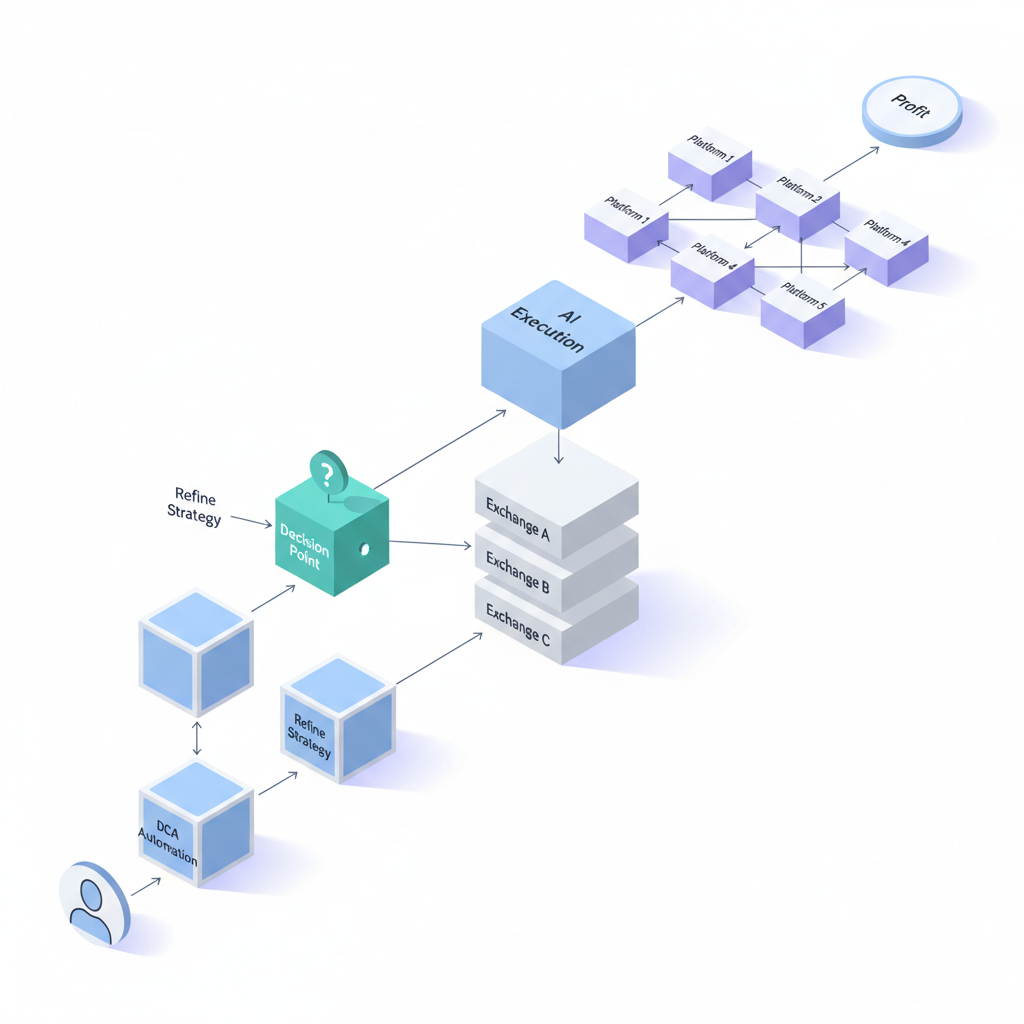
Crypto algo trading Australia means using software to execute buy and sell orders automatically, based on pre-programmed rules, mathematical models, or AI-generated signals. You define the logic, or you buy someone else’s logic, and the system trades on your behalf without you clicking a button.
There are meaningful differences between the tools available. A basic automated bot might just buy $50 of Bitcoin every Monday morning. A rule-based algorithm might enter a long position when the 50-day moving average crosses above the 200-day, then exit when RSI hits 70. An AI-powered system like SaintQuant uses machine learning to identify patterns and adapt strategies dynamically, without you writing a line of code.
The demand for these tools is real. Nearly 4 million Australians held crypto in 2024, and that number has grown since. Twenty-four-hour crypto markets create genuine advantages for automation that simply do not exist in ASX equities. A stock does not move at 2am on a Tuesday; Bitcoin absolutely does. Volatility plus round-the-clock trading is the core argument for algorithmic approaches.
The asset scope is broader than most people realise. Depending on the platform, Australian traders can run algos across crypto, ASX and US equities, forex, futures, and options. Kraken handles crypto natively. Interactive Brokers gives you everything else. Some platforms, like Pepperstone, sit in the middle with CFDs across 1,200+ instruments.
The regulatory picture is developing quickly. AUSTRAC requires all virtual asset service providers to be registered, and ASIC’s new licensing framework takes effect from April 2027. Both matter for platform selection. More on those shortly.
How Crypto Algo Trading Works: Strategies and Methods Explained
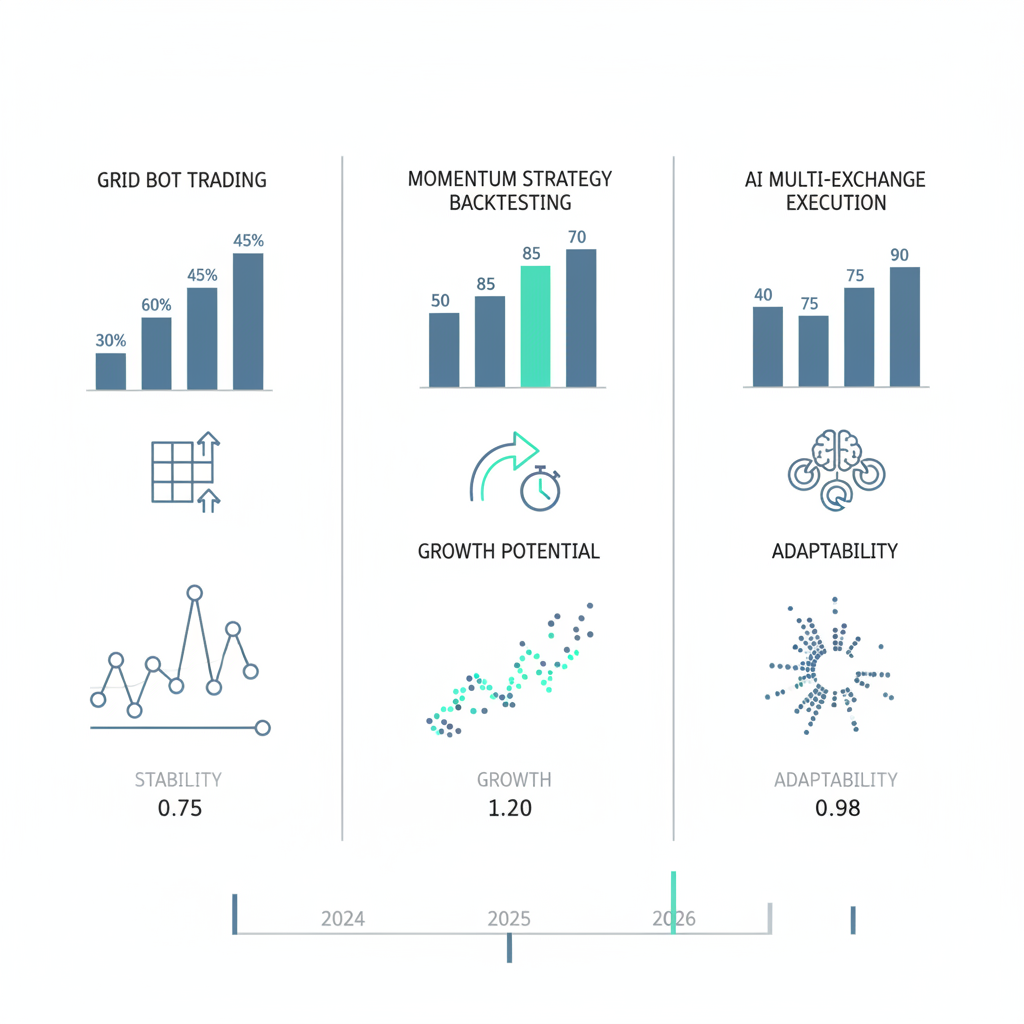
Understanding what your algo is actually doing matters. Not because you need to code it yourself, but because a strategy you do not understand is a strategy you cannot manage when it stops working.
Market-making involves placing simultaneous buy and sell orders either side of the mid-price to capture the spread repeatedly. It works best in liquid markets and requires tight execution. This is largely the territory of institutional desks in Australia, but some advanced retail platforms support it.
Trend-following and momentum strategies are the most common starting point for retail algo traders. The logic is straightforward: if price is above the 200-day moving average and MACD is showing bullish momentum, go long. If conditions reverse, exit. Backtested well on Bitcoin over multi-year periods, though they can get chopped up in sideways markets.
Arbitrage exploits price differences for the same asset across exchanges. If BTC/AUD is trading at $145,000 on Kraken and $145,400 on Binance, you buy one and sell the other simultaneously. The gaps are smaller than they used to be, and execution speed matters enormously. Genuinely useful arbitrage windows in Australia are typically sub-second.
Mean-reversion strategies assume that extreme price moves will correct back toward historical averages. Grid trading bots, which place orders at set price intervals above and below a current price, are a practical retail implementation of this idea. Platforms like Crypto.com and Kraken support grid bot functionality.
DCA automation is the entry point for most Australian traders. Swyftx has a built-in recurring buy feature; Coinbase does too. You set the amount, frequency, and asset, and the platform handles execution. It is not sophisticated, but it removes emotion and timing risk from accumulation strategies.
AI and machine-learning strategies are the new frontier. SaintQuant expanded into Australia in April 2026, connecting to seven major exchanges and offering pre-built AI bots without any coding requirement. The appeal is obvious. The caveat is that past performance in training data does not guarantee future results, particularly when market regimes shift.
Backtesting is non-negotiable before going live. Running a strategy against historical data tells you how it would have performed, not how it will perform, but it eliminates obviously broken logic before real money is at risk. Alpaca and Interactive Brokers both offer solid backtesting environments. Be particularly careful about survivorship bias and slippage assumptions in your backtests.
Risk management parameters sit inside any well-built algo: stop-loss levels, take-profit targets, maximum position size relative to account equity. If your algo does not have these, it is not an algo, it is a liability.
Best Platforms for Crypto Algo Trading in Australia 2026
Picking a platform comes down to five things: API quality and documentation, fee structure, asset coverage, Australian regulatory compliance, and whether the platform’s complexity matches your actual skill level. Here is how the main options stack up in 2026.
Alpaca Trading
Alpaca is the most developer-friendly API broker available to Australian traders right now. It runs on a commission-free model for US equities and offers crypto trading with a clean REST and WebSocket API that is well-documented and actively maintained. If you are building your own strategy in Python or JavaScript, Alpaca is the most common starting point. The downside is that it is US-focused, so direct AUD support is limited and you will need to account for currency conversion.
Interactive Brokers Australia
Interactive Brokers is the institutional-grade option. The Trader Workstation platform supports algo trading across stocks, options, futures, forex, and crypto. You can code strategies in Python, Java, C++, or use their native API. Fees are genuinely competitive for active traders. The setup complexity is real, and the interface has not been redesigned since the early 2010s, but the depth of functionality is unmatched for multi-asset algo strategies. ASIC-regulated and operating with an Australian AFSL.
Pepperstone
Pepperstone runs cTrader, which has purpose-built algo tools including cAlgo for building automated strategies in C#. The platform covers 1,200+ instruments including indices, forex, and commodities. PepperstoneCrypto, their dedicated crypto product, charges a flat 0.1% commission across all crypto trades, which is competitive for active algo execution. ASIC-regulated and AUSTRAC registered for crypto services.
Kraken and Kraken Pro
Kraken remains one of the strongest pure-crypto options for Australian algo traders. Over 400 cryptocurrencies, AUD support, and a well-documented REST and WebSocket API that handles order placement, account management, and market data feeds. Maker fees start from 0.25% and drop with volume. Kraken Pro gives you the more advanced interface and deeper API access. The exchange has a solid compliance record and is AUSTRAC registered.
Crypto.com
Crypto.com offers API access across 400+ cryptocurrencies, zero-fee AUD deposits, and AUSTRAC registration. The Exchange product (separate from the App) supports advanced order types and is the relevant environment for algo integration. Maker fees start at 0.25% and decrease with trading volume. Worth noting for Australian traders: the zero-fee AUD deposit via PayID is genuinely useful for active accounts that need to move cash quickly.
IC Markets
IC Markets is an ASIC-regulated Australian CFD and forex broker with a strong technical infrastructure. Fast execution, deep liquidity, and compatibility with MetaTrader 4, MetaTrader 5, and cTrader makes it well-suited for automated strategies. Crypto CFDs are available. Not a spot crypto exchange, so asset ownership considerations apply, but for traders focused on price exposure rather than custody, it is a serious option.
SaintQuant
SaintQuant launched in Australia in April 2026 and fills a genuine gap: AI-powered automated trading that does not require coding. The platform connects to seven major crypto exchanges and offers pre-built bots across different strategy types. For traders who want algo execution without building anything themselves, this is the most accessible option currently available. I would want to see a longer live track record in Australian market conditions before going in heavy, but the concept is sound and the execution looks clean so far.
Binance Australia
Binance Australia fully reinstated AUD deposits and withdrawals via PayID and bank transfer from January 16, 2026, after the extended suspension that frustrated a lot of local traders. With 500+ cryptocurrencies and one of the deepest liquidity pools available, it is back as a credible option for algo traders who need asset breadth. The API is extensive and well-documented. AUSTRAC registered.
Vantage
Vantage supports MetaTrader 4 and Expert Advisors (EAs), which means you can run existing MT4 algo strategies across their crypto and forex instruments without rebuilding anything. Useful if you already have MT4 strategies running elsewhere. ASIC-regulated.
A note on CoinSpot and Swyftx: Both are excellent for manual trading and beginner-friendly DCA automation. CoinSpot has 530+ coins and a huge Australian user base. Swyftx has built-in recurring buy features and a demo mode that is genuinely useful. I have been using Swyftx since 2022 for accumulation strategies. But neither platform offers the kind of native API access or backtesting environment that serious algo trading requires. They are on-ramps, not algo infrastructure.
Platform Comparison Table: Crypto Algo Trading in Australia
| Platform | Best For | API Available | Crypto Assets | AUD Support | Typical Fees | AUSTRAC/ASIC Status |
|---|---|---|---|---|---|---|
| Alpaca | Developer algo strategies | Yes (REST + WebSocket) | Yes (limited) | No (USD-based) | Commission-free equities; crypto fees apply | US-regulated |
| Interactive Brokers | Multi-asset algo trading | Yes (multiple languages) | Yes | Yes | From ~0.1% depending on asset | ASIC licensed (AFSL) |
| Pepperstone | cAlgo strategies, CFDs | Yes (cTrader API) | CFDs only | Yes | 0.1% PepperstoneCrypto; spread-based CFDs | ASIC licensed + AUSTRAC |
| Kraken | Pure-crypto algo | Yes (REST + WebSocket) | 400+ | Yes | Maker from 0.25%, taker 0.40% | AUSTRAC registered |
| Crypto.com | API trading, zero-fee AUD deposits | Yes | 400+ | Yes (zero-fee deposit) | Maker from 0.25% | AUSTRAC registered |
| IC Markets | MT4/MT5/cTrader automation | Yes | Crypto CFDs | Yes | Spread-based; raw pricing accounts from $0 | ASIC licensed (AFSL) |
| SaintQuant | AI bots, no-code automation | Connects to 7 exchanges | Multi-exchange | Via connected exchanges | Subscription/bot purchase model | Via connected exchanges |
| Binance Australia | Broad crypto asset access | Yes (extensive) | 500+ | Yes (PayID reinstated Jan 2026) | Maker from 0.10% | AUSTRAC registered |
| Vantage | MT4 Expert Advisors | Yes (MT4 EA) | Crypto CFDs | Yes | Spread-based | ASIC licensed (AFSL) |
Editorial note: CoinSpot and Swyftx remain the most popular platforms for Australian crypto beginners but have limited native algo tooling. Use them for accumulation and manual trading, then graduate to Kraken or Alpaca if you want to automate seriously.
Australian Regulations for Crypto Algo Trading: ASIC, AUSTRAC and ATO Rules
The regulatory environment shifted substantially in the first half of 2026, and if you are choosing platforms or building a trading business, you need to understand what changed.
AUSTRAC and VASP Registration
Every business providing virtual asset services in Australia must be registered with AUSTRAC. As of April 2, 2026, the longstanding “Digital Currency Exchange” (DCE) label was officially replaced with “Virtual Asset Service Provider” (VASP), aligning Australian terminology with FATF international standards. The change is cosmetic in most respects; the obligations are the same.
VASP obligations include developing a risk-based AML/CTF program, implementing KYC procedures for all customers, reporting threshold transactions of AUD $10,000 or more, and filing suspicious matter reports. AUSTRAC now maintains a searchable public register of registered VASPs, which is worth checking before you deposit funds anywhere. Operating an unregistered platform is a criminal offence in Australia, full stop.
For algo traders, this means: verify that any platform you connect your capital to is on the AUSTRAC register. This is particularly relevant if you are using offshore platforms or newer entrants to the market.
ASIC and the New Digital Asset Framework
The Corporations Amendment (Digital Assets Framework) Act 2026 received Royal Assent on April 8, 2026. This is the legislation that will formally bring digital asset platforms and tokenised custody platforms under ASIC’s licensing regime. The new Australian Financial Services Licence requirements take effect from April 2027, giving an 18-month implementation window from Royal Assent.
ASIC published its regulatory roadmap on April 21, 2026, flagging that a dedicated regulatory guide for digital asset platforms will be released between July and December 2026. That guide will clarify exactly what obligations attach to different platform types.
What this means practically: platforms that hold client assets or operate exchange functions will need an AFSL from April 2027. Platforms that are already ASIC-licensed (Interactive Brokers, Pepperstone, IC Markets, Vantage) are well-positioned. Pure crypto exchanges like Kraken and Binance Australia are working through compliance pathways. Choose platforms that are either already licensed or transparently on track for compliance under the new framework.
[INTERNAL LINK PLACEHOLDER: ASIC crypto regulations → /guides/asic-crypto-regulations-australia]
ATO Tax Rules for Crypto Algo Trading in Australia 2026
The ATO’s position on crypto has been consistent for years: cryptocurrency is property, not currency, and tax obligations attach to almost every transaction. For algo traders running hundreds of trades per year, this creates a specific administrative burden that is worth understanding before you start.
CGT vs Income Tax
Most crypto transactions for retail investors trigger Capital Gains Tax events. Selling crypto for AUD, swapping one crypto for another, gifting crypto, or using crypto to buy goods or services are all CGT events. The capital gain or loss is calculated as the difference between the asset’s cost base and its disposal value in AUD at the time of the transaction.
The 50% CGT discount applies to assets held for more than 12 months before disposal. If your algo is running long-term hold strategies, this matters significantly. If it is executing dozens of trades weekly, nearly every disposal will be a short-term gain taxed at your marginal rate.
Income tax rather than CGT applies to staking rewards, certain airdrops, and any crypto received as salary or business income. These are treated as assessable income at the AUD value on the date of receipt.
What Is Not Taxable
Transferring crypto between wallets you own is not a taxable event. This point still confuses a lot of traders. Moving BTC from Kraken to a hardware wallet does not trigger CGT. Swapping BTC for ETH does.
GST has not applied to crypto transactions since July 1, 2017, following a legislative amendment that treated digital currency similarly to money for GST purposes.
The Algo Trader’s Tax Problem
Running an active algo strategy creates a record-keeping challenge that manual traders simply do not face. A grid bot running on a $20,000 position over 12 months might generate 500 to 1,