Crypto Algo Trading in Australia 2026: What You Need to Know
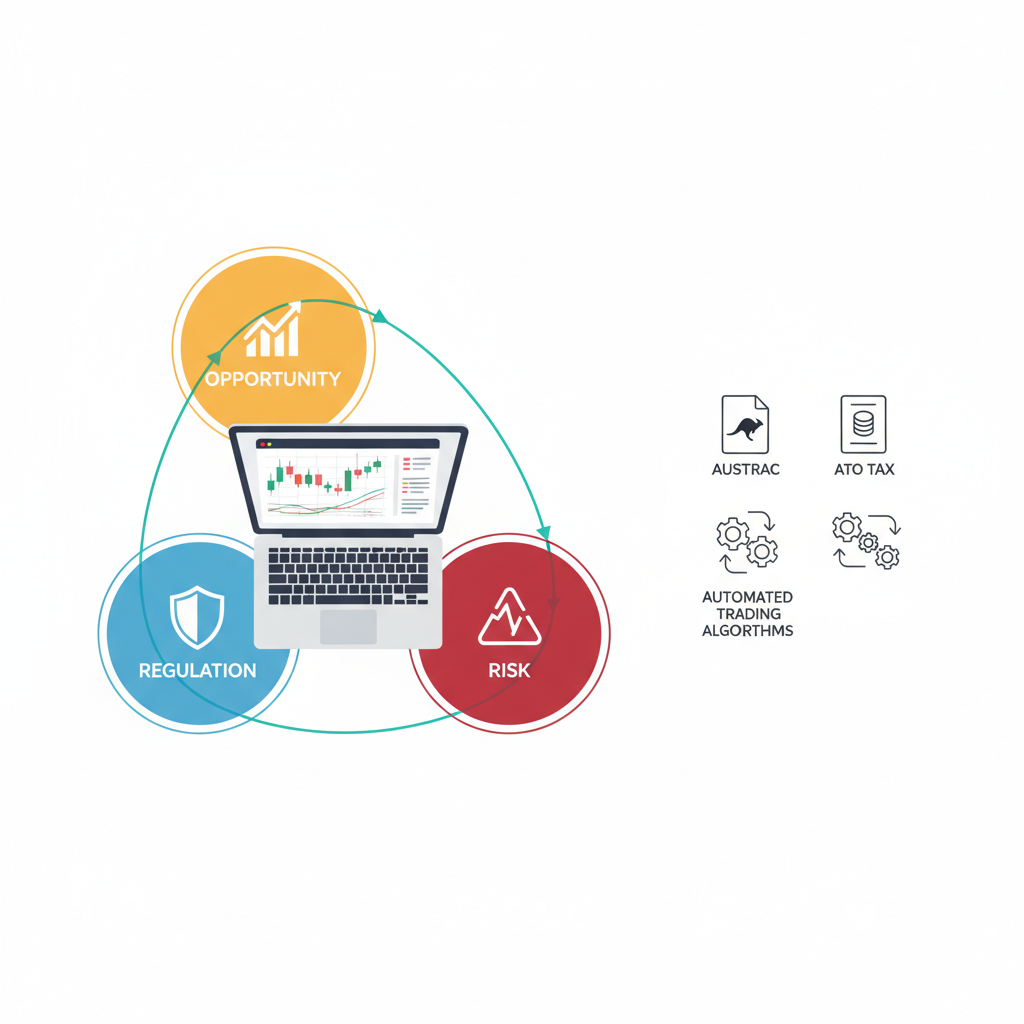
Crypto algo trading in Australia sits at an awkward intersection of genuine opportunity and serious regulatory complexity, and if you get either side wrong, it costs you money or exposes you to legal risk. This guide covers both.
> TL;DR
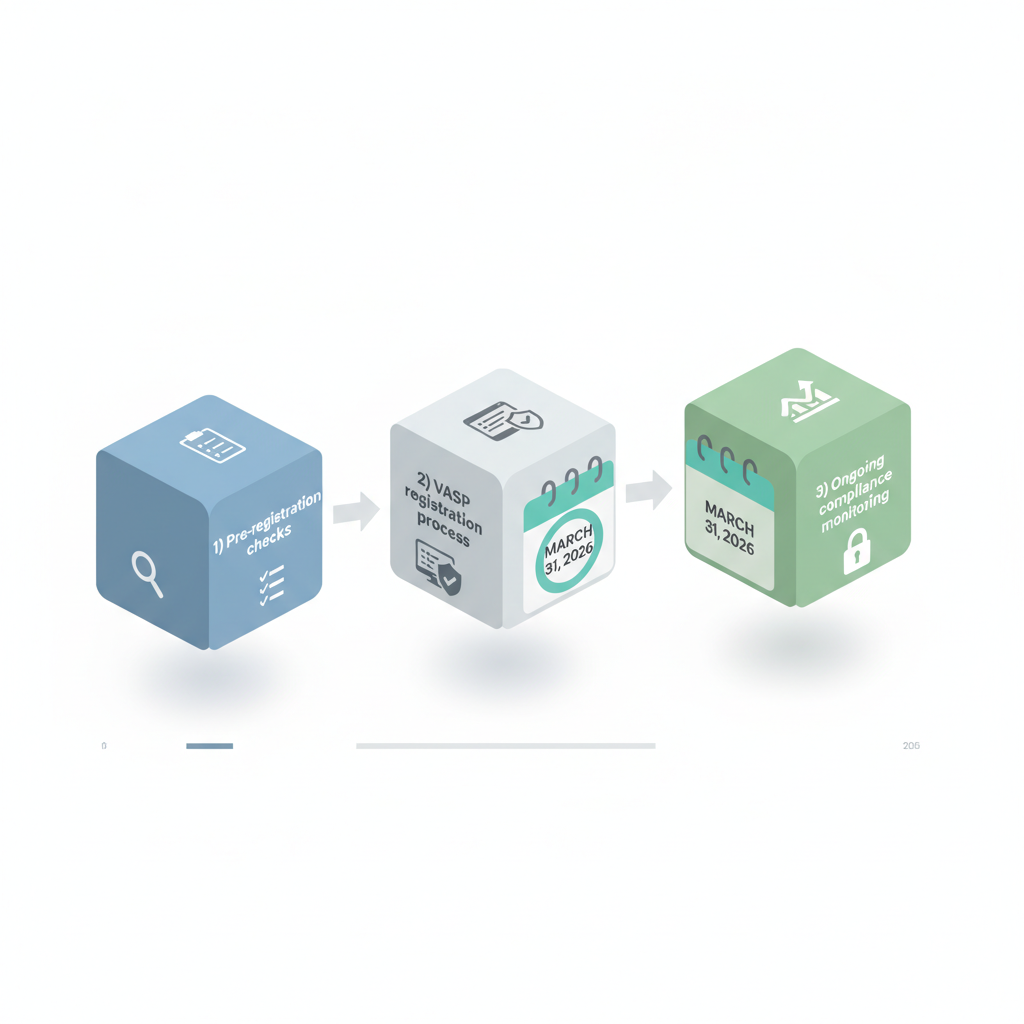
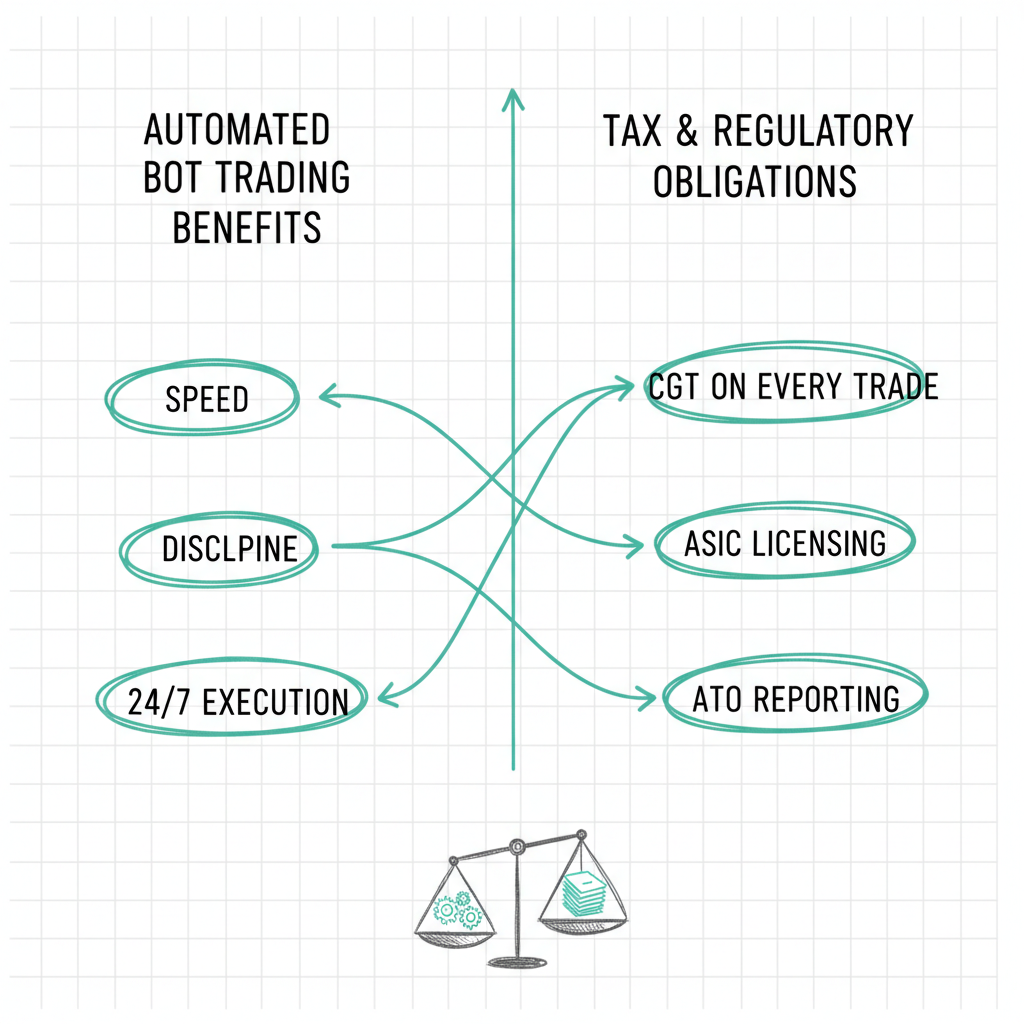
> Crypto algo trading in Australia is legal but tightly regulated, with AUSTRAC now requiring all Virtual Asset Service Providers (VASPs) to be registered as of March 31, 2026. The ATO taxes crypto as property, which means CGT applies to every disposal your bot generates. Automated trading offers real advantages in speed and discipline, but verify AUSTRAC registration and ASIC licensing before you deposit a single dollar anywhere.
Crypto Algo Trading Australia: The Fast Answer
Algorithmic crypto trading means using pre-programmed rules to automatically execute buy and sell orders, without you sitting there clicking buttons. Your strategy gets coded into a bot or trading platform, and it fires orders based on price conditions, technical indicators, time intervals, or combinations of all three. It is legal in Australia for both retail and professional traders.
Two regulators matter here. AUSTRAC handles registration requirements for any business dealing in virtual assets. ASIC handles licensing for platforms that offer financial products or investment advice. They are separate obligations, and a platform can have one without the other, which matters when you are assessing where to put your money.
The big regulatory change landed on March 31, 2026. Australia’s AML/CTF laws expanded to cover a broader set of virtual asset activities. The old “Digital Currency Exchange” (DCE) category got replaced by “Virtual Asset Service Provider” (VASP), which now pulls in crypto custody services, certain DeFi-adjacent activities, and additional virtual asset operations that were not covered before.
On the tax side, the ATO treats crypto as property. Every trade your algo executes that results in a disposal is a CGT event. If your bot is running a mean-reversion strategy and firing 50 trades a day, that is 50 CGT events a day. Each one needs to be reported. That distinction matters enormously for anyone planning to run high-frequency strategies.
This guide covers regulation, tax, the banking environment, platform comparisons, and scam risks specific to the Australian market in 2026.
How Algorithmic Crypto Trading Works
At its core, algo trading is rule-based order execution. You define the conditions, the bot executes. No hesitation, no second-guessing, no checking your phone at 2 am. The strategy runs whether you are awake or not, which suits crypto markets that never close.
Common Strategy Types
Trend following is the most common entry point for retail traders. The bot buys when price momentum is upward and exits when it reverses, typically using moving averages or momentum indicators as signals.
Mean reversion works on the assumption that price tends to return to an average. A bot buys when an asset is oversold relative to its recent range and sells when it recovers. This works reasonably well in sideways markets but can be brutal during trending conditions.
Arbitrage exploits price differences between exchanges. For example, BTC might be priced differently on Kraken and Coinbase at the same moment. The bot buys on the cheaper exchange and sells on the more expensive one simultaneously. Execution speed is everything here, and retail traders are generally at a disadvantage against professional operations with co-located servers.
Market making involves placing limit orders on both sides of the order book and capturing the spread. This requires significant capital, deep API integration, and careful risk management. It is not a beginner strategy.
APIs and the Technical Reality
All of this runs through exchange APIs. Your bot authenticates with the exchange using API keys, sends order requests, and receives execution confirmations. Most reputable Australian exchanges provide REST and WebSocket APIs. The quality varies considerably: Kraken‘s API is well-documented and reliable; some smaller local exchanges have APIs that are adequate for low-frequency strategies but fall over under load.
Custom solutions are typically built in Python, using libraries like `ccxt` which provides a unified API wrapper for dozens of exchanges. For traders comfortable with C#, cTrader’s cAlgo environment is popular for forex and increasingly used for crypto where supported. Interactive Brokers provides one of the most sophisticated programmatic trading environments available to Australian retail traders.
What Can Go Wrong
Speed and consistency are real advantages. Emotion-free execution is real. But the risks are serious. A poorly written strategy does not just sit there doing nothing. It executes badly, at scale, around the clock. Flash crashes can trigger stop-loss cascades that wipe positions before any human could intervene. Over-fitted strategies that looked great on historical data fall apart in live conditions. API disconnections during volatile periods can leave positions open in unexpected directions. If you are testing a new bot, use paper trading environments where available, and start with sizes you can afford to lose entirely while the strategy proves itself.
Australian Regulation: AUSTRAC, ASIC, and the 2026 VASP Rules
If there is one thing worth understanding cold before you put money into any automated crypto trading setup, it is the regulatory structure. An unregistered platform is not a grey area in Australia. It is illegal.
AUSTRAC Registration: Now Mandatory for VASPs
From March 31, 2026, all businesses providing virtual asset services in Australia must be registered with AUSTRAC as Virtual Asset Service Providers. The VASP classification replaced the older Digital Currency Exchange (DCE) label, and the scope expanded meaningfully.
Previously, registration was required for businesses exchanging digital currency for fiat (and vice versa) or for other digital currencies. The 2026 expansion added crypto custody services, additional categories of virtual asset transfer services, and certain DeFi-adjacent activities to the registration requirement. Any business operating in these areas without AUSTRAC registration is doing so illegally.
AUSTRAC’s enforcement powers are not advisory. The regulator can refuse a registration application, suspend a current registration, or cancel it entirely if a business is assessed as posing an unacceptable risk of money laundering, terrorism financing, or other serious crime. In 2025-2026, AUSTRAC conducted a targeted review of the DCE register and removed 62 inactive businesses. Some exited voluntarily. Others were removed to prevent misuse for financial crime.
ASIC Licensing: Separate and Also Relevant
AUSTRAC registration covers AML/CTF compliance. ASIC licensing under the Australian Financial Services Licence (AFSL) framework covers a different obligation: platforms that offer financial products, derivatives, or investment advice need to be AFSL-licensed. Many crypto exchanges operate as pure spot trading platforms without needing an AFSL. But platforms offering crypto derivatives, managed investment schemes, or investment advice need one.
eToro holds both an AFSL and AUSTRAC registration in Australia, which is why it can legally offer copy trading and other features that might otherwise be classified as managed investment services.
How to Verify Before You Deposit
Two registers. First, check the AUSTRAC VASP register, available on the AUSTRAC website. Search the business name and confirm the registration is current, not suspended. Second, for platforms offering financial products or advice, search ASIC Connect for the AFSL.
If a platform claims to be registered or licensed and you cannot find it in either register, treat it as unregistered. There are sites, including one called cryptoalgorithm.net that has been flagged by scam watchdogs and has no record of ASIC authorisation, that front as algo trading platforms while running scams. The AUSTRAC and ASIC registers are your first line of defence.
Crypto Tax in Australia for Algo Traders: ATO Rules 2026
The ATO’s position on crypto is not complicated, but for algo traders it creates significant administrative load. Crypto is property. Every disposal is a tax event. Your bot does not know or care about this.
CGT Applies to Every Trade
When you sell crypto for AUD, that is a CGT event. When your bot swaps ETH for USDC, that is a CGT event. When you spend crypto on a service, that is a CGT event. Each disposal must be reported individually with the AUD value at the time of the transaction. If you are running an automated strategy that fires hundreds of trades per month, you are generating hundreds of reportable CGT events.
The 50% CGT discount applies to assets held for more than 12 months before disposal. For most algo trading strategies, assets are held for minutes, hours, or days. The discount rarely applies, and you should not be building your tax planning around it if you are running active automated strategies.
Income Tax on Staking, Airdrops, and More
Staking rewards, airdrops, and mining income are taxed as ordinary income at market value on the date you receive them. If you are running a strategy alongside passive staking, your staking rewards need to be declared as income, and then when you eventually sell or swap those staked assets, a separate CGT calculation applies to any subsequent gain.
Salary paid in crypto is also ordinary income. GST does not apply to buying or selling cryptocurrency, which AUSTRAC categorises as an input-taxed financial supply. That part is relatively clean.
Practical Approach for High-Volume Traders
The ATO flagged crypto tax compliance as a priority in January 2026. They receive data from exchanges, and the reconciliation process is getting more sophisticated. Doing this manually for a high-frequency algo strategy is not realistic.
Crypto tax software is the practical answer. Koinly and CoinLedger both connect via API to major exchanges, import transaction histories, and calculate CGT on a per-disposal basis across the financial year. Both support Australian tax rules including the 12-month discount. If you are running more than 20 trades a month, paying for one of these services is not optional, it is the cost of staying compliant.
One important nuance: if your algo trading operation crosses into business territory (high frequency, commercial intent, significant capital), the ATO may classify your crypto holdings as trading stock rather than CGT assets. Under trading stock rules, the 50% discount disappears entirely and gains are taxed at your marginal income rate. This is worth a conversation with a registered tax agent who actually understands crypto. Most general-practice accountants do not.
[INTERNAL LINK PLACEHOLDER: crypto tax guide for Australian traders → /guides/crypto-tax-australia]
Banking Restrictions Australian Crypto Traders Face in 2026
Before you set up any automated trading strategy, you need to know how the money gets in and out. Australian banks have been progressively tightening restrictions on crypto-related transfers, and for algo traders who may need to move capital quickly between accounts and exchanges, this matters practically.
What the Major Banks Are Doing
Commonwealth Bank has a fixed $10,000 monthly limit on payments to crypto exchanges. Hit that limit and your transfers stop regardless of what the exchange says on its end. ANZ is more permissive, offering up to $25,000 per day for established customers, though “established” is loosely defined in practice and can vary by relationship. NAB and Westpac both impose restrictions and in some cases block transactions to exchanges entirely, often without warning.
On February 3, 2026, Coinbase submitted a formal complaint to the Australian parliament accusing major banks of systematically debanking legitimate crypto companies. Account closures and blanket transaction restrictions were the primary complaints. This is not new, but it is getting worse and is now at the stage where a major exchange felt compelled to go to parliament about it.
For credit card purchases: many Australian banks block crypto purchases on credit cards, or process them as cash advances which attract different fees and interest rates. Check with your bank before trying this.
Practical Workarounds
PayID deposits are generally the most reliable funding method. Most reputable Australian exchanges accept PayID, the transfers are instant, and fees on the exchange side are usually zero. Digital Surge charges nothing for PayID and bank transfers. Swyftx and CoinSpot also offer free AUD deposits via PayID.
Choosing an exchange that holds its AUD in a local Australian bank account (rather than routing funds offshore) also reduces the chance of your bank flagging the transfer. This is one practical reason to favour Australian-headquartered exchanges for your base account even if you use offshore platforms for specific strategies.
Best Platforms for Crypto Algo Trading in Australia 2026
Not every exchange that claims to support algo trading actually does it well. API reliability, documentation quality, fee structures, and AUD deposit options all matter. Here is where things stand in 2026.
Platform Comparison Table
| Platform | AUSTRAC/ASIC Status | API Access | Bot Support | AUD Deposits | Maker Fee | Best For |
|---|---|---|---|---|---|---|
| Interactive Brokers | AFSL licensed | Advanced (Python, REST, FIX) | Custom code | Yes | Low | Custom coded algos, multi-asset |
| Kraken | AUSTRAC registered | Professional REST + WebSocket | Third-party bots | Yes (PayID) | 0.16% | Serious active traders |
| Coinbase | AUSTRAC registered | REST + WebSocket | Third-party bots | Yes | 0.40% | Liquidity, trusted brand |
| Swyftx | AUSTRAC registered | REST API | Limited | Yes (PayID, free) | 0.6% spread | Beginners, AUD convenience |
| CoinSpot | AUSTRAC registered | REST API | Limited | Yes (PayID, free) | 0.1% | Low fees, AU-based |
| Digital Surge | AUSTRAC registered | REST API | Limited | Yes (PayID, free) | 0.1% | Fee-conscious AU traders |
| Cryptohopper | N/A (bot platform) | Connects via exchange APIs | Full bot suite | N/A | Subscription | Automated strategies, DCA |
| TradersPost | N/A (infrastructure) | TradingView integration | Yes | N/A | Subscription | TradingView signal traders |
| Alpaca Trading | AFSL context | Excellent REST API | Custom code | USD primary | Commission-free (stocks) | API-first traders |
| eToro | AFSL + AUSTRAC | Limited | Copy trading | Yes | Spread-based | Copy trading, passive |
The Platforms Worth Understanding
Interactive Brokers Australia is the most capable option for traders who want to build custom algorithmic strategies. The API supports Python, Java, and C++ natively, and the IBKR platform gives access to crypto alongside equities, options, and futures in a single account. The learning curve is real. The documentation is dense. But if you know what you are doing and want professional-grade infrastructure, nothing available to Australian retail traders comes close.
Kraken is where I would point someone who wants a proper crypto-native exchange with serious API support. The documentation is among the best in the industry, the fee structure is transparent, AUD deposits and withdrawals work via PayID, and staking is available for eligible assets. Maker fees start at 0.16% and drop with volume. For running bots that rely on limit orders, Kraken’s API reliability under load is consistently better than most alternatives.
Coinbase Australia is AUSTRAC-registered and provides strong liquidity on major pairs. The API is well-documented and widely supported by third-party bot platforms. Fees are on the higher end for retail tiers (0.40% maker at base level), which matters if your strategy is high-frequency. The brand trust and liquidity depth make it a reasonable choice for strategies that do not require ultra-tight fees.
Swyftx is Australia-based and AUSTRAC-registered, with over 420 assets and a strong local customer service operation. I have been using Swyftx since 2022 and it is genuinely good for AUD convenience, with free PayID deposits and straightforward withdrawals. The API exists but is not as fully featured as Kraken’s for complex algo work. Best suited to less frequent automated strategies or as a base account for AUD funding. The spread on BTC/AUD runs around 0.6%, which is worth factoring into strategy calculations.
CoinSpot has been operating in Australia since 2013 and is one of the more established local exchanges. Market orders start at 0.1%, making it competitive on fees. The OTC desk is useful for larger AUD amounts. API support exists but is more limited than offshore platforms. If you are running simpler automated strategies and want the lowest possible fees on an Australian exchange, CoinSpot is worth serious consideration.
Digital Surge matches CoinSpot on fees at 0.1% and charges nothing for PayID deposits or bank transfers. For traders whose primary concern is minimising the cost-