Crypto Algorithmic Trading in Australia: Complete 2026 Guide
Crypto algorithmic trading in Australia changed permanently on 1 April 2026, and if you are still running bots on a platform that has not started its AFSL application, you are taking on regulatory risk you probably have not priced in.
> TL;DR: Crypto algorithmic trading in Australia lets you automate buy and sell decisions using pre-set rules triggered by price, volume, or technical indicators. In 2026, Australia’s new AFSL licensing regime and updated AUSTRAC rules have reshaped which platforms you should be using. Key platforms include Eightcap, IC Markets, Pepperstone, and Alpaca. The ATO taxes crypto as property under CGT, with a 50% discount for assets held over 12 months, and staking rewards as ordinary income. Stick to AUSTRAC-registered platforms and keep records of every single trade.
What Is Crypto Algorithmic Trading in Australia?
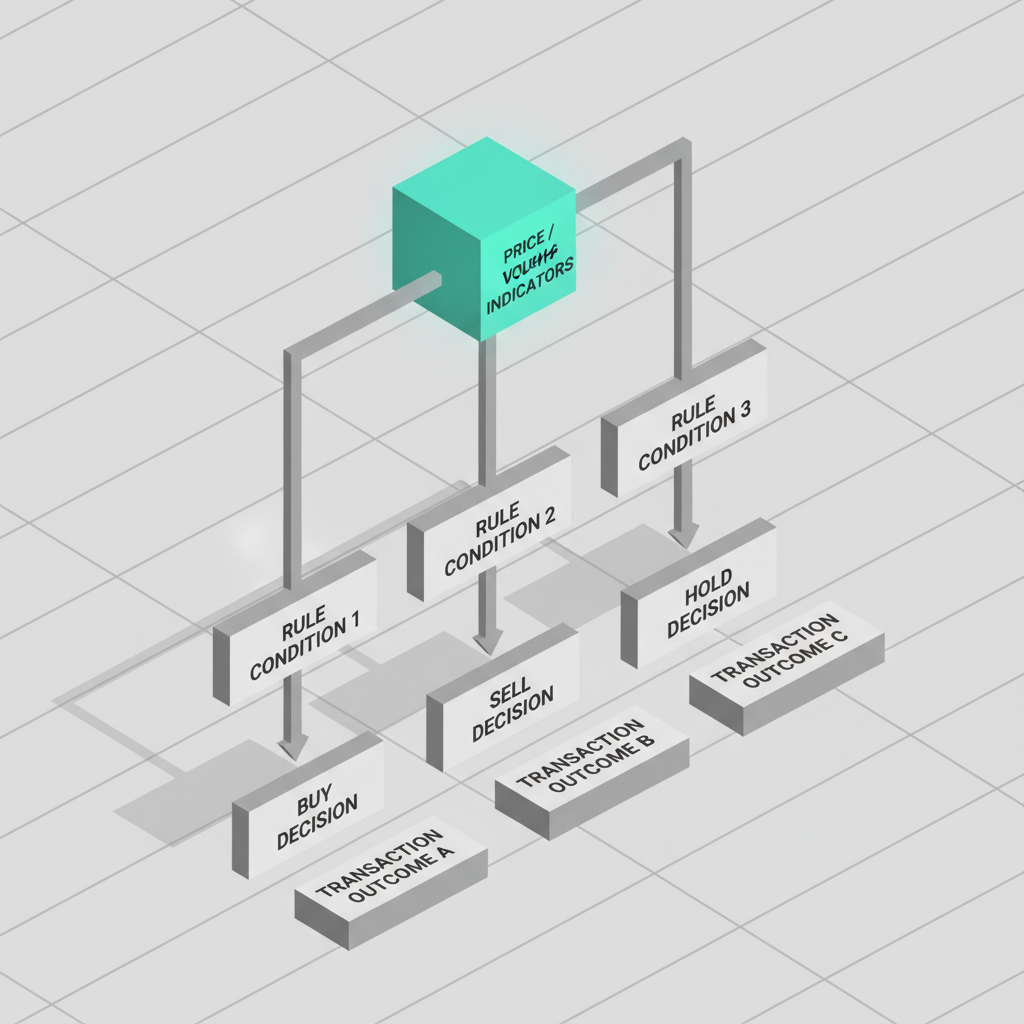
Crypto algorithmic trading in Australia is exactly what it sounds like: you write a set of rules, a computer follows them, and trades get placed without you staring at a screen at 2am. The algorithm monitors market conditions, including price levels, volume spikes, moving averages, RSI readings, or even news sentiment feeds, and fires off orders the moment your conditions are met.
For Australian traders specifically, this matters more than it does in traditional markets. Crypto runs 24 hours a day, 7 days a week, including Christmas and EOFY. Manual trading across that schedule is not sustainable. Algorithms fill that gap.
The main strategy types you will encounter are trend-following (buying when momentum is up, selling when it reverses), arbitrage (exploiting price differences across exchanges), market-making (posting both bid and ask orders to collect the spread), and mean reversion (betting that extreme price moves will snap back). Each has different infrastructure requirements and different risk profiles.
The regulatory picture shifted significantly on 1 April 2026. Australia passed its first comprehensive crypto regulation law, requiring exchanges and custody providers to obtain an Australian Financial Services Licence. That changes which platforms are appropriate for serious algo traders, and it affects how you think about counterparty risk. More on that in the regulation section below.
One thing worth flagging upfront: no single dominant local algo trading platform covers everything. Australian traders typically combine a CFD broker for derivatives exposure, a spot exchange for direct crypto ownership, and a third-party bot or API layer to connect the two.
How Algorithmic Trading Works in Crypto Markets
At its core, an algo trading system scans market data continuously and triggers orders when a predefined condition is satisfied. That condition might be as simple as “buy 0.01 BTC when the 50-day moving average crosses above the 200-day moving average,” or as complex as a multi-factor model incorporating on-chain flow data, funding rates, and order book depth.
The execution speed advantage is real and measurable. A human trader reacting to a price move is dealing with reaction times somewhere north of 200 milliseconds on a good day. A co-located algorithm can execute in under a millisecond. In volatile crypto markets, that difference can be the gap between getting filled at your target price and chasing a candle that has already moved 2%.
The emotion-free aspect is underrated. I have watched traders manually override their own backtested systems because they “had a feeling.” The feeling cost them. Algorithms do not have feelings about Elon Musk tweets.
Continuous surveillance is the other practical advantage. A well-built algo can monitor BTC/AUD, ETH/AUD, SOL/USDT, and a dozen other pairs simultaneously, something no individual trader can do with any consistency.
Backtesting is where most newcomers either gain confidence or get humbled. You feed your strategy historical data and see how it would have performed. The trap is overfitting, where your strategy is tuned so precisely to past data that it falls apart on live markets. A strategy that returned 200% in backtesting on 2021 data may have simply learned to buy every dip in a bull market. The fix is out-of-sample testing: build on one period, test on a separate period you have never touched.
Practical risks worth knowing before you commit capital: slippage (particularly on low-liquidity pairs), API downtime (exchanges go offline, sometimes at the worst possible moment), and crypto’s inherent volatility, which can blow through stop-loss levels during flash crashes. None of these are reasons to avoid algo trading, but they are reasons to size positions conservatively until a strategy proves itself on live markets.
[INTERNAL LINK PLACEHOLDER: backtesting crypto strategies → /guides/backtesting-crypto-strategies-australia]
Top Platforms for Crypto Algo Trading in Australia (2026)
The honest answer is that the “best” platform depends on whether you want CFD exposure, spot ownership, or a bot layer on top of an existing exchange. Here is how the main options stack up in 2026.
CFD Brokers
Eightcap is ASIC-regulated and one of the more crypto-focused CFD brokers available to Australians. It offers over 95 crypto CFDs, supports MT4, MT5, and TradingView for automated strategies, and has its own proprietary tool called CryptoCrusher. Spreads on BTC/AUD CFDs are competitive. The limitation is that CFDs mean you do not own the underlying asset, which has CGT implications worth understanding with your accountant.
IC Markets is a favourite among experienced MT4 and MT5 users running Expert Advisors. The execution speeds are fast, spreads are tight (BTC spread around 0.1% in normal conditions), and the infrastructure is built for high-frequency strategies. Not ideal for beginners because the platform assumes you know what you are doing.
Pepperstone covers MetaTrader, cTrader, and TradingView automation, which gives you more flexibility in how you build and deploy strategies. ASIC-regulated, tight spreads on major crypto CFDs, and a solid reputation for not having the kind of API outages that derail automated strategies.
Developer-Focused Brokers
Alpaca targets developers with a REST API that is genuinely well-documented. Paper trading mode lets you run a strategy on live market data without risking real capital, which is useful for validation before going live. Fees are low, though AUD deposit options are more limited than with the Australian-headquartered brokers.
Interactive Brokers offers exchange-level access and full API control with sophisticated order types. The downside for algo traders is no MetaTrader support, so you are building in Python, Java, or using IBKR’s own API. The platform suits experienced developers who want institutional-grade infrastructure.
Third-Party Bot Platforms
Cryptohopper sits on top of existing exchanges rather than being a broker itself. It handles DCA strategies, trailing stops, AI-generated signals, and copy trading across major exchanges including Kraken and Coinbase. Subscription-based pricing, which adds to your cost base, but the no-code interface makes it accessible without deep programming knowledge.
Australian Spot Exchanges
CoinSpot and Swyftx are both AUSTRAC-registered and offer API access for spot algo trading. I have been using Swyftx since 2022 and the API is functional for basic automation, though neither exchange is built for high-frequency strategies the way a dedicated CFD broker is. CoinSpot’s market order fees start at 0.1%, with instant buy at 1%. Swyftx’s spread on BTC/AUD sits around 0.6% on average.
On AUD deposits: PayID is the fastest option across most platforms, typically settling within minutes. Direct bank transfers work but can take one to two business days. Card deposits are available on some platforms but come with fees, CoinSpot charges 1.22% for card deposits, for example. Note that Commonwealth Bank, ANZ, Westpac, and NAB all impose monthly caps (often $10,000) or holds on transfers to crypto exchanges. This is not specific to any exchange; it is a blanket bank policy tied to AML/CTF rules.
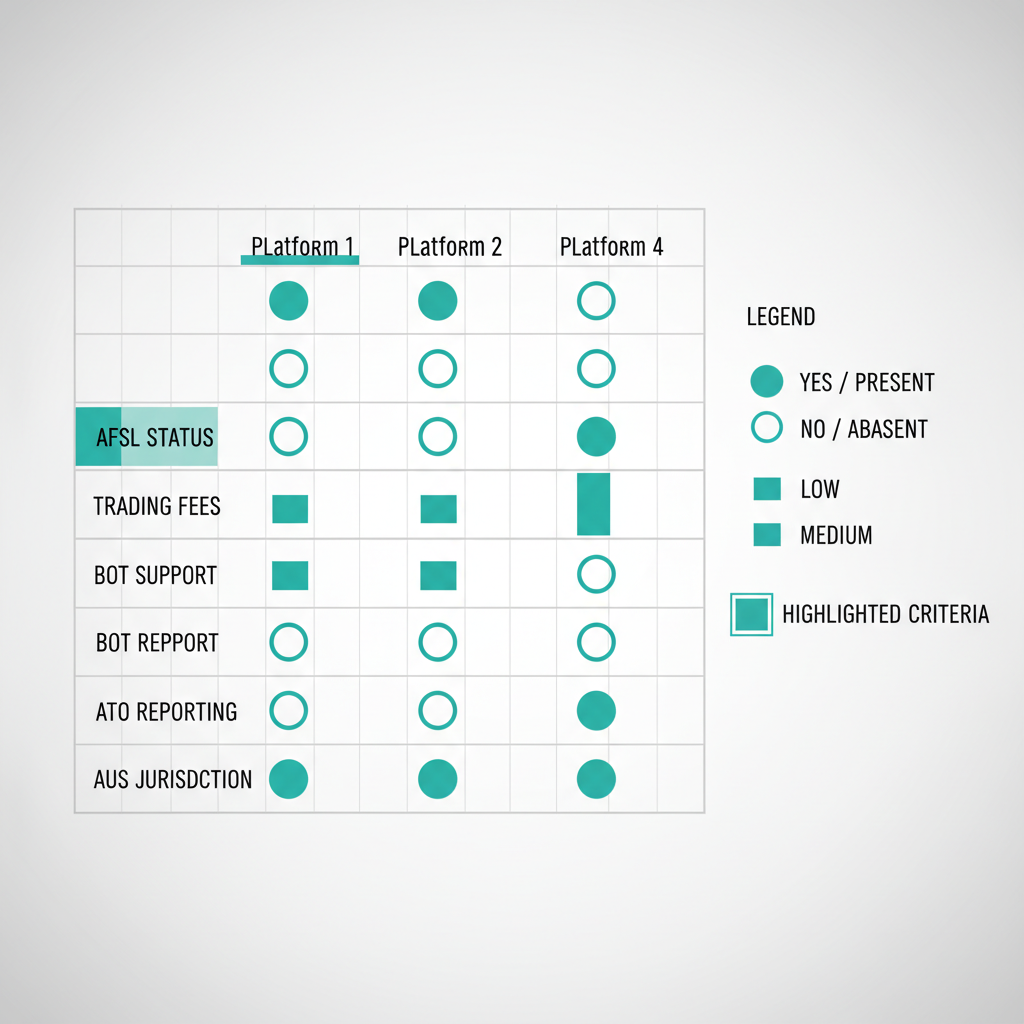
Platform Comparison Table: Crypto Algo Trading in Australia
| Platform | Regulation | Asset Types | Algo Method | Min Deposit (AUD) | Maker/Taker Fees | AUD Deposits | Best For |
|---|---|---|---|---|---|---|---|
| Eightcap | ASIC | 95+ crypto CFDs | MT4, MT5, TradingView | ~$100 | Spread-based (~0.1–0.3%) | Bank transfer, card | Crypto CFD algo trading |
| IC Markets | ASIC | Crypto CFDs + FX | MT4/MT5 Expert Advisors | ~$200 | From 0.1% spread | Bank transfer, PayPal | High-frequency Expert Advisors |
| Pepperstone | ASIC | Crypto CFDs + FX | MT4, MT5, cTrader, TradingView | ~$200 | From 0.1% spread | Bank transfer, card | Active CFD automation |
| Alpaca | US-regulated | US equities + crypto | REST API, paper trading | $0 | 0.25% taker | Bank transfer (USD) | Developer-built strategies |
| Interactive Brokers | ASIC + global | Crypto, equities, futures | Proprietary API | ~$0 | Varies by asset | Bank transfer | Advanced API traders |
| Cryptohopper | N/A (bot layer) | Via connected exchanges | Visual bot builder, signals | Subscription from ~$30/mo | Exchange fees apply | Via connected exchange | No-code bot strategies |
| CoinSpot | AUSTRAC registered | 530+ spot crypto | REST API | $0 | 0.1% market / 1% instant | PayID, bank, card, PayPal | Spot trading, AUS-based holders |
| Kraken | AUSTRAC registered | 200+ spot + margin | REST API, Kraken Pro | $0 | 0% maker / 0.1% taker (high vol) | PayID, bank transfer | High-volume traders, low maker fees |
| Swyftx | AUSTRAC registered | 420+ spot crypto | REST API | $0 | ~0.6% spread BTC/AUD | PayID, bank transfer | AUS-based spot API trading |
A few things to highlight from the table. Kraken’s 0% maker fee for high-volume traders is the standout on cost. Independent Reserve (not in the table above but worth mentioning) runs a tiered fee structure that drops to 0.02% at volume, which is about as cheap as it gets in Australia for spot. For CFD traders, Eightcap and Pepperstone are both ASIC-regulated and built for automated strategies in a way that CoinSpot and Swyftx simply are not.
[INTERNAL LINK PLACEHOLDER: Swyftx review → /reviews/swyftx-review-australia]
[INTERNAL LINK PLACEHOLDER: CoinSpot review → /reviews/coinspot-review-australia]
Australia’s 2026 Crypto Regulation: What Algo Traders Must Know
On 1 April 2026, Australia passed its first comprehensive crypto regulation framework. The headline requirement: all crypto exchanges and custody providers serving Australian users must obtain an Australian Financial Services Licence within six months of that date. ASIC issued a no-action position until 30 June 2026, meaning platforms that had applied but not yet received their AFSL would not face immediate enforcement action during that window.
From April 2027, ASIC will issue detailed regulatory guidance and operational standards specifically for Digital Asset Platforms (DAPs) and Tokenised Custody Platforms (TCPs). That second phase is where the fine print around algorithmic trading, custody arrangements, and client money handling will be codified.
For algo traders, the practical implication is straightforward: use platforms that are either AFSL-licensed, AFSL-pending with a documented application, or operating under the ASIC no-action position. Using a platform that ignores the requirement entirely is a counterparty risk you do not need.
On the AUSTRAC side, the changes effective 31 March 2026 are significant. AUSTRAC officially renamed Digital Currency Exchange (DCE) providers to Virtual Asset Service Providers (VASPs) and expanded AML/CTF obligations to cover a broader range of virtual asset-related services. A searchable public register of VASPs is now available, so you can verify any platform’s status before depositing funds.
The Travel Rule came into effect in 2026, requiring platforms to collect and transmit verified sender and receiver information for crypto transactions over $1,000. If you are running automated strategies that generate frequent withdrawals above that threshold, your platform needs to handle Travel Rule compliance, which is another reason to stick with registered, compliant operators.
ASIC’s updated guidance also classifies stablecoins, wrapped tokens, tokenised securities, and digital asset wallets as financial products. This has flow-on effects for algo strategies that use stablecoin pairs or wrapped assets as part of arbitrage or yield strategies.
The regulatory certainty from all of this is projected to open up an estimated A$24 billion in annual economic activity. Whether that projection is accurate is anyone’s guess, but the directional logic is sound: institutional capital needs regulatory clarity before it moves in size, and the April 2026 framework provides that clarity for the first time.
For CGT purposes, the ATO has not changed its fundamental position. Crypto is property. Selling, trading, or using crypto to buy goods or services is a CGT event. If you have held an asset for more than 12 months, you qualify for the 50% CGT discount on any capital gain. Staking rewards are ordinary income, assessable in the year you receive them, at their AUD value at the time of receipt. Transferring crypto between wallets you own is not a taxable event, but you still need records because the ATO runs data-matching programs with exchanges and will ask questions if your reported gains do not match what exchanges have reported.
[INTERNAL LINK PLACEHOLDER: crypto tax Australia guide → /guides/crypto-tax-australia]
FAQ
What is crypto algorithmic trading in Australia?
Crypto algorithmic trading in Australia is the practice of using automated software to execute cryptocurrency trades based on pre-set rules, such as price thresholds, technical indicators, or volume conditions. The software monitors markets continuously and places orders without manual input.
Do I need an AFSL to run a crypto trading bot in Australia?
No, individual traders running their own bots do not need an AFSL. The AFSL requirement applies to platforms and businesses providing financial services to clients. You do need to ensure the platform your bot connects to is AUSTRAC-registered and, from April 2026, working toward AFSL compliance.
Which platforms support automated crypto trading in Australia?
The main options are Eightcap, IC Markets, and Pepperstone for CFD algo trading via MT4/MT5; Alpaca and Interactive Brokers for API-based trading; Cryptohopper for no-code bot strategies; and CoinSpot, Kraken, and Swyftx for spot trading via exchange APIs.
How does the ATO tax algo trading profits?
The ATO treats cryptocurrency as property subject to CGT. Each trade your bot executes that results in a disposal (selling crypto, or trading one crypto for another) is a CGT event. If you hold the underlying asset for more than 12 months before disposal, you may qualify for the 50% CGT discount. Staking rewards generated by your strategy are assessed as ordinary income. Detailed trade logs from your bot are essential for accurate tax reporting.
What is the Travel Rule and does it affect my trading bot?
The Travel Rule, effective from 2026 in Australia, requires crypto platforms to collect and transmit verified identity information for transactions over $1,000. If your bot triggers frequent withdrawals or transfers above that threshold, your exchange must handle the compliance. You do not need to implement this yourself, but it is another reason to use a compliant, AUSTRAC-registered platform.
**What are the risks of crypto